Marketing Minds: Local pros talk strategy and efficiency in 2026
February 2026
The business world is constantly evolving, but one thing will never change: If you’re not connecting with customers, you’re in big trouble.
In an increasingly competitive environment where consumers are crunched for time and pummeled with promotions at every turn, careful and effective marketing is more important than ever. But how do today’s marketers navigate a dizzying array of channels, tactics and technologies? How do they know what’s really working? And how do they do it all within budget?
The TCBN convened a roundtable of local marketing professionals to discuss the trends, opportunities and challenges within this busy and vital space.
The roundtable:
Coryn Briggs, Senior Director of Marketing, Traverse City Tourism
Paul Britten Jr., Executive Vice President/Sales and Marketing, Britten, Inc.
Jennifer Lake, Owner, Brand Tonic
Fernando Meza, Owner/CEO, Oneupweb
Chip Rice, Director of Marketing, Interlochen Center for the Arts
Aaron Swanker, Co-owner, Flight Path Creative
Carly Wujcik, Owner, WURCK Consulting
Back to basics
As with the average consumer, modern marketers simply have far more choices (or distractions, depending on how you look at it) than they did even a decade ago. One essential social media platform became three or four. Digital opportunities have exploded. Even old-school channels like outdoor, TV and print are far more diverse.
Add in artificial intelligence, which came on the scene with guns blazing, and you have an overwhelming suite of technologies and channels through which customers can be wooed.
So what’s worth pursing, and what’s just noise? Now more than ever, these marketers said, it’s critically important to figure out who you’re targeting – and why – before you give any thought to what tools you’ll use to connect with them.
“Every successful or experienced marketer knows the channels will always change. The possibilities will always expand and contract, always ebb and flow, but you can't ever abandon the basics,” said Carly Wujcik of WURCK Consulting. “You have to understand who that target audience is, which starts to shape where you might find them, and then you have to understand what problems you solve for them and communicate that message clearly.”
It’s tempting to get distracted by the how, marketers say, but you’ll be spinning your wheels – and wasting your money – if you don’t start with the who, what and why.
“Marketing, I feel, has always been an act of empathy,” said Chip Rice, director of marketing for Interlochen Center of the Arts. “No matter what industry, no matter what business, if you're an agency or direct to consumer, it's really understanding who they are, what they need and the solution that you provide. And if you don't provide a solution, you're not doing business with them.”
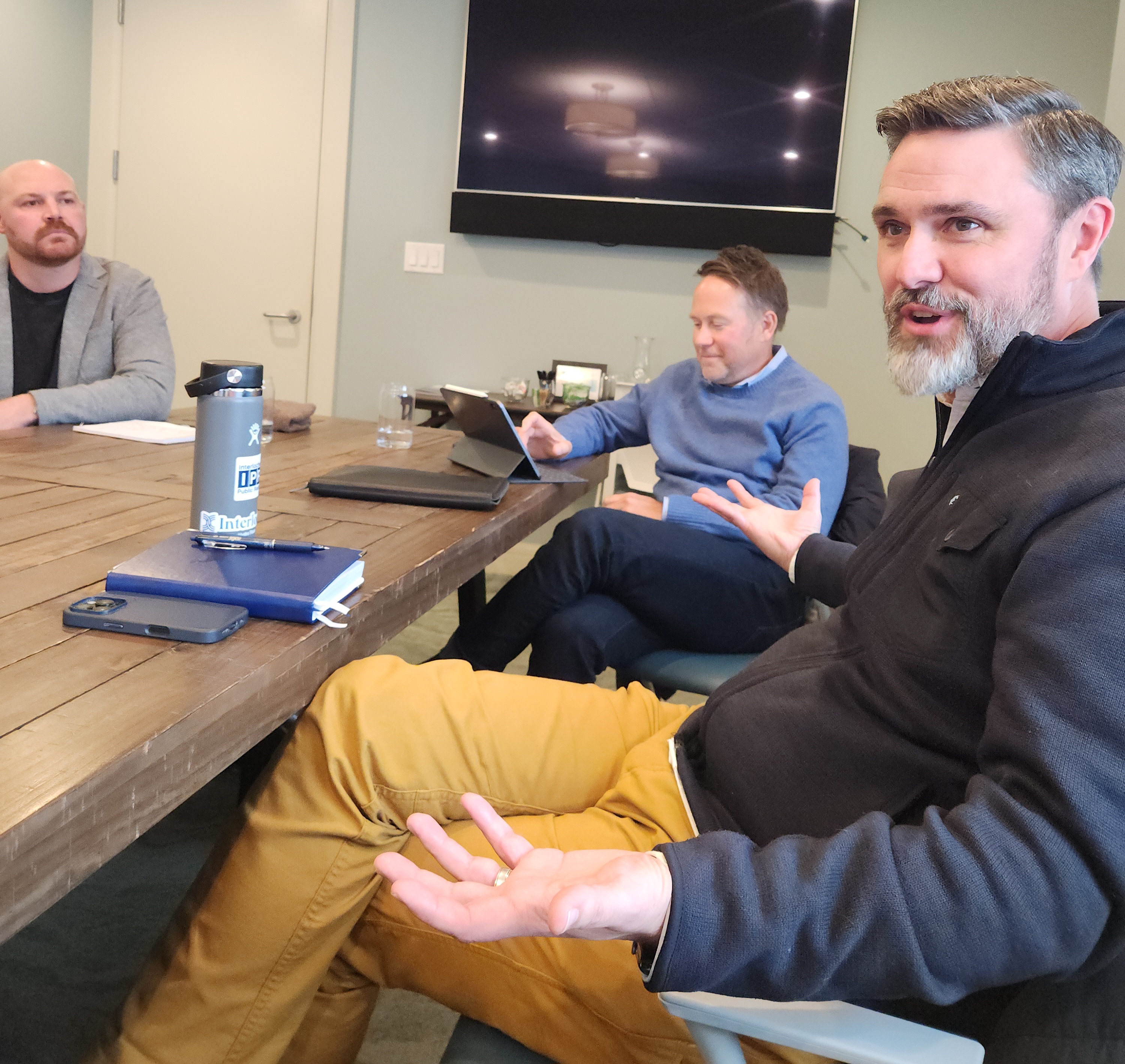
A marketing plan that clearly identifies will in fact be the best way to make sense of the madness when it comes to this overwhelming buffet of methods and solutions.
“The basics are not gone, and in fact, I think they're more important than ever, because otherwise, you're chasing down every possibility, the possibilities are endless, and how do you decide?” Wujcik said. “You have to have that clarity.”
This can be, of course, a challenge. Sometimes, clients (in the case of agencies) or leadership (in the case of internal marketing teams), push for action before a plan is in place. But good marketers push back.
“They’ll say they want to campaign for X. Well, why? What's it for, and who's it for? So giving them the roadmap first is so critical,” said Jennifer Lake, owner of Brand Tonic in Traverse City. “There seems to be a lot more education with clients. Let's really understand your goal, and then we can build a strategy.”
And it’s not just about defining a marketing plan – it’s about making sure your house is in order. No matter how urgent you are to connect with and convert customers, for instance, you can’t (or shouldn’t) do it with a bad website, an ill-defined brand or unclear value proposition.
“You cannot outrun a weak brand. You can, for a little while with a hell of a lot of money, but you can’t do it sustainably,” Wujcik said. “And that has always been the case.”
Tried and true
Despite an onslaught of new platforms, solutions and channels, these marketers say they are leaning heavier than ever into tried-and-true practices.
“It's not necessarily about using new tools, but using the tools that you have and… fine tuning those strategies, really segmenting and honing in,” said Coryn Briggs, senior director of marketing at Traverse City Tourism.
So, what time-honored tactics still work in 2026?
“Email marketing is never going to go away, much to my dismay, because I feel like it can be so challenging,” Briggs said. “But it’s a qualified list of people that have opted in to receive your communications. So you're targeting people that have asked for you to message them and have shown interest in or engagement with the content that you've served up to them.”
Paid digital (Google Ads, as one example) are also still very effective, as is paid traditional media (print, outdoor) for both general awareness campaigns and those seeking conversions. Back again with a vengeance after COVID is the importance of in-person marketing, particularly the B2B event circuit, Wujcik said.
“But we’re shifting how they are treating those events, treating them more like a campaign,” she said. “We’re going into it with an objective rather than just show up and showcase our services or our tools. Who do we want to be getting in front of while we’re there? What are we doing with the leads after the show? What automation can we leverage to follow up?”
Still, experimentation is vital. Lean on the known tactics, but don’t be afraid to reserve a little money for trying something outside the box.
“If you're able to have that little bit of budget for that moonshot idea, it’s really important to (do that), or maybe try a tried-and-true method a new progressive way,” Briggs said. “Those often lead to results that you may not expect.”
“About 70 or 80 percent of our budget is focused on those channels that are known to be producing for us, and then we reserve 20 to 30 to just constantly be testing and trying things,” Rice added. “As soon as we stop testing, we'll die.”
Experimentation is not for the weak of heart, though, especially since it might not deliver immediate results.
“You need to allocate budget to experimentation and then take time to actually see it through. I've had a lot of clients onboard a new tech stack, and then they give it about three months before they’re they're done,” said Fernando Meza, CEO of Oneupweb in Traverse City. “And it's like, how the hell are you ever going to expect anything to work out?”
Themes and messages
In terms of what’s working in marketing messaging, certain themes are rising to the top. One is that consumers are looking for quick, efficient solutions, so messaging that supports that goes a long way.
“Time [is huge],” Meza said. “When we launch certain campaigns for clients, the ones that perform best are the ones that help to solve the problem as quickly as possible.”
And businesses need to show that consumers can trust them to deliver these solutions with relatively little input or hassle.
“Turnkey is a huge thing that we promote. From design, building and installation…people just need us to be the easy button,” said Paul Britten Jr., executive vice president for sales and marketing at Britten, Inc. "Because there's so much going on in the world, and they want to trust that somebody's just got it from start to finish.”
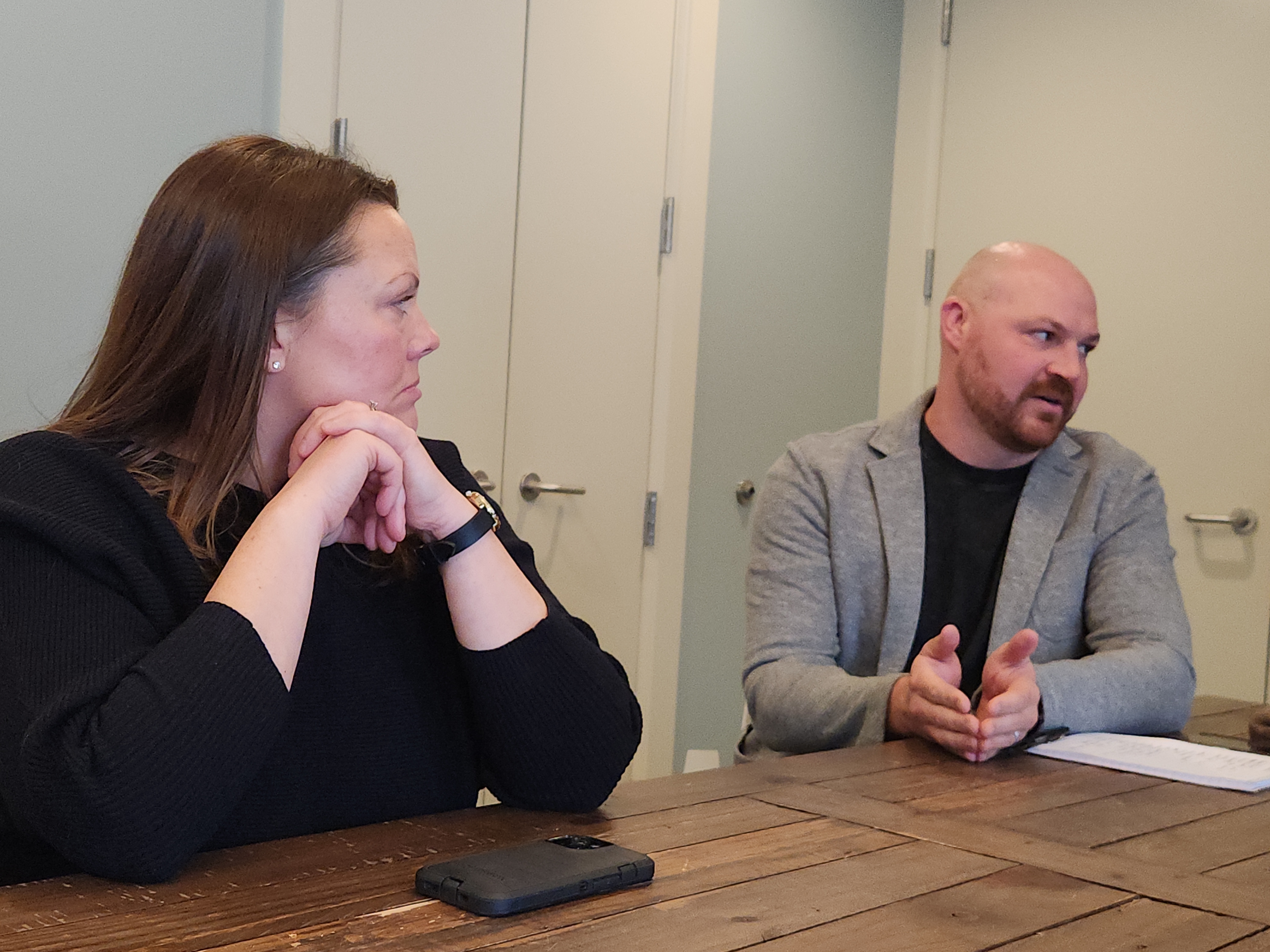
Trust has been important forever, but in an increasingly inauthentic and fragmented world, businesses are advised to keep doing whatever they can to build it.
“Consumers are doing their own thing. They have their own process. They're going to go look at all the reviews, and it's hard to control. We’ll have a client that comes to us as a four-point-something in their Google reviews. We can't control that, so we can implement systems to get more reviews and bump this up,” said Aaron Swanker, CEO of Flight Path Creative in Traverse City. “Are you building trust? I think it's a big thing coming into this year.”
And it’s not about how often or how many times you ping consumers these days. It’s about making sure you have something good to say.
“It’s not the volume play that it once was,” Wujcik said. “It’s about restraint and quality and making sure that what you're putting out matters.”
The end of websites?
Optimizing your website – both holistically and individual pages of content – remains important. The methods for doing so have evolved considerably over the years, with certain early tactics (keyword stuffing) now drawing penalization from search engines.
“Making sure that you're optimizing your content front and back end, website and beyond, so that it can be found by the people who are looking for it is so critical,” Wujcik said. “And unfortunately for us as marketers, that is a perpetually moving target. We always have to learn. I mean, it changes every day.”
But things on this front – and indeed the entire nature of how people interact with the internet – is rapidly changing with AI. So called “zero-click searches” are becoming a thing as tools like Google’s AI overview are delivering so much information that a user doesn’t need to travel beyond that first step.
“The real challenge is with SEO and search. We're already seeing declines in organic web traffic because people – and I do it myself – don't have to go to your website if the answer's right there on the results page,” Rice said. “So it's structuring and optimizing data so it has a voice in there and can be present and visible.”
Briggs agreed that it’s more critical than ever to make sure website content is primed to work with modern search technologies.
“There’s all of this talk about how websites are dying; I'm sure we've all seen it,” she said. “I don't think that they're necessarily dying, I think they're just changing. I think the structure and how they're built is changing, and how we mark data and content up so that it can be read online through the [large language models] and anything AI related.”
Website structure aside, marketers are also dealing with significant shifts away from traditional – and even AI supported – searches. Younger people are using social media to find information in the same way older folks use search engines.
“You have recent studies that show social media being its own search engine – TikTok or Instagram are surpassing searches on Google,” Briggs said. “And I think that's a generational shift in terms of how people consume content."
“I have two teenagers, and they laugh at me if I Google something. They just go to YouTube and use it really the way we used Google. They just go there to find answers,” Rice added. “[My two kids are] a small sample size, but times are changing."
Part of this shift is that younger consumers place much higher value in user-generated content, which seems much more authentic (even if it, like everything else, can still be monetized).
“Three or four years ago, we sold a million and a half in video production. No way is that happening, ever again,” Meza said. “Now, you spend $5,000 to get some micro-influencer to go do some user-generated content, and that performs better, if not as good, as the $50,000 investment, and you can scale that so much easier.”
Artificial intelligence
This group is largely bullish on AI, mostly because it allows them and their staffs to do more with less.
“We’ve really embraced AI and are mostly positive about it. We look to leverage it for efficiencies,” Rice said. “I mean, our team is finite. It's a good, healthy-sized team, but we still are limited by number of people and hours in a day. We're using AI everywhere we can to just help us do more.”
And it’s not just explicit AI solutions. Programs that have been around for years are adding AI wrinkles, and they’re a huge boost to productivity.
“Yes, there's new shiny tools and there's new awesome things, but the primary resources that we use – LinkedIn, Google, Microsoft Outlook – they're all adding these AI add-ons to them,” Britten said. “Every tried-and-true tech platform is adding some type of AI functionality.”
“It's an incredible assistant. It helps us a lot from a research perspective, especially competitor research,” Meza added. “And from a sales side, it's incredible. Having to work with creative to come up with spec work is now not as hard. Our time invested in the sales process is now cut in half.”
Removing the human element of certain functions and interactions comes with risk, but as long as the system performs as good or better than a human, people are less likely to care.
“It comes down to the experience, really. I don’t really care if I talk to a human or I get a system if I have a positive experience,” Rice said. “You can get a person on the phone who is terrible or helpful, and you can have an automated system that is smooth and seamless or one that drives you crazy. So it really just depends.”
There are definite efficiencies in the creative world as well – AI is a great tool for image processing and cleanup, for example – but this is where things get a little more hairy. Why hire a designer when ChatGPT can kick out a few logos for you?
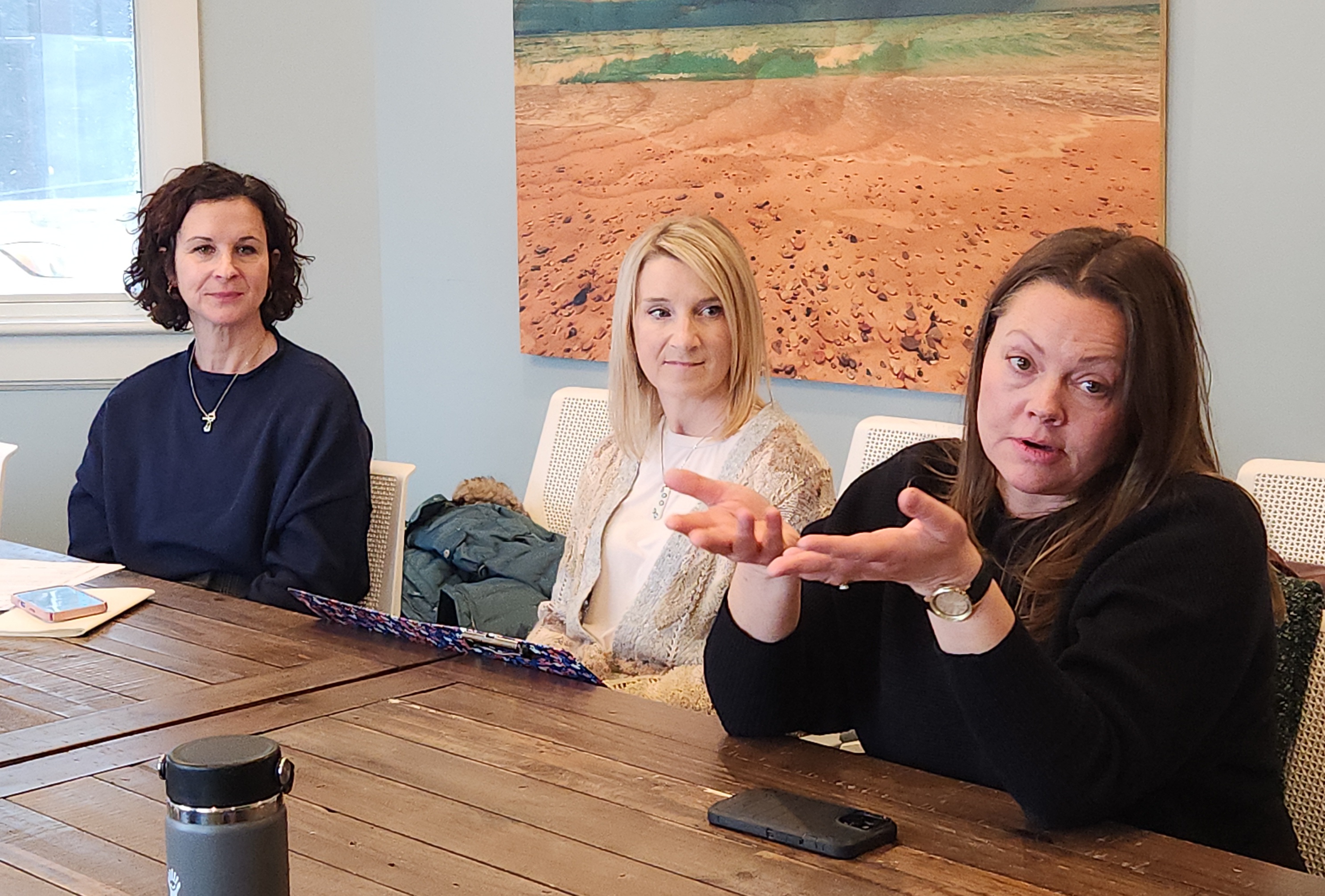
Lake says it’s all about quality. There’s nothing wrong with starting with AI for brainstorming, she says, but then things need to go further.
“I always teach people that (AI) is just going to generate the base ideas that everyone else is going to come up with,” she said. “Let’s get all the junk ideas out, then come back and talk about what we’re really trying to do and make it creative, because it still has to be unique.”
A skilled professional with context and a handle on subtleties and nuances can still produce a logo or other creative content that’s worlds better – and more effective – than AI, Lake says. Some people will be just fine with the full AI content, but that's not all bad.
“That’s OK. It happens in a lot of industries. [Professional assistance] is not right for everyone. But here, we want the people who appreciate the value we bring in the ideas and concept, and how we execute,” she said. “The real detail, the fine design, the great concepting – I like to think that’s not going away."
“There’s always people looking for a shortcut, and shortcuts are always there, but that isn’t where the great work happens,” Rice added.
Meza and others are not overly worried about AI coming for creative jobs.
“Yeah, it’s something that we're having to navigate, but it's always like that. I remember when the first handheld HD camera rolled out and everyone in Hollywood thought that that was it. That was the end of time,” he said. “At the end of the day what happens is better ideas surface up. Strategies get better. It pushes us.”
Plus, there is already considerable scorn of AI content among certain segments of the population.
“I feel like people are almost overly sensitive to it,” Briggs said. “We don't use any AI generated images here. We purposefully work with local photographers [because we] have an incredible region to photograph. And we'll sometimes share photos on our social media and people will call it out. That's too perfect. That's an AI image.”
Pictured above: Coryn Briggs, Jennifer Lake, Carly Wujcik. Back row: Fernando Meza, Aaron Swanker, Paul Britten Jr. and Chip Rice