Peace of Mind: Northern Michigan's mental health industry adapts to changing times
May 2026
You see your doctor regularly. You check in with the dentist at least once a year. But what about a therapist?
As with many other professional services, Traverse City serves as a mental health hub for the northwest Michigan region. Hundreds of clinicians here handle thousands of patients from across the region, providing critical support that is increasingly recognized as essential to long-term health and well-being.
And while issues like anxiety and depression have been around forever, the landscape of the industry itself is rapidly changing in the post-COVID world. The TCBN sat down with leaders at several local practices to see what’s new and what’s next within the mental health sphere.
A growing need
Local mental health professionals unanimously agree that the COVID pandemic was a major game changer in many (mostly good) ways.
There was a dramatic spike in people seeking therapists during and shortly after the pandemic, they say, and the number of people seeking therapy remains much higher even as 2020 fades into the rearview mirror.
 Wilmoth
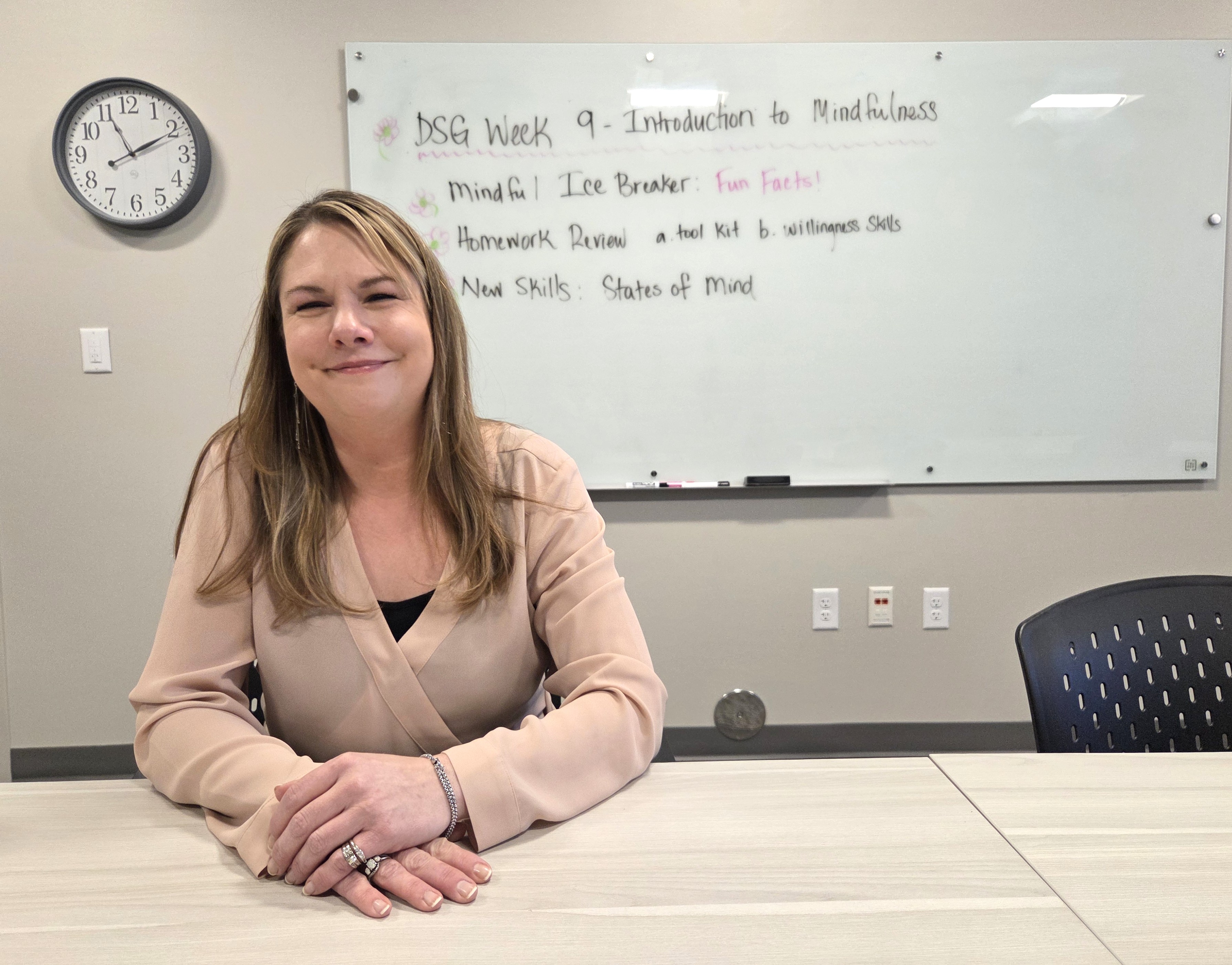
“I think the need was really highlighted with COVID. I mean, it kind of smacked everyone in the face,” said Kristine Wilmoth, who manages the nonprofit Pine Rest Christian Mental Health Services clinic in Traverse City. “And we haven't necessarily seen that go down since COVID, but we have seen it stabilize.”
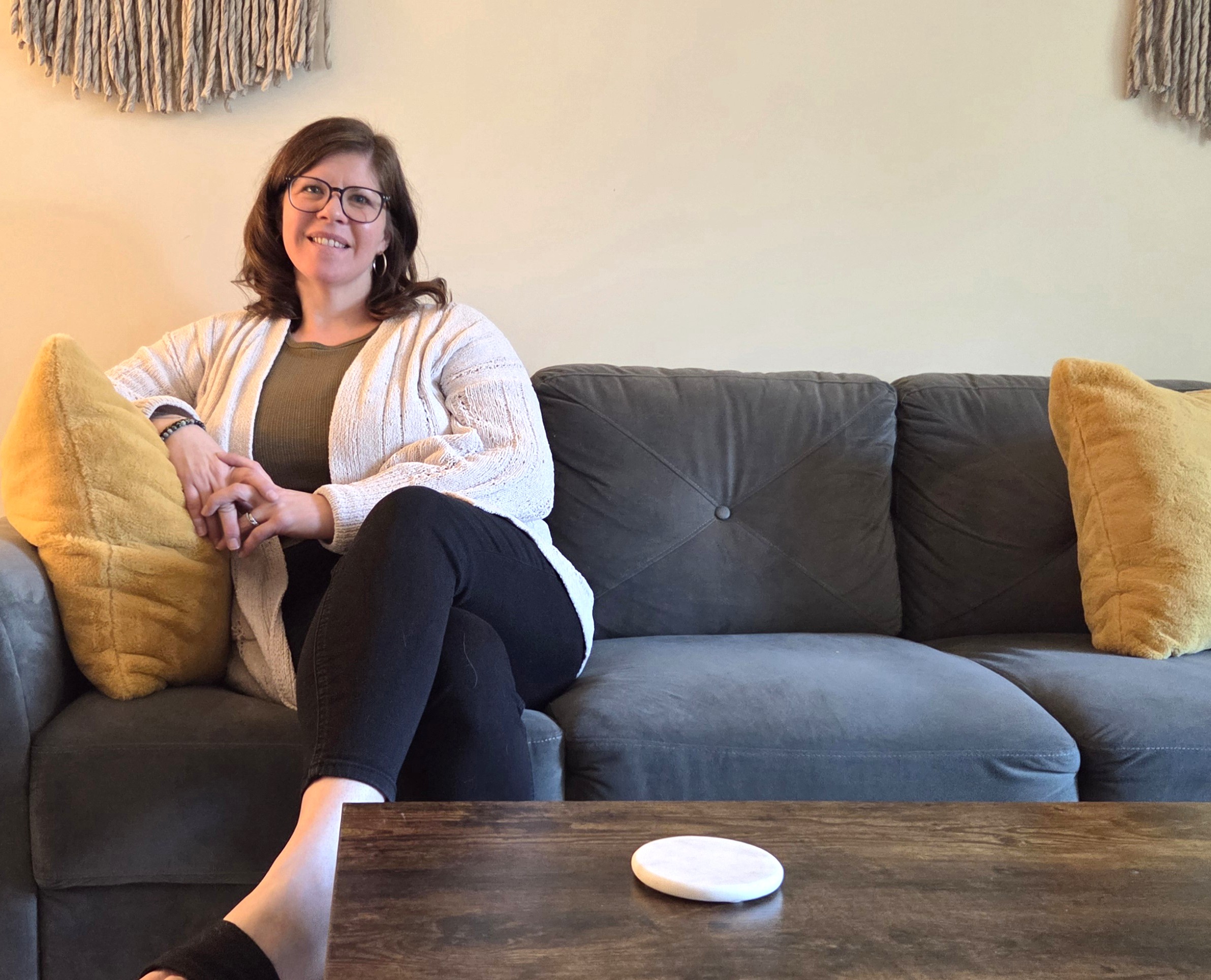
Nicole Ball said the phones don’t stop ringing at Mental Wellness Counseling, her four-location, 39-clinician practice headquartered in Traverse City. They’re getting way more calls in the time since the pandemic, she says, though it’s not necessarily because more people are struggling.
“We're seeing an increase across the board over the last handful of years,” she said. “But I don't think it's because there's more mental health issues, it's just because there's more acceptance to seeking mental health services.”
The conversation around mental healthcare “exploded” during and shortly after COVID, Ball said, which led to increased normalization of seeking these services.
“The stigma is still there, don’t get me wrong, but I'm having teenagers come in to see us who say things like, ‘My two best friends go to therapy, so I thought I would try it.’ And you never saw that before. Or men coming in to talk about depression or anxiety, which we never saw before unless their wife was pushing them in the door,” she said. “So I think there's more conversations about it and I think overall we've just normalized it a little bit more.”
People also seem to be talking more about their own positive experiences with therapy, which helps reduce the stigma.
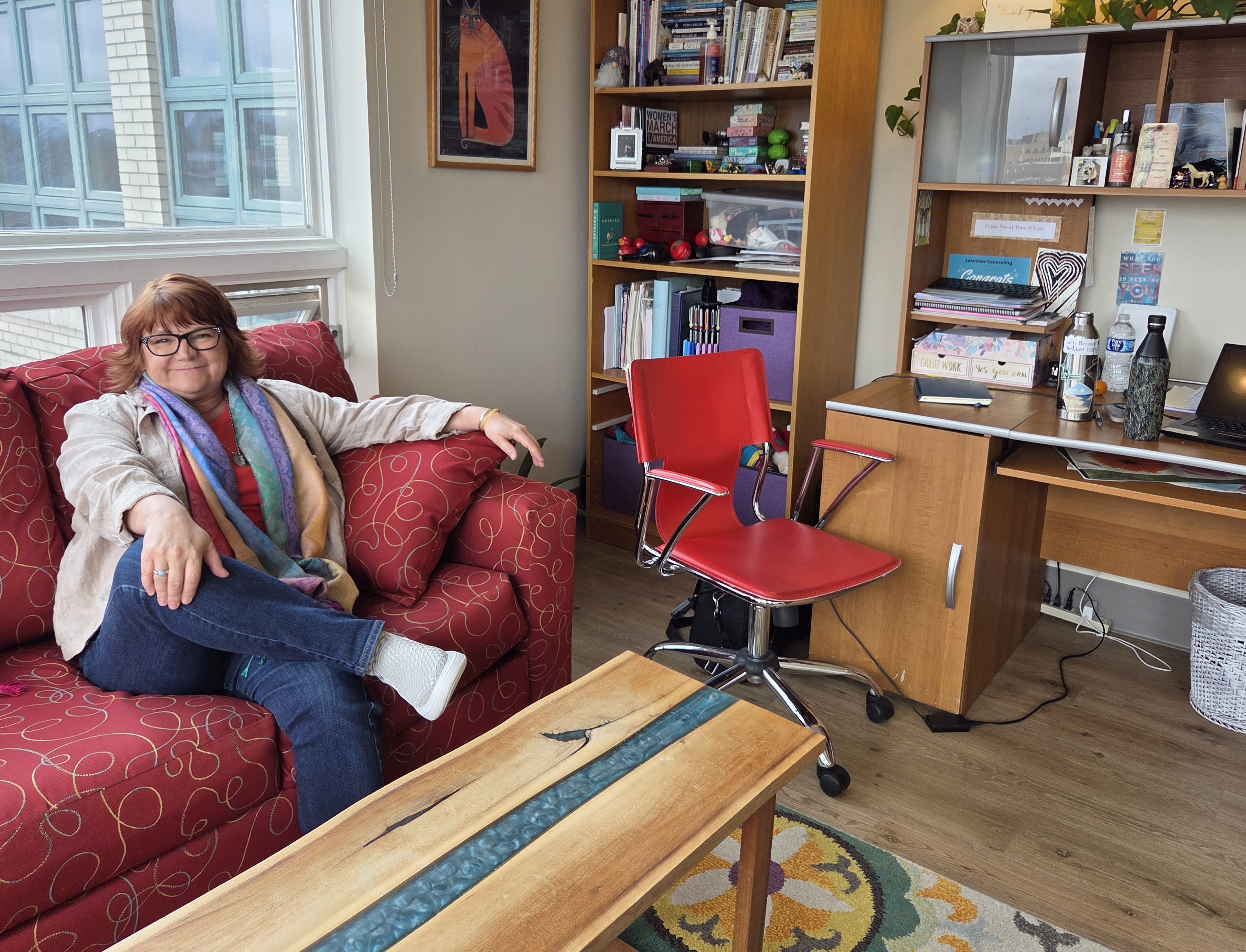
“It's great to find these people who are ambassadors of mental health who will tell people that they're seeking services and there's nothing wrong with it,” said Jill Kimball, co-owner of Lakeview Counseling in Traverse City.
A lot of those spreading positive vibes are doing so through social media or other digital channels. Consequently, it’s not uncommon for young people to show up at places like Lakeview having already diagnosed themselves through TikTok videos, Kimball says.
“With TikTok and YouTube and podcasts, a lot of people are getting mental health support digitally, which is good and bad. It's great if it's convenient and it leads to more access, but unfortunately, people don't always know the quality of the material they're accessing,” Kimball said. “Still, (it can be a positive because) people are developing more insights into themselves.”
Telehealth and BetterHelp
Pine Rest, which has 23 local clinicians and serves thousands of patients in its Traverse City clinic, is along with other clinics experiencing another major shift after COVID: telehealth.
Only about 5% of Pine Rest’s pre-COVID appointments were virtual. It rose to 100% for the duration of the pandemic and remains at about 50% now.
“And I think now we’re waiting to see what the end state is going to be. Is it going to stay 50-50?” said Scott Halstead, Pine Rest’s vice president of outpatient and
 Kimball
recovery services. “Culturally, are people going to want to get back to more in-person care?”
Kimball believes more telehealth is a net positive, as it increases access to care for many people who would otherwise not receive it due to mobility, distance or other issues.
“Telehealth is awesome because it puts providers with patients in ways that maybe wouldn't happen otherwise,” she said. “But it's harder to most effectively monitor the nonverbal cues of their mental health. So I can't tell their hygiene, for instance. I can tell if their hair’s messed up, but not if they’re bathing or wearing clean clothes.”
There’s been a huge, post-COVID boost in nationwide, purely telehealth outfits like BetterHelp, which has a network of more than 30,000 therapists that provide services virtually. Local professionals are leery about these types of services.
“With a lot of those websites, the way it works for the clinician is they're getting paid $30 to $40 an hour, and so who do you get that's willing to take that?” said Joe Sanok, a therapist who also runs a therapy consulting business. “It’s new grads that are just establishing themselves, people that for one reason or another can't fill up their practice, or people whose heart really isn’t in it.”
Pine Rest’s Halstead agrees, calling it “therapy light.”
 Ball
Ball“They have I don't know how many tens of thousands of clinicians, but it's a different sort of quality control, and they're all independent contractors,” he said. “They might be the best clinician ever, or they might be somebody who's two days out of school.”
Ball wants to assume the best from the BetterHelp-type therapists, but she has similar concerns about those platforms.
“For them, it's quantity over quality,” she said. “They want to get as many therapists as they can, whereas me, if I have an opening, I'm doing interviews for weeks and weeks to find the person that is going to represent our brand and take care of their clients.”
Regardless, BetterHelp and similar services represent significant competition for local counseling offices, especially for first-time patients who might not know the potential difference in quality.
“These big companies have billions of dollars to market and to get people to their services,” Ball said. “So we have people who are local to Traverse City who are typing in counseling in Traverse City, Better Health is coming out on top, and they’re going to those services instead of us. It’s taking the local out of local.”
Tight margins, insurance woes and staffing
Nobody who works in this industry is doing it to get rich (even though some clinicians are in school for just as long as very well-paid folks in other medical fields). That’s largely because counseling/therapy alone does not generate a lot of money.
“One of the challenges for a freestanding behavioral health system is it's a super low margin service, and unlike a big health system, we can’t do neurosurgeries or something to offset some of those costs,” Halstead said. “So we have to figure out how to make it work on a pretty low margin service up front.”
This is especially hard for a place like Pine Rest that accepts Medicare and Medicaid, which many private groups don’t accept because of notoriously low reimbursement rates. But even the major private players are pulling the purse strings tight.
“Blue Cross had a terrible year last year. They'll tell you they lost a billion and some dollars and Priority Health lost some millions of dollars,” Halstead said. “If you're involved with your own healthcare costs, you'll probably see double digit increases, but we’re not getting a double digit increase from insurance companies on the reimbursement.”
Ball says she’s tired of being jerked around by insurance companies, and she’s selective about which ones her practice will accept.
 Halstead
“We get paid whatever insurance pays us, so if we charge $180 for a service and an insurance company is going to pay us $127, we only get that $127. We can't charge the client the difference; that’s illegal,” she said. “Or they do an audit or a claw back for $8,000 because this patient didn't have (coverage), but they kept paying anyway. Being at the mercy of insurance companies is why so many practices go private pay only.”
Even people who have reasonably good insurance are struggling to pay for it as insurance companies ask consumers to shoulder more and more.
“What we're seeing a lot more of is that middle class, working people who have insurance are really struggling more because they (still) do have to pay for treatment,” Pine Rest’s Wilmoth said. “They might have a high deductible, or even just the copays. Even at a $20 copay, if you have two kids with trauma you could be looking at $160 a month.”
Like pretty much everyone else in northern Michigan, staffing also remains a concern, with the usual factors like a lack of housing playing a role. This is true for clinicians as well as various support staff.
“Our retention is fantastic; it’s recruitment that’s a nightmare,” Wilmoth said.
In terms of clinicians in particular, local practices are also hurting from a reduction in local programs that produce them, Wilmoth and Sanok say.
“There used to be all these satellite programs – Ferris, Grand Valley, Western – and all of those programs have really downsized or left,” Sanok said. “So we used to have 40 to 50 clinicians every year graduating here from the (Northwestern Michigan College) University Center, and with that shift, we don’t see as many mental health clinicians here.”
Then there’s the matter of simply running a functioning business, which can be difficult.
“As clinical social workers, our education doesn't prepare us to be business owners,” Kimball said. “We're (just) here to help people relieve their hurt.”
Sanok has spent years in this sphere, with his company (Practice of the Practice) assisting thousands of private practices over about 15 years in all matters of business operations. He’s hosting a nationwide conference on this matter May 4 and 5 in Traverse City.
“One of my partners and I went on a retreat with (Sanok) where, instead of focusing on clinical skills, it was on business management skills,” Kimball said. “It was really helpful for us to just get better at running our business.”
Enough access?
Are there enough therapists to meet the need in northern Michigan? That’s a tricky question. Statewide statistics show there is still a significant gap between need and access.
“This isn’t about convincing people to seek help anymore, it’s about having enough providers to serve them,” Sanok said. “The biggest shift in the last five years is that therapy is now normalized, but access hasn’t caught up.”
Ball believes there might indeed be enough therapists in northern Michigan, but that doesn’t mean the need is being met. This is true in large part because many offices are increasingly steering clear of accepting public or lower quality private insurance programs for reasons described above.
“The people who can afford private pay or have good commercial insurance usually don’t have a hard time finding a therapist. The area itself is saturated with people who are ready to provide services,” she said. “Unfortunately, it’s the Medicare and Medicaid patients who are on wait list after wait list.”
Even some practices that accept Medicare and Medicaid have wait lists of varying lengths.
“We can only see so many people,” Lakeview’s Kimball said. “We get several referrals a week, so we have people wanting to get in, and we can’t always take them.”
It’s not just a matter of there only being so many hours in a day. Therapists are also cognizant of protecting their own mental health when scheduling patients.
“We only have so much of ourselves to give, and a lot of us have figured out where we cap out in terms of the people,” Kimball said. “There’s a certain amount of sessions that I can’t go over, or my stress levels just start exploding.”
There are other paths to therapy, which helps. Pine Rest has seen a huge increase in interest in its employee assistance programs in which businesses pay them to be accessible for their workers.
“And it's not just a checkbox for them. They really want to be sure that their employees are getting the services they need,” Halstead said. “And they used to pay for maybe three visits per year for their employees. Now they're like, well, if the standard length of treatment is five to seven visits, then that's what we want to pay for.”
Artificial intelligence
Yes, some people are talking to ChatGPT for therapy. And yes, therapists are aware that advancing AI technology is alleged to be a threat to many professional services, including theirs.
Ball is not afraid of AI ever fully replacing human therapy, for a variety of reasons.
“I think it has the potential to replace some level of care, but not long-term ongoing care. Chat GPT could give them some answers and some hope, but that bot is … not going to replace the long-term science-backed work that we are able to provide,” she said. “That includes things like nonverbal communication and body language. If I see somebody shift in the chair when I ask about the relationship with their mother, I'm going to catch that because I’ve been trained.”
That said, Ball has leaned into AI for much-appreciated help with marketing and other matters, and many therapists are finding it to be useful for a host of supporting tasks.
“(For example), there are so many HIPAA-compliant AI note takers that make it easy for a therapist to hit record for a session, and then they can really focus on the actual session instead of taking notes,” Sanok said.
It also has the ability to enhance patient care outside of the one hour a week a patient actually interfaces with a client. Sanok describes a situation in which therapists can upload their writings or other information into closed GPT systems that patients can ask questions of in the interim.
“I think if we set aside the privacy concerns, the political concerns, environmental concerns of water banks and all that, I think overall that AI is a positive thing for mental health,” Sanok said. “Forward-thinking therapists are starting to utilize it in ways that it really enhances therapy outside of therapy.”