The Practice of the Practice: Local therapy consultant helps thousands of clinicians nationwide
July 2026
There’s plenty of nuts and bolts that Brianna Henderson learned from Practice of the Practice, a Traverse City-based consulting business that has helped thousands of therapists across the country grow their counseling practices.
Yes, the Frisco, Texas-based therapist learned about the various nuances of running your own business, from billing and marketing to schedule management and much more. But just as helpful, she says, was relentless encouragement.
This was particularly useful when she went from being a sole practitioner to opening a group practice, a scary leap for someone who almost two years before was merely an employee at a larger practice.
“I got so much knowledge on how to do things, and what to do, all of that … and while I had the knowledge, it doesn’t mean it still wasn’t terrifying,” she said. “So then probably equal to the knowledge (about how to run the business) was the support and faith in me that really encouraged me to have faith in myself.”
Henderson is about to hire her fifth clinician, light years ahead of where she assumed she’d be by now.
“I imagined going group in 10 years, 20 years,” she said. “I thought I’d need to be much older or have much more experience.”
Practice of the Practice (PotP), founded by therapist and Traverse City native Joe Sanok, 47, has assisted more than 5,000 counseling practices – from solo practitioners up to much larger outfits – grow their businesses since 2012.
“In grad school, therapists aren’t trained to run a business,” Sanok said. “We’re filling that gap so amazing therapists can have thriving businesses.”
The TCBN sat down with Sanok to learn about his operation.
It started with a podcast
Sanok started his own counseling practice part-time in 2009 after returning to Traverse City. He quickly realized that while he loved helping people through therapy, he was woefully underprepared for running a functioning counseling business.
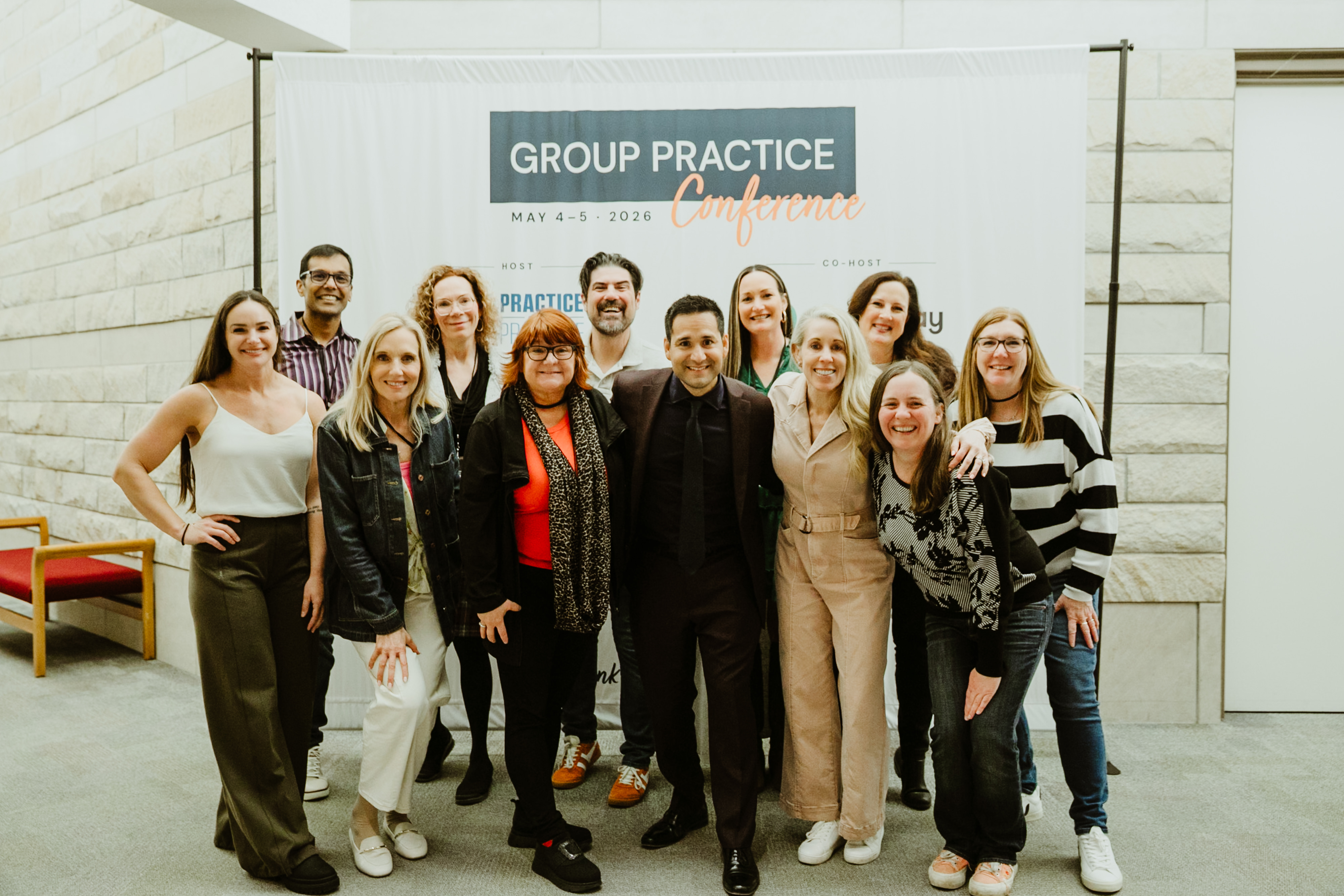 Attendees at the recent group practice conference
“I’d post stuff online. Anyone know how to make a website? Anyone know SEO? What even is SEO?” he said. “I never had a single business class, and I realized there was just so much I didn’t know.”
He started listening to a bunch of business podcasts and eventually started his own (with an accompanying blog) specifically to help other therapists.
“There were no podcasts about the business of counseling, the business of private practice … so I could enter a market where no one else is,” he said. “So from day one we were the number one podcast for counselors in private practice, even when we had five listeners.”
He brought in regular guests to talk about a variety of business aspects – marketing, accounting and much more – and watched as his listenership grew.
Now, that podcast – which is just one component of PotP programming – has up to 100,000 listeners a month and is one of the top ranked therapy podcasts.
“We have over 1,400 episodes. We're doing it three days a week. We have sponsors for every episode. And it's really something that focuses on counseling, but that definitely applies to most general businesspeople,” Sanok said. “We've had massage therapists, life coaches, physical therapists, doctors, dentists, all sorts of helping professionals enjoy the podcast.”
Growth and impact
PotP now employs 20 full-time, part-time and contracted staffers across the globe and provides a suite of services to therapists.
The Practice Academy is a monthly, membership-based program that provides “step-by-step roadmaps, a supportive community and expert-led resources to help therapists confidently launch, scale, and manage a private practice.”
“It’s meant to be a community that really helps people at every phase of their practice,” Sanok said. “So we’ve got sustainable solo practice, group practice launch and sustainable group practice.”
The Practice Academy is made up of regular virtual meetings with PotP staffers and outside experts alongside tons of supporting materials.
PotP gives one free year of Practice Academy membership to newly graduated clinicians and also gives fee breaks to clinicians working in underserved areas or with underserved populations.
“To us, it's more important to have more therapists that know how to do this right and have successful businesses,” Sanok said. “Later on, maybe they'll come back if they need consulting because we helped them at the beginning.”
PotP also provides direct, one-on-one consulting and hosts a variety of conferences across the continent. It just hosted one in Traverse City, with about 200 people from across the country descending on Milliken Auditorium for a group practice conference.
Part of PotP's work is getting therapists comfortable with the fact that it’s OK to want to make money, a mindset that Sanok said can be taboo in the altruistic field of therapy.
“Sometimes people come up to me and say ‘I never thought I could do this. I now have 10 employees, we put a pool in our house, I’m able to buy my parents a house in
.jpg) Sanok
Sanoktheir retirement,' or whatever,” Sanok said. “We help people so that they aren’t stuck in the narrative that as a therapist, you have to be a martyr.”
This was helpful for Henderson to hear, she says.
“(We) clinicians are at a disadvantage because we just want to help people, and that makes it really hard to make business decisions and look at it from the mindset of growing revenue and money and all of these things,” she said. “So a big piece of this was learning that just because you’re trying to make money doesn’t mean you’re selfish or greedy.”
While PotP offers plenty of direct instructions and lessons, Sanok is also quick to point out that PotP is just as valuable for its role in connecting therapists with each other. His clients appreciate this deeply.
“He really is a connector, and he hires people who are connectors,” said Elizabeth Carr, a Washington D.C.-based therapist who has worked with PotP for years. “Every time you talk to other people, you share your ideas, they share your ideas and you just layer them. Over the years, these things exponentially help you grow.”
Sanok is proud to do this work, with each successful counseling business able to help that many more people in an increasingly turbulent world.
“We want to help good therapists do more good therapy,” he said.