Farm Club Expands As Popularity Soars
August 2026
You know your business is special when it shows up in real estate listings.
Not because it’s being sold, but because it’s a selling point if the home you’re selling is near it – the same way you’d talk about being only a few miles from Sleeping Bear Dunes or a short distance from the TART trail.
The ownership team at Farm Club, nestled in the rolling hills of Leelanau County a few minutes north of Traverse City, is well aware of this phenomenon.
“We see it in real estate listings,” co-owner Allison Jonas said. “And I have realtors coming in saying, ‘I just sold another house nearby. The buyers said one of their requirements was to be by Farm Club.' It’s kind of crazy.”
Since it opened in July 2020, Farm Club has become one of the hottest operations in Leelanau County, if not the entire region. Its founders – Gary and Allison Jonas and Sara and Nic Theisen – set out to expand upon the farm-to-table concept. Not only did they put the table at the farm itself and let its bounty drive the menu, but they launched other endeavors – a brewery, bakery, flour mill, detached market, wholesale operations and more – to make the Farm Club experience unlike any other.
“I think people were ready for something like this,” Gary said. “People care about their food more than anyone else thinks, and I think people want sincerity and want to feel like there’s intention.”
By their powers combined
The Jonases moved to Traverse City from Brooklyn about 15 years ago. They had operated a restaurant and a combined flower shop and bar there, but decided to relocate to Allison’s native Michigan when it was time to raise kids.
They soon opened The Little Fleet, a bar surrounded by a “little fleet” of food trucks, that has become a Traverse City staple. In many ways, The Little Fleet captured the essence of community – true community – that they left behind in the big city.
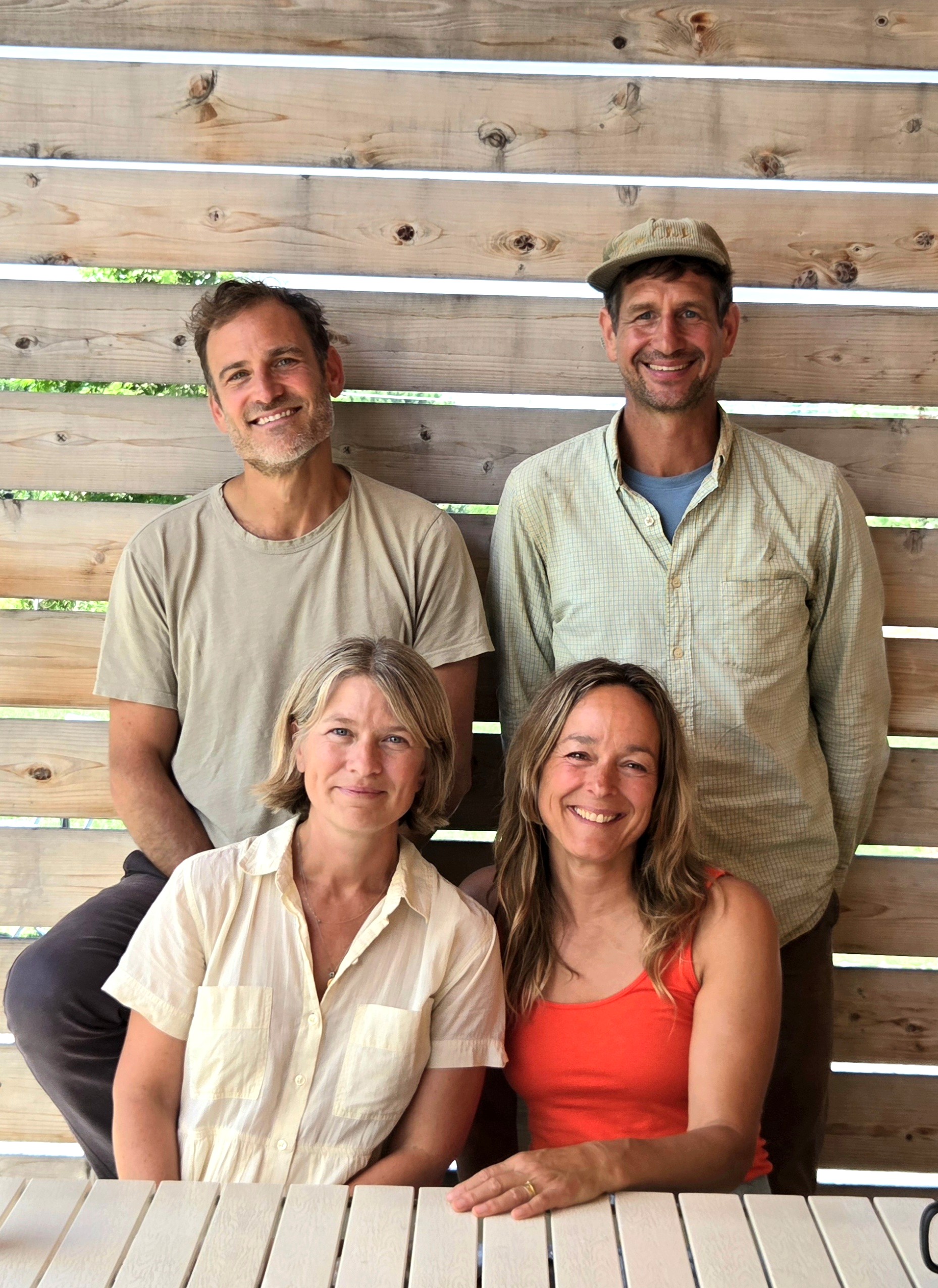 Gary and Allison Jonas and Nic and Sara Theisen
“Brooklyn is this humongous borough filled with millions of people, but this little neighborhood, we were the hub. In our bar, we had weddings, we had brises, we had all different types of community events there, and we were part of that community,” Gary said. “And so we wanted to replicate that here. I’m glad it feels like (we did), and I’m really proud of it.”
Meanwhile, around the same time, another pair of transplants was starting something special. The Theisens moved to Leelanau County in 2011 and opened Loma Farm on 13 acres just down the road from the eventual Farm Club site. Aside from producing a bounty of organic produce using sustainable methods, they also hosted farm dinners attended by the Jonases.
Fast forward to 2017, when the Jonases were on a trip to Australia and came across a restaurant on a farm that “blew them away.” So much so that they started looking at properties to do just such a thing back home while they were still abroad.
“We said, ‘Can you imagine if we can take this idea of a restaurant on a farm that we saw in Australia, combined with what they're doing at Loma Farm, and do this in Leelanau County?’” Gary said. “We felt like the time was right – that people want this, crave this. I think a lot of this was honestly out of frustration that something like this didn’t exist already.”
Their friends the Theisens were on board, and the four worked together to open Farm Club, which sits on nine acres. As they prepared to open, the timing couldn’t have been worse. But it also couldn’t have been better. People instantly gravitated to the space and began to find community there, Sara says.
“When we opened, it was during COVID. It was a dark time. A lot of places were closing,” she said. “But I’ve said a million times that we got to be a bright spot in an otherwise really dark time.”
Local focus
At Farm Club's core is the restaurant, which averages over 90% of its produce coming from the fields at Farm Club or Loma Farm (which the Theisens still own, now sending almost all of the crops to Farm Club).
“Last year was 92.5%, which is an insane number considering we're a vegetable-heavy menu, we’re covered with snow for four months of the year and we're crazy busy,” Gary said. “And it's not an accident. Nic puts an incredible amount of energy into making sure that this happens year round.”
They plant and grow food while planning the menu more than a year ahead, with many ingredients that aren’t used fresh put in storage or preserved for later use.
“There's not one month of the year we're not pulling food out of either a hoop house or outside from the ground,” Gary said.
All the ingredients not grown there are exhaustively and deliberately sourced from farms that grow things the way the Farm Club team wants them to be grown: organically and sustainably. Nic is the point man for these relationships.
“Nic speaks farmer. He is a farmer. He’s crawled on his hands and knees for over 20 years growing food and tending to the land, and it really means a lot to him that all of our inputs are quality,” Sara said. “He's constantly reaching out to networks trying to find anything from a saskatoon all the way to a 2,000-pound tote of winter wheat.”
Nic is also a chef, which means his brain is thinking about what to do with the food, not just how to grow it.
“He is so in tune to cooking and ingredients and how to create and build beautiful dishes. So what he plants in the field informs the menu in a way that I don't think a lot of people in farming think about,” Allison said. “He's in kitchen meetings and he's designing menu items with our chef, which really is special.”
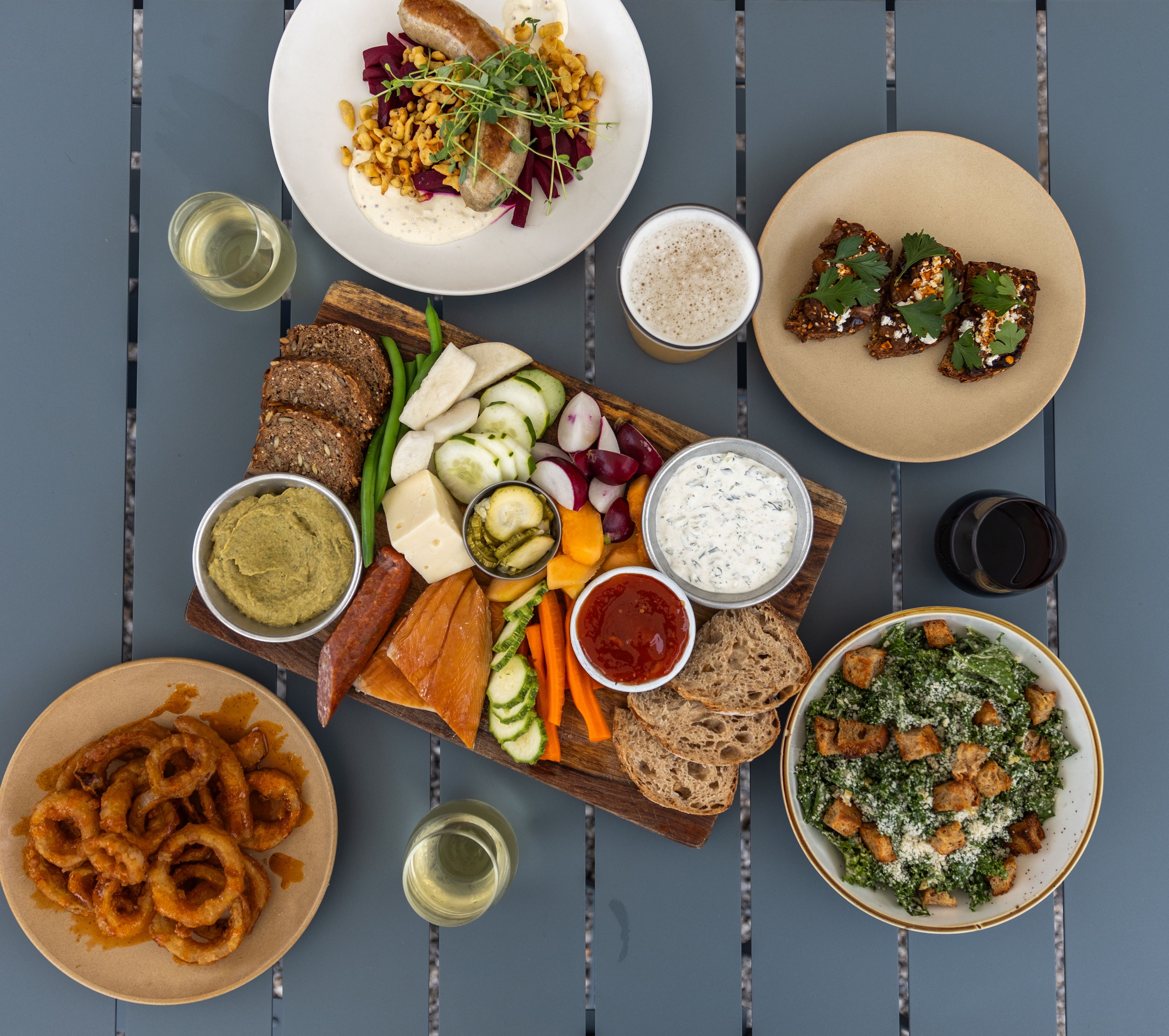
The restaurant is, in many ways, the tip of the iceberg. Farm Club’s brewery cranks out quality suds that are enjoyed locally and across the state. An on-site mill grinds organic flours that are also distributed. A bakery produces piles of delicious goods from this flour. A production kitchen makes a wide variety of packaged foods for retail sale. A bustling on-site market sells them, along with produce and other goods.
All of these things do generate revenue, but that’s not what drove their creation.
“We don't take on any of these enterprises or these focuses or these special projects or anything because we think there's some huge profit in it or it's a trendy thing. It's literally our interests, hobbies, passions, ethics,” Sara said. “It’s a big hobby that turned into a business.”
‘Nothing but elbow grease’
Farm Club now employs up to 100 people in the summer, while maintaining a still-robust 50 or so people in the off-season. The ownership foursome is extremely proud of their staff and credits them in large parts for Farm Club’s success.
But a big part of success is also that the four are deeply involved in day-to-day operations.
"You're doing interviews, HR, bookkeeping, fixing a tractor, grading the driveway, fixing plumbing on the dishwashing, doing an Instagram post, all in one day,” Sara said.
“It's the weirdest smattering of responsibilities and tasks.”
The four also have diverse backgrounds that combine in a symbiotic fashion to create something special, Sara believes. She cites Nick’s farming and cooking combined with endless little things, like Gary’s instruction for bussers to not disrupt customers in the way they clean tables. Four experienced eyes on the ball create a "deep bench" of quality control, she says.
“When you're asking about how people feel when they leave or what resonates with them, there's a lot of little details that can go overlooked. And we all have little things that are important to the four of us, whether that's sourcing or decision making or aesthetic or design,” Sara said. “There are things we all pay attention to that end up building to this big experience for folks that is hard to replicate and hard to experience anywhere else.”
“We built this from the truest place of authenticity,” Sara added. “We are nothing but elbow grease, top to bottom, back to front. It’s a really hardworking crew, and it’s a really wild thing we’re doing."
Dollars and cents
It’s not cheap, of course, to provide the type of ingredients and to run the type of operation that Farm Club does. But that doesn’t mean they’re eager to charge an arm and a leg.
“To me, what's most important about this space is that it's accessible to people, that it's not fine dining, that it's not reservation only,” Allison said. “Most of the time when you’re eating this kind of quality food, it’s not a place you can ride your bike up to or take your whole family.”
So how does it all work?
“Well, we just keep making it more expensive on our end,” Nic said. “Our margins get smaller, (even as) revenue is increasing.”
A big part of the equation is being able to make money in a lot of ways, Nic says.
“The one thing is we are tremendously diverse. We have a lot of different sales venues and products," he said. "We're selling in many different ways and we're making many different things. Whether it’s through the mill, the brewery, the restaurant, the market, the bakery … we have dozens of finished products and raw materials to sell.”
A recent expansion in the form of a detached market building that opened in May of this year should be a revenue booster. It gives people a place to buy all their favorite Farm Club baked and packaged goods (sauerkraut, anyone?) at longer hours than the restaurant, complete with dedicated parking for those who want to avoid the crowds.
More importantly, it also allows for a considerable increase in production, with bakery and other value-added and packaged operations moving there from the restaurant and brewery building. Workers there are much less cramped and have the space to produce much more retail and wholesale goods.
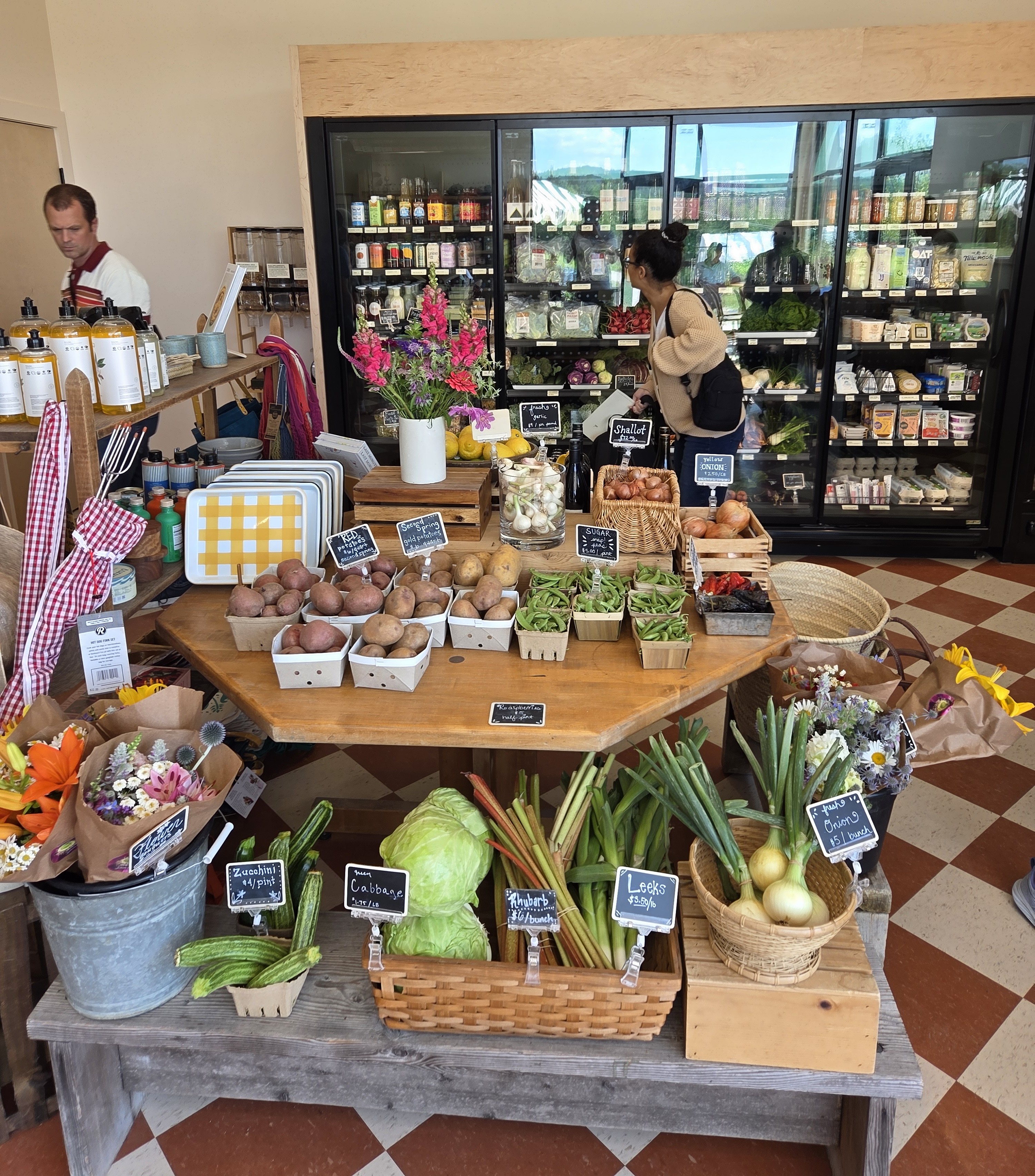
“With a bigger facility, there’s a lot more opportunity,” Gary said.
Although the team isn’t eager to expand further, it might be on the horizon.
“Currently the brewery's out of space, so that'll be kind of our next pinch point,” Allison said. “How do we expand so we can produce enough to reach the demand? Because … it never feels good to say no when people want your product.”
Locals and tourists
Trevor Tkach is president and CEO of Traverse City Tourism. He’s a big fan of Farm Club.
“Farm Club is special because it’s authentic. They have a real, working farm. They’re processing their own foods. They’re delivering a true, farm-to-table experience unlike anything else,” he said. “And that of course appeals to not only locals, but visitors come from all around to see and enjoy this type of experience.”
In many ways, Farm Club is offering exactly what people who come here want and expect, Tkach adds, and indeed what they’re coming here for in the first place.
“They’re really the perfect example of the nexus between agriculture and the visitor economy,” he said. “We value fresh produce in northern Michigan and draw lots of people in who really appreciate that…I think they’re the poster child for what’s (attractive) in northern Michigan right now.”
Don’t get them wrong. The ownership foursome loves and appreciates tourists, who bring a ton of revenue. But the seasonal whiplash is hard from a logistical standpoint.
“It’s an unfair way to run a restaurant, quite honestly. You can't staff the restaurant like you should in the winter and then expect to hire everybody and be prepared for July and August,” Gary said. “So you end up keeping as many people on as possible through the winter months so that you're ready for this time of year. That’s stressful, and it’s expensive.”
And while those tourists fuel the engines all summer long, it’s the dedicated locals who keep things going when the temperatures drop.
“I just adore our local community, because they're the ones that are skiing up in February in the middle of a snowstorm. They're the ones coming out for a solstice bonfire, totally bundled up. They're subscribing to our winter ration program, which is like a weekly or monthly bread and soup thing in the deep, dark days of winter,” Allison said. “We just lean into loving on our community in the off season.”