Still Cookin:' Great Lakes Potato Chip Co. continues strong growth after private equity injection
August 2026
In early 2010, the brand-new Great Lakes Potato Chip Company made about 175 pounds of chips an hour on a single used cooker in a building purchased out of bankruptcy.
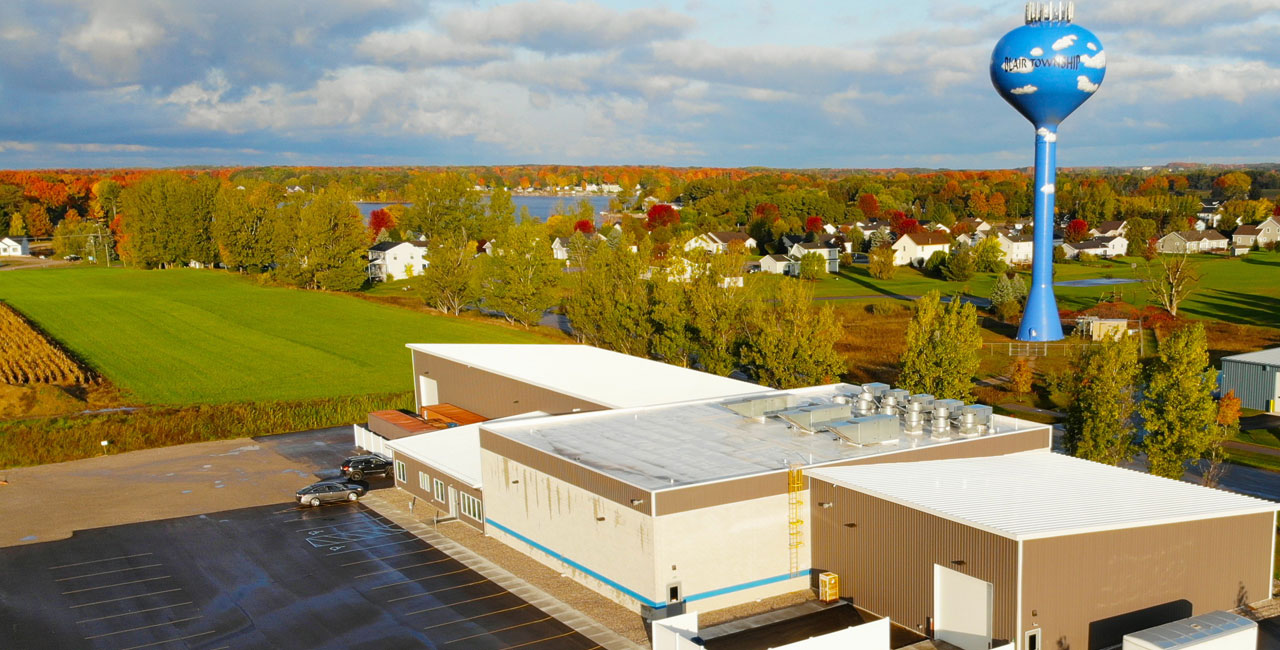
Today, they do about 2,100 pounds an hour across seven state-of-the-art cookers in an equally modern facility near Chums Corner.
Put in other terms, sales of a few hundred thousand dollars in the first year are now north of $30 million. And these chips – all produced in Traverse City – went from being sold at a handful of local shops to hundreds of locations across a dozen states.
Sure, some of this growth and success was luck. But it’s mostly the result of a solid business hunch from founders Ed and Chris Girrbach, who conceived of the concept and brand while still running Pangea’s Pizza in downtown Traverse City.
The TCBN sat down with Chris (Ed is now retired) to learn more about the past and future of one of Traverse City’s most popular brands.
Founding and early growth
The Girrbachs opened Pangea’s in 2006. It was a good business, but the hours simply weren’t great for someone with a young family (like Chris). After a few years, the father and son team set out to find something different.
“My dad worked for Merrill Lynch for his career, and he always said that if you took money out of it, that the quality of life in manufacturing was really good,” Girrbach said. “Restaurants are a great business, but they’re hard, especially if you want to raise kids. So we said, okay, well let's manufacture something food-related.”
After experimenting with pizza sauce and frozen pizza, they settled on another item they both loved – potato chips. But it wasn’t that they simply liked chips. Several things suggested that this may be a very lucrative path.
The first was that there simply wasn’t a local competitor to the big national brands.
“If you look back 40 years ago, 50 years ago, there were a ton of regional potato chip companies,” Girrbach said. "And they got bought, or closed, or retired, or whatever it was. And when we started, there were really just the big companies (in Michigan). That’s all there was.”
The second was that the Girrbachs knew there was no better time to start a local company, as the local food movement was gathering considerable steam. This, incidentally, is a wave they’ve ridden ever since as local food has become even more popular.
“We knew that 'buy local' and 'made in Michigan,' especially with the Pure Michigan campaign, was hot,” Girrbach says. “And it’s even bigger now than it ever was.”
The third was entering into an unfilled local segment with no competition. As a lot of decidedly repetitive businesses opened up around them, they were glad to go in a different direction.
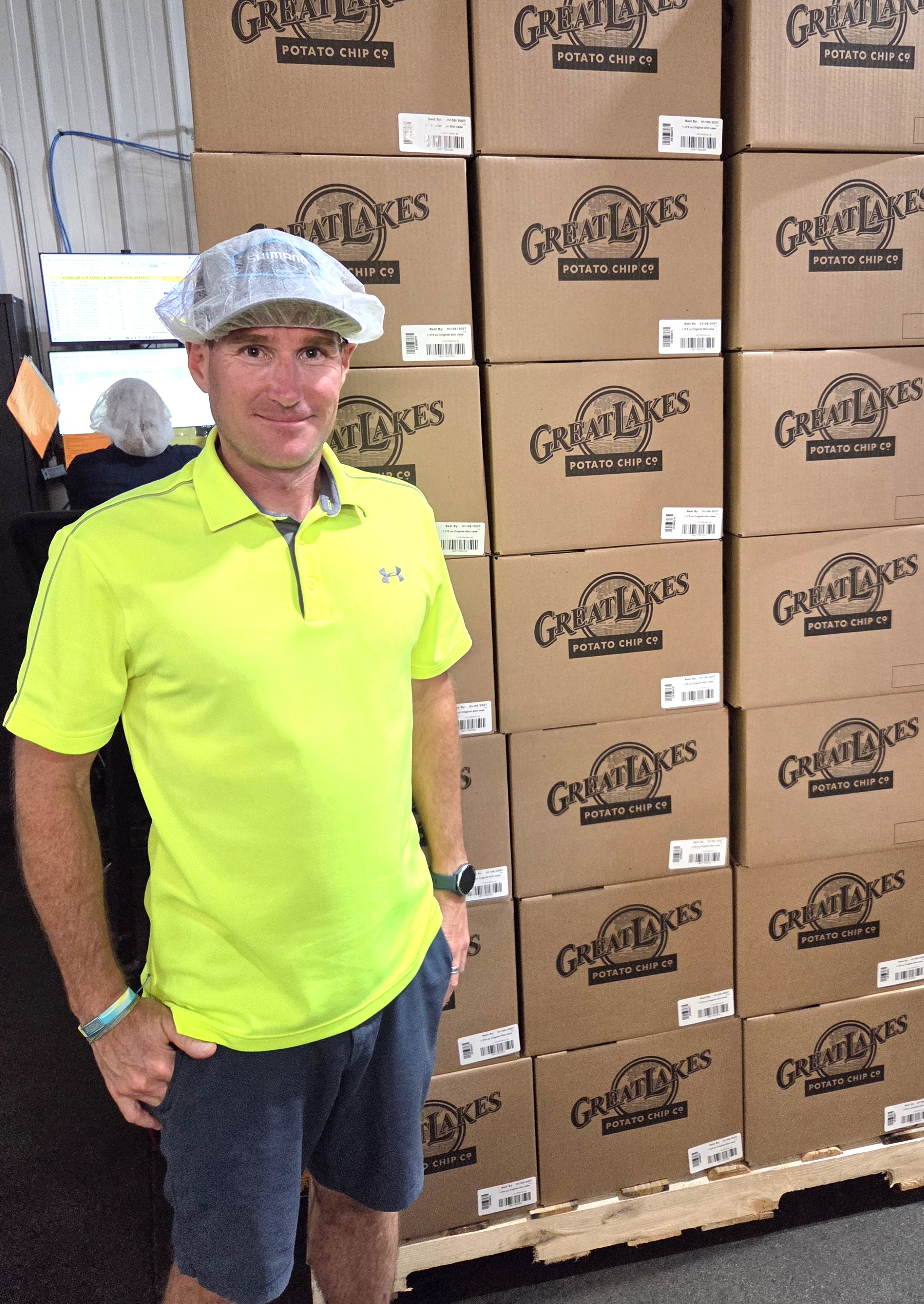 Chris Girrbach
“The thing about our category is it's not sexy. Making beer and wine, now that’s cool. People want to own a brewery or distillery. No one wants to own a chip company,” he said. “But the margins are really good. The business is really good. And I would rather compete against a couple of national brands than 50 other breweries.”
They settled on the Great Lakes name under the assumption that millions of people have an affinity for these bodies of water in one way or another, and that like Maui-style chips and Cape Cod Potato Chips, there’s a track record of success for regionally themed chips.
“If we called it Bill's Chips, are we here right now?" Girrbach said. "Maybe. Maybe not.”
Other little things set Great Lakes Potato Chips apart from the get-go. In an effort to further stand out, they left their skin on. They also tried to make classic, in-demand flavors, but with a unique twist. It’s not barbecue, for instance. It’s Michigan cherry barbecue.
“If I took an original and a regular barbecue chip to any store and I said, ‘Hey, you're going to love them. They taste really good.’ Every buyer would be like, ‘I have six of each of those. I don't have room for that,” Girrbach says. “But If I take you a salt, pepper and onion and a Michigan cherry barbecue, then the buyers are like, ‘Well, I don’t have any of that.’”
Even with a good product, it’s not easy getting it on shelves. The Girrbachs logged very long hours at trade shows and in front of stores and distributors as they were getting themselves established.
“The beginning was hard. The reception was warm, but distribution is really hard. It’s really challenging,” Girrbach said. “You can have the best of anything, but if you can't get it somewhere, it's very difficult.”
But that local food angle sure did pay off as they made the rounds.
“If it wasn’t for buy local, made in Michigan, we wouldn’t be here talking today,” Ed Girrbach told Bridge Michigan magazine in 2012. “There’s no way we ever would have gotten into Kroger, Spartan, Meijer, Walmart, if we weren’t made in Michigan. It’s been amazing how many doors that has opened up, and how strong that drive is.”
Continued momentum
Great Lakes Potato Chips has grown steadily in the years since its founding. It now has more than 90 employees and is churning out chips as fast as it can to meet consumer demand. The 2,000 pounds a day of potatoes (almost all from Mecosta County’s Sackett Potatoes since day one) is now about 80,000 to 100,000 pounds a day.
“We've kind of been building capacity and expanding regularly. Every year or two, we have a massive upgrade of some sort,” Girrbach said. "At the the old plant we did three building expansions and four cooking capacity expansions. Here we've done two building expansions, three cooking expansions, and we just added machine seasoning. You kind of never stop with that.”
And you never stop because you can’t risk falling behind.
“You can’t be at capacity. You just can’t. Because then customers say, ‘Well, if we can’t get it, we’re going to buy someone else’s,” Girrbach said. “If you’re in a situation where you’re telling someone you can’t fill an order, you’re in big trouble.”
The company now distributes in about a dozen states east of the Mississippi River, with a few limited touch points out West. There’s plenty of ground left to conquer within this footprint.
“The reality is that we have so much white space left in our core region, and we’ll continue to fill that,” Girrbach said. “We have partners that we only do a little bit of business with that we can saturate, or that we don’t do any business with – regional chains and stuff – so there’s no shortage of opportunity.”
They dabbled in a few other things in the past – tortilla chips, for one – but have avoided straying from chips since then. Do one thing and do it well, Girrbach says, and you have the best chance at success.
“The biggest thing is we’ve tried not to chase shiny nickels all over the place. We’ve been pushed and pulled to do things besides kettle chips. We’ve been asked to do popcorn and pretzels and all of these other things, but we make kettle chips,” he said. “Let’s stay in our lane.”
The company has had pretty good recruiting and excellent retention, in part because management believes in treating its employees well.
“We work really, really hard to be a best-in-class employer, so our benefits package is really strong,” he said. “And I hate to even say work-life balance, because it's cliché, but it's true. People don't live in Traverse City to work 60 hours a week … and we choose to be accommodating to that.”
Girrbach doesn’t have much to complain about. But when pressed, he could think of a few things.
“When you get to our size, regulatory challenges are very real,” he said. “We're audited by four different agencies, and all of them are unannounced. The compliance complexity that we have to deal with is fine, because it's why food is safe, but it can be very challenging because there's a lot of gray areas. Don't give me gray. Give me black and white.”
Like everyone else, Great Lakes is dealing with price increases for supplies. Unlike everyone else, it’s a bit harder for them to manage.
“We don't have the ability to change pricing quickly. At a restaurant, you just change the menu. Like, 'Hey, your burger was $10, now it's $10.50.’ We can't do that,”
.jpg)
Girrbach said. "It takes us months to push a price increase through, and that’s months with justification to all of our parties.”
Girrbach (and his industry at large) are also keeping a close eye on the weight-loss drug trend, which is expected to cut into snack sales considerably. Girrbach hopes that his local chips will be at least somewhat insulated.
“It’s real, but for us, the benefit is that most of the companies taking that on the chin are the national brands,” he said. “Our category in general is flat to declining. Our brand has been lucky enough to have been growing during that … but we have to be cognizant of all of this stuff.”
Outside investment
In 2022, the Girrbachs sold a majority stake to the Chicago-based private equity firm LaSalle Capital (in partnership with Lightspring Capital). Chris was retained as CEO and maintains a minority share.
The deal made sense for several reasons. Ed wanted to retire and Chris didn’t have the ability to buy his dad out. But it was also always their plan from the start to build the business and then sell it, Chris says.
The sale has allowed the company to make significant investments in recent years.
"In the last four years we've invested over ($6 million), probably close to $7 million in equipment and infrastructure and buildings,” Girrbach said. “We could have bootstrapped it again and taken out more loans, but (this is a better path).”
Girrbach has been pleased with the experience, which is happening more and more as private equity firms are dialing up their activity in northern Michigan.
“I think private equity used correctly is great, and you're seeing it more and more when you want to scale or you want to do something,” Girrbach said. “If you’re diligent, which we were, you get the right partner. Our group is phenomenal. They’re great and I love working with them.”
The outside investment also should ensure that the company is strong for years to come. For Girrbach, whose greatest joy by far is providing good jobs, that’s great peace of mind.
“I think it's really awesome that we get to supply 93 people with a good living, and be fair to them and help them, and that they help us. The product itself is cool, and it's fun, and it’s good. But the real value … is that you can employ people in your region and keep this vibrant area going. I think the idea of this plant being here beyond me is going to be cool,” Girrbach said. “I can drive by here with my kids or my grandkids and be like, ‘We started it. I don't have anything to do with it anymore, but look, there's still people pulling in doing work.’”
A big fan
Warren Call, president and CEO of Traverse Connect, does not have enough good things to say about Great Lakes Potato Chips.
The company pulls together a lot of what makes the region notable and special into one package, he says.
“The best way to put it is that they’re exemplary,” he said. “We’re using a locally grown product for value-added agriculture, and processing it is part of the manufacturing legacy of this area.”
“They're employing people in good quality production jobs that are year round … and it's a product that gets produced here and gets shipped out to the world,” Call continued. “It's not that we mind having tourism and second homes, but it's always valuable to have those diversified firms that ship a high-quality product out to the world that doesn't require us to import a visitor.”
Finally, they're just another thing that serves to boost the region's already strong reputation.
“Much like we're proud when we see Michigan dried cherries all over the world, seeing Great Lakes Potato Chips on menus and plates outside of this area is a source of pride, I think, for all of us,” he said. "It's also a matter of continuing to reinforce our brand as a place that makes quality food and agriculture products. It really fits well with what we’re trying to portray to the world.”