IT in 2026: Tech leaders provide advice for the year ahead
January 2026
Business owners have a lot to keep up on, but few things are as rapidly changing as the world of technology.
From artificial intelligence and cybersecurity to automation and cloud computing, the decisions made now could substantially impact profits and sustainability in the long run.
The TCBN connected with leaders at three local information technology (IT) firms to see what’s on their minds – and by extension, what should be on their clients’ agendas – as we enter 2026.
Cybersecurity
It’s the big one now and most likely well into the future. IT professionals are constantly chatting with clients about security and risk, and it’s a conversation that won’t be going away anytime soon.
Even in 2026, and even after abundant news about cyberattacks, it's still a topic that sometimes requires a little pushing from the IT team.
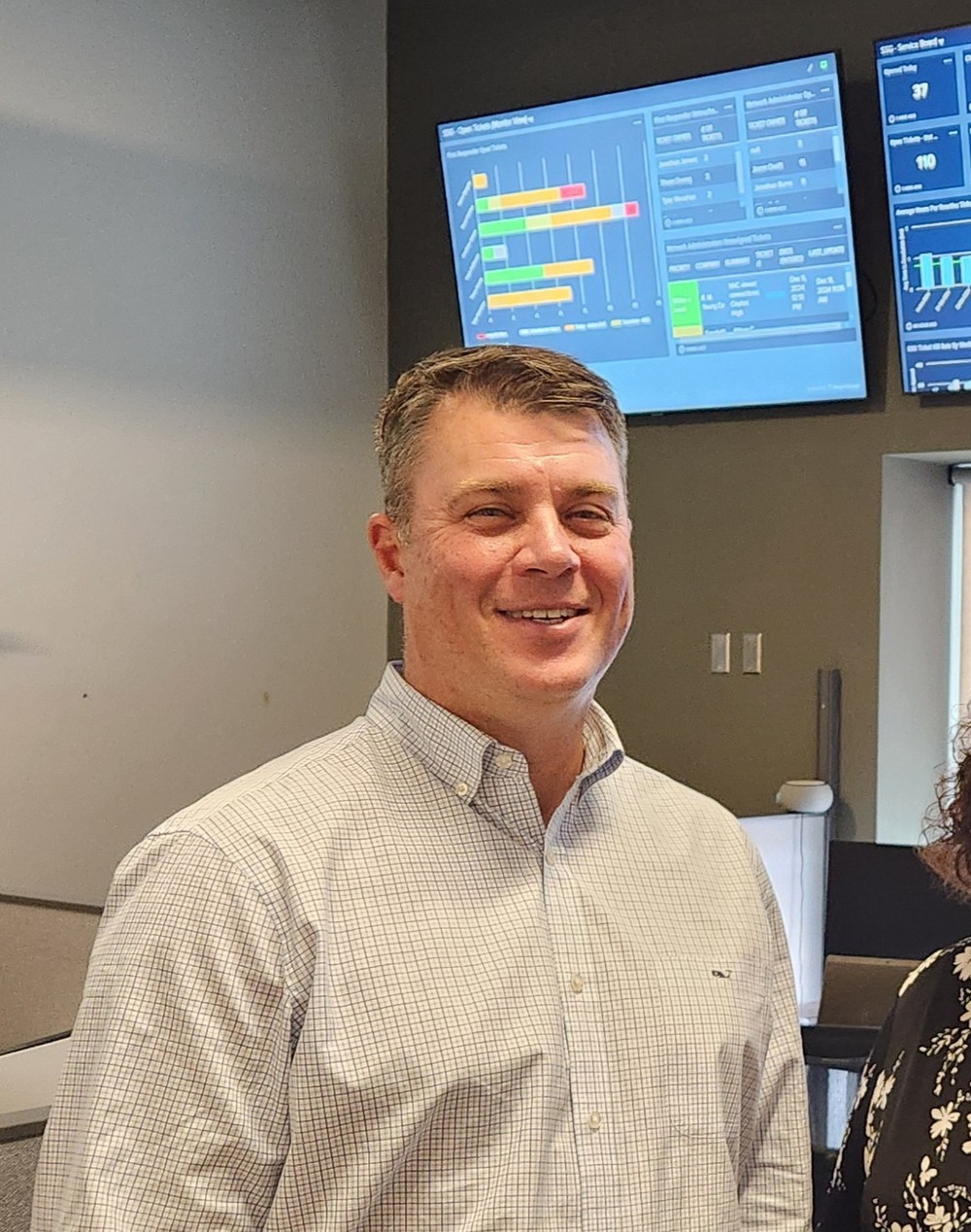 Cerny
Cerny“There are companies that feel as if the antivirus software that they've had in place for the last 10 years is fine and there's no real need to continue to add more to cost associated there,” said Tim Cerny, area vice president for Thrive (which bought Cerny’s Safety Net last year). “It's just a matter of when they'll get a ransomware attack.”
While hackers can and do target any system, most small to medium businesses in northern Michigan are unlikely to fall victim to the most sophisticated hackers, who are using the latest technology to focus on much, much bigger fish.
What this means is the hackers that are in fact targeting smaller businesses are most often going after the low hanging fruit: Employees who can be tricked into giving them access to the system.
“The big hacker group isn’t going after $100,000 … so the whole idea of how you do cybersecurity [at smaller businesses] is different. It’s so user focused,” said Cody Lewis, IT manager at Anavon Technology Group. “Your users are really the only avenue that these people are going after … and human error is the number one vulnerability.”
So while security software and other systems are indeed important, the biggest risk is still Debbie in the sales department.
“The biggest area we see cybersecurity problems is email, and the weakest link is the employee. It’s the user,” said Wyant Technologies CEO Tom Wyant. “We had three clients suffer business email compromises within about six months of each other. Because of tools we had in place we locked them down within like five or six minutes before anything happened, but the user let them in in each instance.”
The basic steps are still, even in 2026, the most important, IT leaders say. Train your employees to never click on even remotely suspicious links. Pick up the phone and verify emails that appear to be legitimate if they’re asking for sensitive information or tasks (or, for starters, always be sure to look at the sender’s address to assure it’s legitimate).
“I think we've done a pretty good job of training [clients] to not trust anything,” Wyant said.
All of this will get harder as even low-level attackers leverage AI to clean up their awkwardly worded emails – or worse. Voice replication, deep fakes and more will likely present considerable threats to security in the years to come.
“The line between what’s real and fake is going to basically blur beyond recognition,” Cerny said. “So the way that we're protecting clients isn't just going to be cybersecurity. Customers are going to have to have protection in place to help their consumers, their employees or the world recognize what is real and what isn't.”
Human weak links aside, making sure systems are updated is another huge component of cybersecurity. Cerny says he’s encountered far too many systems that haven’t been properly maintained from an updates/patch standpoint.
“If there's a patch available for the type of application that you're working with or the computer that you're working on, it was created because there was a vulnerability identified, and that vulnerability is posted on the dark web and out there for anybody to kind of see,” Cerny said. “Hold your IT team or your IT provider accountable to demonstrating the discipline that they have around patch management, because those things exist for a reason.”
Lastly, while not purely cybersecurity, data access continues to be a point of discussion.
“Most if not all small businesses, when it comes to data security, there’s none. There is still so much data on the network that probably should be locked down. We’ll talk to them and say, 'What do people actually need access to?'" Wyant said. “For the longest time nobody cared, and I think it’s because they didn’t know they needed to."
Tech debt
Speaking of systems, hardware can be expensive. And like pretty much everything else, it’s getting even more pricey by the minute. What this means is that many businesses are at risk of falling even further into “tech debt,” IT professionals say.
Delayed spending on necessary upgrades to hardware, software and other tech components can eventually put businesses in a very daunting hole. In some businesses, it’s enough of an issue to be the number one risk to business continuity.
“Tech debt is probably a bigger problem in a lot of places than cybersecurity, because if they want to come into the future … they’re going to need to spend a ton of money to eliminate that debt and upgrade everything,” Wyant said. “But there’s a lot of people holding on to old stuff because it still works.”
Clients can be quite stubborn in this regard, particularly as components become more expensive. But kicking the can down the road is never a good strategy.
“We deal with it on a regular basis where equipment becomes legacy or end of life, and it's no longer receiving firmware upgrades, patch management, bug fixes, security fixes,” Anavon President Michael Madsen said. “Then you're trying to talk to a customer and you’re like, ‘Hey, listen, you got to replace this,’ and they just say ‘No, it's not broke.’”
Madsen says his team is regularly pushing clients to bite off upgrades in manageable chunks to avoid digging too deep of a hole.
“It’s manageable now, but if you keep pushing it off, it's just going to pile up,” he said. “The idea is … to get yourself on a manageable schedule.”
Some of this can be solved by leasing instead of buying hardware, Cerny says. Thrive can get clients set up with everything they need. “Hardware as a service” is the latest in a trend that started with cloud-based “software as a service” many years ago.
“You could write a big check and pay for a big project to have hardware … put in place or updated. Or you can just lease that and receive that hardware as a service, as well,” he said. “You move it from a big capital expenditure to an operational expenditure, one that you can count on consistently to be the same price every month.”
Artificial intelligence
 Wyant
WyantThese tech professionals have a somewhat measured take on AI. Yes, they say, it’s going to be a major disruptor in business and society, and it’s something that all businesses need to be ready for. But it’s also somewhat of a bubble, especially on the consumer side, as various companies race to capitalize on the zeitgeist with endless AI solutions.
“Unless people are willing to invest a ton of money, it’s just a big marketing thing right now,” Wyant said. “Marketing fluff.”
There are specific ecosystems where AI is already having a big impact, Wyant says, like systems that assist with sales management and follow up. But effective AI is just not there yet in a lot of business segments and applications, he says. Wyant finds that as of now, many customers asking about AI are really asking for something else.
“Once we start talking to clients and get into the whole AI thing, a lot of it isn't AI, it's automation,” he said. “Do you really want AI, or do you just want this thing to run on its own?”
Cerny says Thrive is “all in” on AI, specifically finding solutions that help clients increase productivity. One example he cites is a tool that lets his private equity clients thoroughly analyze prospective business purchases and generate rock-solid reports and recommendations in a matter of minutes, rather than weeks. Still, most of his clients are asking for much more mundane things.
“We're seeing it for the simple things: Can it summarize my email? Can I have it write things for me? Can I build PowerPoints?” he said. “But what I'm not finding yet, and I expect we'll start to see a lot more of that in the new year, is true business use cases: ‘If we could streamline this process, it would save us this amount of time, this amount of dollars and give us this kind of competitive advantage.’ That isn’t happening a ton within our market today, but it will be coming.”
Ultimately, most businesses just want to make sure they’re prepared.
“What they are asking us to help them do is get ready for AI,” Cerny said. “That readiness piece is probably the biggest trend."
A big part of that, incidentally, is cleaning up what for many companies has become a file structure that is a “complete mess,” built up over time with old, useless data in cumbersome or confusing pathways.
“If you're going to leverage AI, you've got to have that clean. You can't have it mine old bad data. You can't have it accessing files that people shouldn't be accessing,” Cerny said. “Data and file structure management is a big deal.”
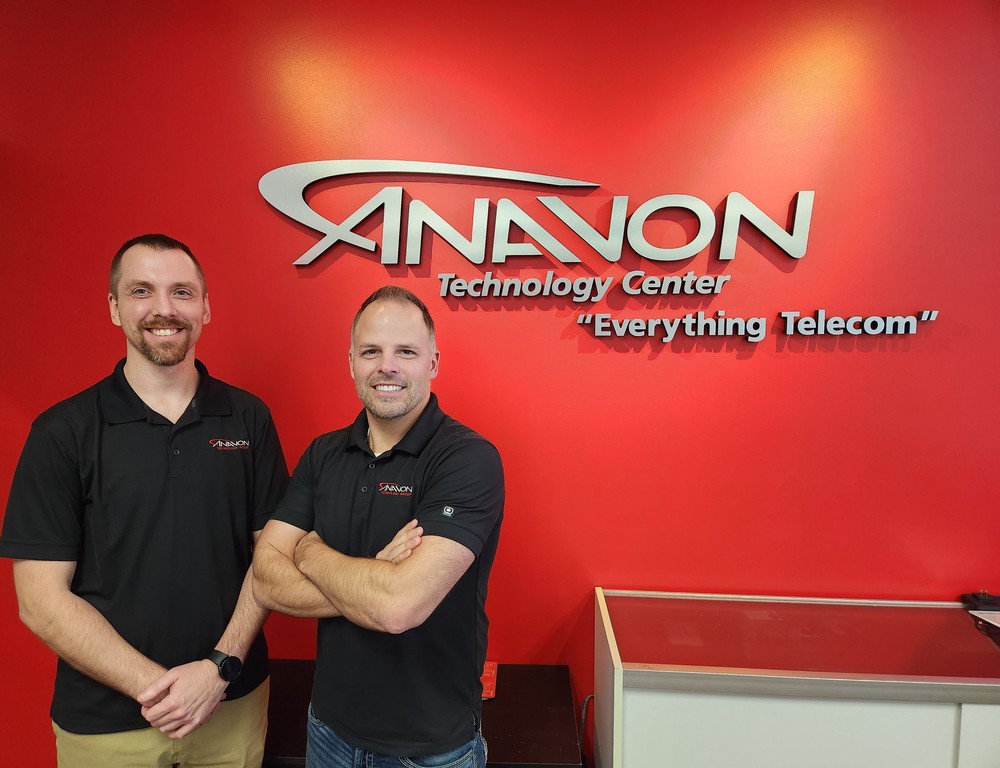 Lewis and Madsen
 Anavon’s Madsen says AI has already shown tremendous value in certain areas. Anavon is a full-service technology company that (among many other services) installs and maintains security cameras. One example Madsen cites is AI programs that allow hours of security footage to be text searchable, a massive improvement over having to watch all that footage to find what you’re looking for.
But like Cerny, Madsen doesn’t yet see a lot of strong use cases for many of his clients. They’re asking plenty of questions about AI, but Madsen would rather identify the problem that needs to be solved before chasing an endless buffet of solutions that are looking for problems.
“I think that we’ve still got to have those conversations about what the ultimate end goal is, and if they really need it,” he said.
Madsen is also curious to see how much AI end users will ultimately put up with.
“Even though I'm in technology, I still have a hesitation with AI. I still want to preserve that human factor, because I feel like it's going to get lost as we just try to automate everything,” Madsen said. “If you try to go too heavily into something, there's going to be pushback and blowback. I’m hopeful that people are still going to appreciate human voice and human interaction and not have it all AI driven.”
To the cloud
Local IT companies are still badgering their clients to move their systems and data from on-site servers to the cloud. There are tons of benefits, tech leaders say, including (generally) better security and no longer having to worry about updates.
“With most of the applications our clients deal with, once they move to the cloud it's just a treadmill of new features and updates,” Wyant said. “One day they walk into the office, they log in and there's a new feature. Vendors are doing this now where instead of releasing software, you subscribe to their cloud plan, and it's just constant features and upgrades and stability fixes.”
Many companies that couldn’t effectively use the cloud before because of enormous file sizes now have that opportunity, and they’re among the last to migrate over.
“There's becoming more and more options for customers that have historically had to keep physical infrastructure in place, like architectural companies or manufacturing firms or engineering firms that are using large files,” Cerny said. “They haven't historically been able to leverage cloud infrastructure because they're moving giant files back and forth through their internet. That’s beginning to change.”
With more companies working on the cloud comes a lot more riding on that precious internet connection, Madsen says. Because internet outages can mean major problems for those who no longer house their own systems or data, a lot of companies are investing in fiber to reduce the risk of outages.
“We’re working weekly on building out the fiber networks to our customers so they have that reliability with fiber,” Madsen said. “And even outside of that, some businesses are saying, ‘Hey, listen, I got the fiber, and I understand it's incredibly reliable, but I also need another redundant internet source.’”
‘So much more’
IT isn’t what it used to be, in large part because of how interwoven technology and the internet have become into our daily (and business) lives. As such, clients are increasingly looking to their IT companies for much more than setting up email systems.
“Our role has gone from being the guys who fix the PC to: We do everything,” Wyant said.
Cerny says IT companies like his are quickly moving from mere supporting actors to key advisors for business growth and success.
“We’re evolving from just providing vanilla technology solutions to being a real partner that's involved in helping CEOs and business leaders identify ways to streamline their business and drive profitability for their companies,” he said.
The advent of AI is only accelerating this phenomenon as businesses lean on their IT teams or contractors to make sense of it all.
“It's not just delivering a tool and monitoring a tool and providing support to that tool. It's [looking at existing tasks and] saying, ‘Is there a way to streamline this and leverage AI to accomplish this task in a shorter time frame, in a more efficient and productive way?'” he said. “How do we do that faster?”
Anavon’s Madsen agrees.
“IT is becoming like a strategic cornerstone of a business. It's not just, ‘Hey, my computer's broke, I need you to fix it.’ IT is doing so much more,” he said. “We’re being looked at for proactive management, automation, risk reduction and also like, ‘Hey, I'm growing my business. How are you going to help us enable that?’”