A Conversation With New Munson Medical Center President Joe du Lac
July 2026
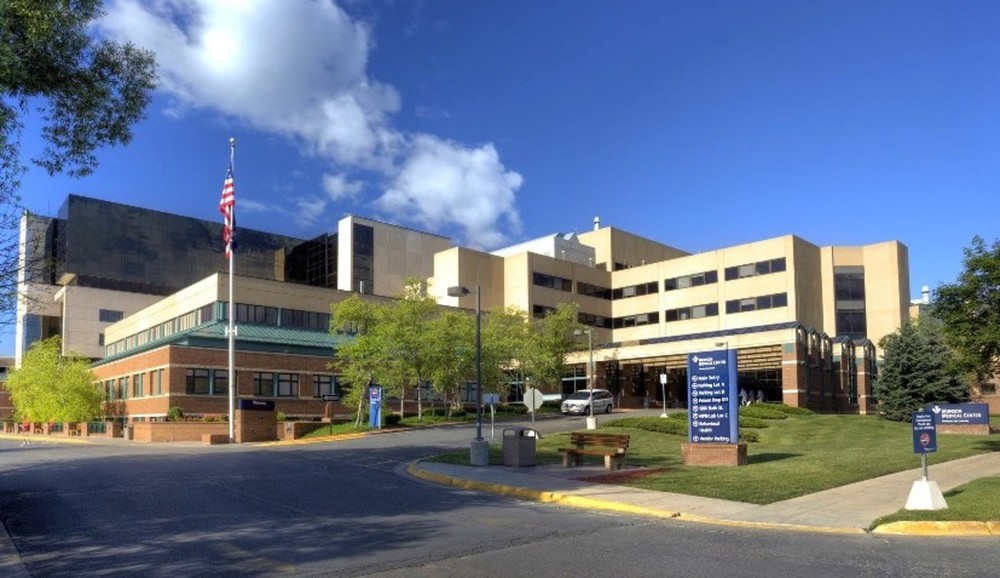
Michigan native Joe du Lac was announced in May as the new president of Munson Medical Center. Du Lac comes to Munson from Kalamazoo-based Bronson Healthcare group, where he served as a senior vice president. Prior to that, he held executive leadership positions at Trinity Health of New England and the Detroit Medical Center, among other roles.
The TCBN sat down with du Lac on his second day on the job in late June to learn more about his experience and vision.
What attracted you to this position?
One of the things that really drew me to Munson is the culture. The culture is very similar to the culture at Bronson. Very positive culture, very committed to the hospital and very committed to the community.
Bronson and Munson are both independent hospitals. What does that mean to you?
I worked for the Detroit Medical Center, which was a part of Tenet Healthcare, and at the time we had 80-something hospitals across the nation. Then I went to Trinity, and they had over 100 hospitals across the nation. And it was very difficult to get things done and make decisions because decisions had to go all the way up to the top. When I went to Bronson, we could make decisions very quickly and do the right thing quickly. It wasn't a shared decision about what was happening across the nation, it was about what was important for that community. And at Munson, it’s very much the same thing: quick and targeted decisions.
What will you bring to this role from your previous experience?
I actually started in the automotive industry. I was an engineer designing robots that put cars together. I worked my way up into leadership, and this is right when the automotive industry was just about ready to collapse. And then we started learning from Toyota things like lean manufacturing, Six Sigma and Kaizen (a Japanese concept of continuous, incremental improvement). I thought this was a way to save our organization, and we learned it together and the business really took off. It was amazing.
After some consulting, I eventually took a job at the Detroit Medical Center and thought it would be interesting to bring what I knew about this to healthcare. We did that there and turned all eight hospitals into lean hospitals, and then I followed the president out to Trinity and we did the same thing there. At Bronson, I got there to the tune of about a $20 million loss (per year), and when I left were running in 5% or 6% margins. I want to bring that management system here and strengthen what we’re already doing.
Describe your leadership style.
My style is being a coach, a mentor and a servant leader. My job really is to make sure that my team has what they need to get the job done and a clear vision as to where we’re going.
What are your top priorities for the first few months? The first year?
That’s a tough question (since I just started). What I'm going to do is just really learn what's going on here, learn the hospital, learn the people, learn what's important to them, where they may have shortcomings, where they may see the hot spots are that need immediate attention. And more importantly, I want to learn what’s going on in the community.
What is Munson already doing well?
I think most obviously is the quality metrics are just outstanding. They provide high quality care and complex care. It’s a big hospital providing high level services.
What does Munson need to improve upon?
I don’t know. Again, I’m in the learning phase. So looking at all of the metrics, looking at the financials and trying to understand what’s going on, what the situation is today. I really can’t answer where I’m going to focus.
What are the biggest opportunities going forward?
Wherever I have gone, I focus on quality and patient experience. You can solve many, many problems with those two drivers. Those are things I work on.
What about opportunities in technology or other areas?
Artificial intelligence is changing the world. It’s the next internet. Back at Bronson, we were experimenting with AI in a bunch of different areas. It’s really about understanding where we can use it and where we can apply that to support what we're already doing.
What are the biggest challenges going forward?
There's really only one thing that keeps me up at night, and that's the One Big Beautiful Bill and the cost pressures we're going to be facing in the future. It’s going to put a ton of pressure on rural hospitals like ours, and we’re going to have to run very, very efficiently to make it through those upcoming cost pressures. Medicaid and Medicare reimbursements are going to drop.
(Megan Brown, Munson’s chief marketing and communications officer, adds more context: About 70% of our revenue comes from government payments, and about 30% is private pay. We expect that between 10 to 15% of our patients are going to lose their insurance. Then what happens is that these people don't get preventative care, and by the time they do come to us, they're very sick without insurance. And we have to treat them regardless. It could really drive up costs. This all goes into effect January of 2027. By 2032, we expect to lose at least $50 million a year.)
What about costs and staffing?
Costs are constantly increasing and staffing is constantly going in the wrong direction. There are fewer and fewer nurses, so we’re struggling in those areas. To combat that, we need to become more efficient as a health system and as a healthcare industry. I think perhaps one of the reasons that Munson chose me over other candidates is my ability to drive the cost down and improve those efficiencies to maintain our competitive nature, to be able to recruit and combat those escalating costs.
If you could accomplish one goal during your tenure here, what would it be?
At Bronson, we wanted to become a national award-winning hospital that reflects or represents the pride of our community. And I want to do the same thing here. If you're a national award winner, that means you're providing high quality care at the lowest possible cost. You're doing the right thing for the patient, and you also want the community to say, 'That's my hospital and I'm proud that that's my hospital.' If I can do that here, that would be a success for me.
How was your first day?
My first day was just great. I actually texted my wife and said how great it was. The people are really who I thought they were. Down to earth, salt of the earth people. This hospital is in great shape. It’s a wonderful medical center. There’s no burning platform or anything. It’s going very well.