Help (Really) Wanted: Local dealerships, auto shops desperate for automotive technicians
October 2026
How big is the need for automotive technicians in the region?
Dan Korte would hire 30 tomorrow if he could. That’s not a typo.
Korte is fixed operations director at Serra Traverse City, which operates several dealerships and repair centers in the area. He’s looking for more than just a few good men (or women) to get under the hood.
“I’ve got a shortage in every one of our buildings and every one of our brands,” he said.
This, of course, directly impacts the bottom line. Fewer workers means less work, and less work means less revenue. It’s also not ideal for the loyal customer base that Korte greatly values.
“A technician can only work on one car at a time, so the number of technicians directly dictates the number of cars we can get in,” he said. “We’re in a growing area and there’s a growing need for work to be done on cars, and when we’re booking all the way out to six, seven or eight weeks, that’s not good for anybody. It’s not good for the customer experience and it’s not good for our growth.”
In a situation that’s repeating itself with many positions across several industries in the region, automotive shops of all kinds are desperate for technicians. From entry level folks to master technicians, Korte (who already employs 84) estimates there’s an immediate need for at least 100 between all of the region’s employers.
Root causes
This acute lack of workers has several root causes, industry folks say. The first is a decades-long push for kids to go to college instead of trade school. Though the tide is turning on that front, there’s still a lingering stigma for this and other blue-collar jobs.
“We’re still getting beat up from that a bit – 'Go the college route, not the technical route’ – but that’s changing. It’s shifting,” Korte said. “We’re seeing the bubble on that.”
Another is (surprise, surprise) housing. This is especially true when local employers try to lure good workers from more populated areas downstate.
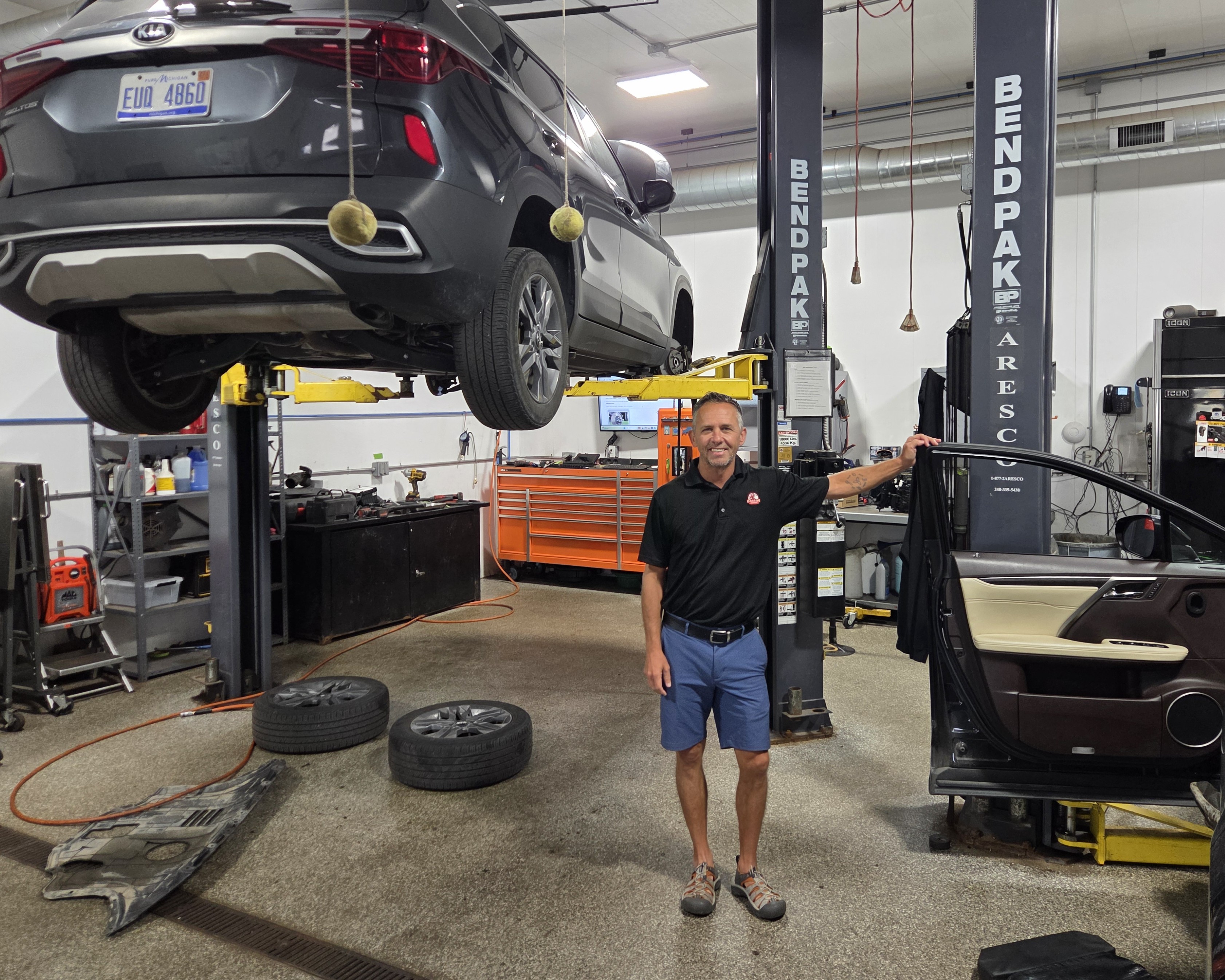 Laferriere
“A couple years ago I had a potential employee that I had found through Indeed. We had a great conversation. He really wanted to be in Northern Michigan … and we worked our tail off to try and get him in a top-level wage, more than he was making downstate,” said Jamie Laferriere, owner of Dave’s Garage in Traverse City, Elk Rapids and Gaylord. “But housing killed it.”
The potential hire backed out when he realized he’d get half the house for the same money here, Laferriere says, and he’d have to live out a good distance from town to boot.
Laferriere says the industry also lags behind others, even in the blue-collar world, in terms of employee compensation. Not so much on pay, he says, but things like time off, health insurance and other perks and benefits.
“The amount of people that we have coming into the trade has diminished, so that is an issue, but the inability for employers to adapt to the needs of their employees is a huge part of it too,” Laferriere said. “In our field, there’s a lot of businesses that have archaic and completely outdated compensation models and approaches to benefits and time off.”
That said, even the worst of these employers are often paying way more than most people think. Korte believes a lack of awareness on this front might even be the number one reason for the lack of potential candidates.
“You can make a ton of money in this business. I mean, some of my technicians make six figures. A lot of them do,” Korte said. “I don't think anybody ever thought you could make that type of money being a grease monkey. So lot of people don’t understand that this is a great career. People just don’t know the opportunity that’s sitting right here.”
Reversing the trend
Employers are attacking the problem from a few different angles. Korte talks about “removing every roadblock.”
“If somebody wakes up this morning and says, ‘You know what? I think I want to be a technician.' Perfect. Come knock on my door. I’ll get your tools, I get you training, we'll get you uniforms, we'll get you started,” he said. “For the guy that wants to move up from downstate, we're going to help find some housing. We're going to help with relocation costs and things like that. I just try to remove all of those obstacles.”
That first part is key. In addition to getting the word out that these jobs pay well, Korte is trying to spread the word that schooling, certifications and experience are nice – but definitely not required. Because it’s nearly impossible to find seasoned workers, Serra and other shops are willing to train.
“I've had some interesting interviews with folks that come in and they want to interview for an entry level porter or something,” Korte said. “I’ll start interviewing them,
and they’ll say, ‘I’ve never worked professionally, but I've been wrenching on cars since I was eight, and I really want to be a technician one day.’ Well, why not today? If you have the aptitude for it, we’ll teach you the rest. I have guys who started out just like that who are now master technicians.”
It’s the same at Dave’s Garage, where Laferriere talks about the need for a “farm team.”
“We went through such a long period where we couldn't find those really top-level technicians, so we just started growing them,” Laferriere said. “We have an apprentice program where we bring guys in, we train them, we license them, and one of them is now a co-owner of our company. We’ve got shop foremen that started as trainees.”
The shops have also worked to convert workers from related fields.
“One of my great employees was working as a maintenance technician at a hotel chain. Doing a little bit of this, a little bit of that, fixing pool pumps, you name it. He has a gift to mechanically understand things, and we hit it off,” Laferriere said. “So we got him as an apprentice. We grew him. He was able to get all certifications and become a master technician, and now he's our shop foreman in Gaylord. If we can find someone who has talent, we’re going to develop it.”
Laferriere says his shop is also all in on sweetening the pot for prospective hires and current employees.
“As a small business, we've doubled down on the benefit side of things. Full, 100% funded insurance, PTO, profit sharing, things like that,” he said. “I can be in direct competition with some of the large employers and still draw people in. Right now I employ a number of folks that have migrated from other businesses locally because of the benefits that we offer.”
Korte, who believes that too many people are overlooking this industry, continues to shout from the mountaintops about how well-compensated, well-respected and in-demand auto tech jobs actually are.
“Number one, for me, is letting the public know,” he said. “I just don’t think there’s an understanding of how big the need is and what the opportunity is. You can make good money, work indoors … and I’ll pay you to start learning here. It’s a great career to have, and there’s a ton of opportunity within this career. It’s not what your grandpa used to do.”
While these employers will take mostly anyone, regardless of experience, some things are deal breakers. They’re encountering a troubling lack of “soft skills” – things like reliability, effective communication and interpersonal skills – particularly with younger people. Korte stresses the importance of great attendance, attitude and work ethic. He can teach the rest.
“We work as teams here, so you work in a vehicle as an individual, but you're still within a team of advisors, managers and your peers,” he said. “You better be able to make eye contact, have a conversation, work within that environment.”
The pipeline
Two local programs serve to get more people into the industry: The high school auto repair program at Northwest Education Services’ Career Tech campus and Northwestern Michigan College’s automotive technology program.
Korte is on the advisory board for both and is deeply appreciative of these programs, which continue to produce employees. While not every kid who takes the career tech class ends up as an automotive technician, the NMC students are in extremely high demand and have virtually 100% job placement.
“I like to say I could probably put at least two jobs on each of my students if they wanted them,” said Wayne Moody, the longtime head of NMC’s program.
The NMC program is proud of not only training new technicians, but re-training existing techs within the growing field of electric vehicle maintenance, Moody says. The
.jpg) Moody
Moodyprogram continues to grow, with 64 kids enrolled last year, up from 44 the year before.
“I think there's a couple of reasons for it. The word is finally getting around that technicians can really make some serious money compared to what they used to,” Moody said. “And then we have the (community college guarantee) in which newer high school graduates can get free tuition if they go to a two-year community college.”
The NMC program enjoys a great relationship with local auto shops, Moody says.
“We get tremendous support from Serra and all the dealerships and whatnot. They're just wanting to get as many as they can … and they’re always willing to donate what we need,” Moody said. “And that tells a story right there that they're confident in what we're teaching.”
An advisory board of those dealerships (along with smaller, independent auto shops and other local industry figures) helps guide the NMC program. Moody says he’s well aware of their need for better soft skills, so that's a big part of his program.
“We teach that responsibility and job etiquette and work ethics is as important, or more important, than the technical training itself,” Moody said.