The Leelanau Problem: Cab startup, BATA attempt to address ongoing transit woes
October 2026
It’s hard to catch a ride in Leelanau County.
Despite Leelanau landing on every top 10 list imaginable, soaring real estate prices and record visitation at popular attractions, people who don’t want to drive face limited options for getting around.
Ride shares like Uber exist, but they are nearly useless due to a very low number of drivers. Cab companies also operate, but most are located in Traverse City and have limited practical availability up in Leelanau. Public transportation is available – even in an on-demand service similar to a taxi – but not around the clock, and with longer wait times in certain areas of the county.
Enter Leelanau Transportation, a relatively new company started by the husband-and-wife team of Kim and Jim Robb. While they’ll pick you up for a wine tour if need be, they’re just as excited to offer functional transportation for full-time and seasonal residents who need to get from point A to point B.
Meanwhile, the Bay Area Transportation Authority (BATA) continues to shore up service in Michigan’s “little finger” and hopes that people are aware of all of its options there.
Leelanau Transportation
The seeds for Leelanau Transportation were planted as Kim Robb managed Aurora Cellars for years and handled more than 100 weddings there. She got tired of having to tell people there wasn’t a way for them or their guests to easily get around.
“All the time I had to say ‘No, I’m sorry,’ or ‘No, there isn’t,’" she said. “There was nothing I could do for them. And it wasn’t just to and from the airport; it was anywhere. And they were always surprised that there wasn’t an option that made sense.”
So she and Jim – a retired oil and gas man – started Leelanau Transportation in late 2025. It was just the two of them for a bit, but they just hired one driver and hope to hire several more.
They strategically positioned themselves in Cedar – the geographic heart of the county – to be within striking distance of as many clients as possible.
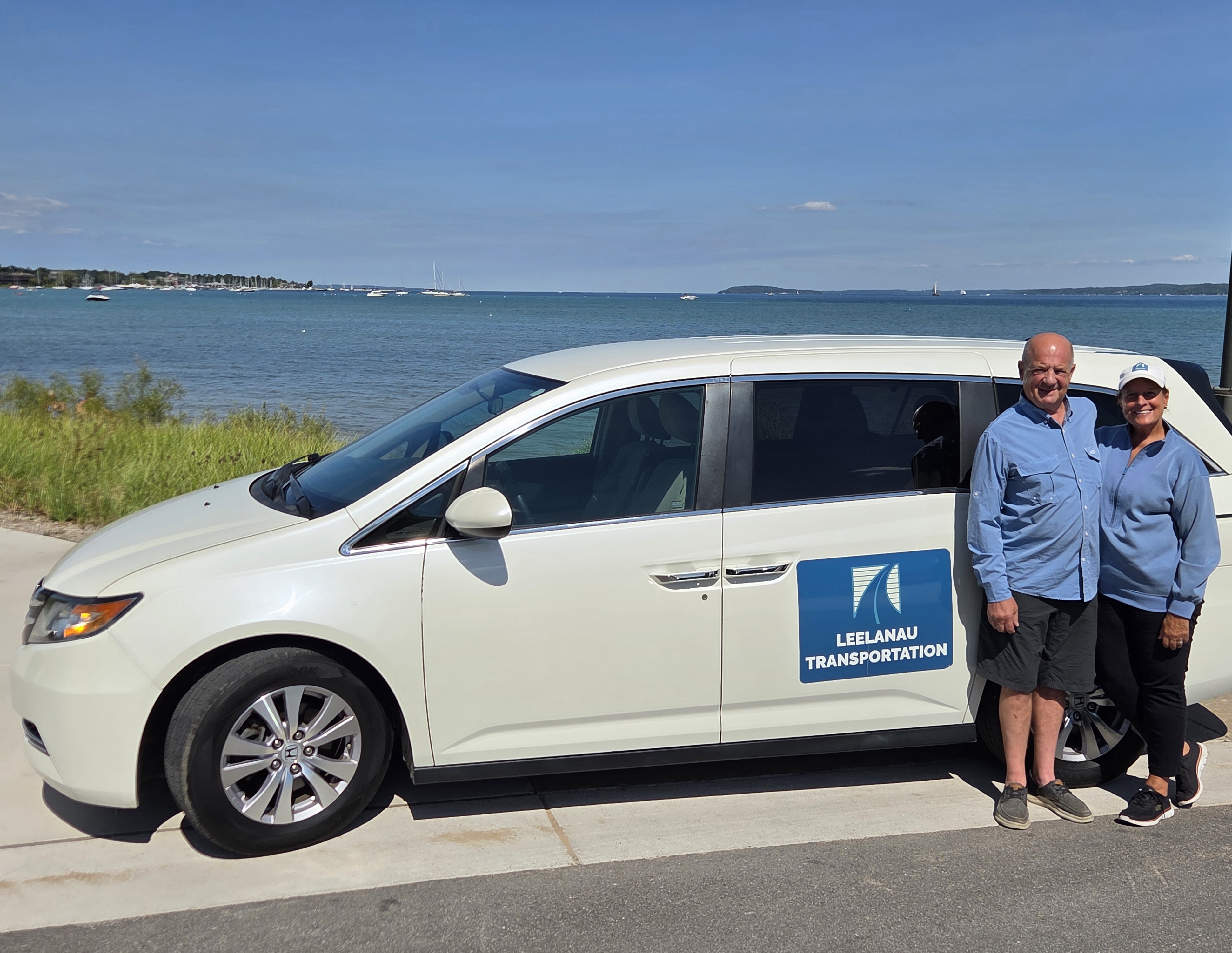 Jim and KIm Robb
“Everybody is so spread out,” Kim said. “The customers are not concentrated anywhere.”
Leelanau's housing is more than 50% second homes and a large chunk of the Robbs’ business has become taking people to and from the airport. It's a mix of seasonal residents and their many guests as well.
“Family and friends don’t want to bother their hosts to drive them or pick them up from the airport, so either the host books us directly or passes our number along,” Kim said. “That market alone is probably our biggest from May through October.”
That’s a common factor in their business, the Robbs say. After all, it takes a while to drive from the far reaches of the county into town.
“I’ve had people say it so many times: ‘Yeah, I’ve got a friend, but this takes two hours,’’ Jim said. “They don’t want to waste their friends' and families' time.”
They also schedule up to a year in advance, which they’re finding is very useful for people who hire them as an integral part of their plans. Customers coming out of town for pre-planned golf trips, for instance, need something set in stone.
“These people have organized an outing, and they’re not going to stand on the curb and try to wave down (a cab). Part of their travel package needs to include transportation,” Kim said. “It can't be an afterthought, especially when you have things timed out like that.”
But they also want to be available on an as-needed basis. Not long ago, they came to the rescue of an out-of-town pair who took an Uber to Leland from Traverse City, but got stranded there and couldn’t find a way home.
“They spent hours trying to find a ride, but couldn’t get anyone. Somehow they found our number,” Jim said. “They had already walked 5.6 miles to that gas station on M-204, and they were going to walk all the way to Traverse City.”
Admittedly, a lot of their clientele is affluent (one had Jim pick them up off the yacht in Leland and take them to Williamsburg to get a hunting dog puppy) but their rates are not unreasonable. A ride is usually between $100 and $200, with up to seven people accommodated.
“We are not black tie limos, but we’re also not a BATA bus," Kim said. "We charge what we charge."
Rates are dependent on the drive time involved (which is usually, but not always, tied to distance) and what time of day (or night) the ride is requested.
“There are flights that arrive at midnight here, and there are flights that leave at 5:40am. Those are really, really popular for our people because they really don't have anyone to take them,” Kim said. “So that's our higher end.”
Demand is very strong and the Robbs want to hire more drivers, but they want to be extremely cautious in doing so. They recently hired one after a careful search.
“We want to grow, but we will only hire someone that is safe, reliable, polite and good with time management,” Kim said. “This is not an easy job to do … we’re not just driving people from the bar to the Delamar.”
BATA
BATA has two fixed, regular routes in Leelanau County. One travels between Traverse City and Glen Arbor, and the other between Traverse City and Suttons Bay/Peshawbestown. These buses depart every two to three hours and make several stops along the way, so while they are critical to certain area residents, they aren’t practical for a lot of transportation needs.
BATA’s Link service is an on-demand, door-to-door operation in which buses or vans can pick you up and take you anywhere within BATA’s service area of Grand Traverse and Leelanau counties. And for only $6 a ride, that’s one heck of a deal.
The catch? Link doesn’t operate around the clock and is offered on a first-come, first-serve basis. BATA leaders also try to prioritize senior or disabled riders. But it’s worth a call, BATA leaders say, and more than 12,000 Link rides are provided in Leelanau County alone each year.
“As you can imagine this is a very popular service … and keeping up with demand can be challenging, especially with the lack of other transportation options in Leelanau County like taxis, Lyft and Uber,” BATA Communications Director Eric Lingaur said. “That’s why other transportation services like Share Care’s volunteer transportation service for seniors and the new Leelanau Transportation are important to help provide as many options as possible.”
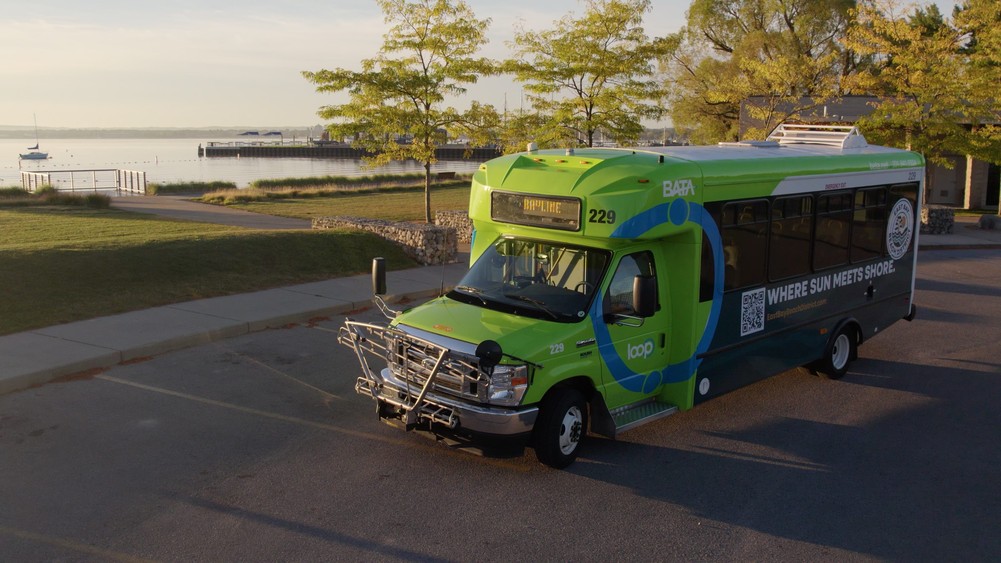
In Leelanau, and indeed throughout its entire service area, BATA is trying to build back staffing (and thus service levels) that have in many ways not recovered since the pandemic. BATA is “always looking for ways to modify and improve service in Leelanau County … by making effective use of its people, fleet, and funding,” Lingaur said.
“BATA has experimented with various pilot services and route configurations in Leelanau County over the years and continues to explore ways to add the right type of service that meets resident and visitor needs,” he said.
Ultimately, BATA’s staffing levels will continue to dictate just how much service is offered, especially in far-reaching locales.
“Recruiting and hiring great drivers and finding the right service to meet demand are also some of the biggest challenges BATA faces,” Lingaur said. “BATA has been actively recruiting more drivers in the effort to shore up our staffing footprint to be able to add service and expand hours and frequency.”