Still Writing Their Stories: Traverse City's 7Over70 are not slowing down
October 2026
Is 70 the new 60? The new 50? You could come to either conclusion based on our latest 7Over70 class, a group of impressive 70 and 80-somethings who are still trailblazing and moving the local economic needle in unique ways. From farmers to philanthropists to career journeymen, join us in celebrating this bunch – the TCBN's first 7Over70 honorees since 2019.

Jim Bardenhagen
How it all began: Bardenhagen grew up on his family’s centennial farm in Suttons Bay, graduated from Leland Public School in 1962 and went to Michigan State University where he earned his bachelor’s degree in marketing and transportation. His career initially led him to New York, where he took a job with the chemical company Union Carbide in 1966. In 1980, Bardenhagen chose a different path. “I decided to move back to Suttons Bay and purchase the family farm from my father, who was ready to retire,” he said.
Most memorable roles: “One job I had at Union Carbide was to manage the department tracking railcars from the plants to the customers,” Bardenhagen recalled. At the time, tracking was done through telex, a text-based telecommunications system that sent messages between teleprinters using telephone lines. Bardenhagen oversaw the transition from telex-based tracking to early desktop computers. Later, after pivoting to agriculture, Bardenhagen was appointed by the U.S. Secretary of Agriculture as a member of the Federal Crop Insurance Board. “I served for eight years as specialty ag crop board member, with colleagues from across the country who remain close friends to this day,” he said.
Best decision: “Returning home to farm and joining the MSU Extension,” Bardenhagen said. He took the latter role in 1987, serving for 20 years as county extension director for Leelanau County. “I really enjoyed trying to provide Leelanau County farmers with information they needed to operate their farms successfully.”
If you could change one thing: Bardenhagen insists he is the rare person with no major regrets, though he does wish farming was more rewarding financially. "It’s a lot of work for marginal gain some years," he said.
Credit where it’s due: Jim Nugent, former chair of the Michigan Tree Fruit Commission and also a previous MSU Extension director for Leelanau County, “has been an important mentor in my time in MSU Extension, and an important friend since we both retired,” Bardenhagen said. He also points to his wife, Jan, as a key reason for his success, praising her as “so understanding, so helpful and encouraging over the years.”
Not slowing down: Bardenhagen sold the farm to his son Chris and daughter-in-law in 2023. He still helps out with day-to-day operations, but also stays busy elsewhere. “I’m the president of the Leelanau Peninsula Economic Foundation and president of the MI Farm Cooperative, a food hub with 25 growers producing locally grown products,” he said. “I also serve on the Leelanau Conservancy Farmland Committee, the Leelanau Housing Collaboration Committee and chair the Missions Committee for the Leland Community United Methodist church.”
Advice: “Serve your community, plan ahead, try to find jobs you’ll enjoy, and cherish your friends."

Lowell Gruman
How it began: “My path into finance was pure serendipity: physics at Dartmouth, philosophy at Edinburgh, then a job working in the chairman’s think tank at Citibank in Manhattan,” Gruman said. “That somehow grew into a 30-year career as a financial executive across southeast Asia, principally in Singapore.” Gruman and his wife moved to Traverse City in 2010, a decision motivated by the “boyhood summers” he’d spent on Crystal Lake. “While raising our children in Asia was an incredible opportunity, we wanted our children to know what it was to be American kids – at least for the summers,” he added.
Most memorable roles: “While overseeing the H.J. Heinz businesses in Asia, I found myself trapped in a noodle factory in Central Java when the Indonesian government fell in 1998 during the Asian financial crisis,” Gruman recalled. “Civil order had disappeared, along with the electricity and telephone service. I had more than 800 workers to protect inside a walled compound, and a mob outside the gates with torches and pitchforks, howling for the foreigners to be handed over for ‘punishment.’ We escaped those terrifying hours in a way that seems obvious in retrospect: we tossed hundreds of boxes of instant noodles over the gate, after which the mob disbanded and went home to eat.”
Best decision: “Marrying my wife, Mary, in 1983,” Gruman said. “We'd met on Wall Street, where she worked, and we were able to spend some time in settings around the world before we married during Christmas week. She joined me in Manila for six months before we moved to Seoul, then Hong Kong, then Jakarta and finally Singapore.”
If I could change one thing: Gruman describes himself as “an avid amateur musician,” with proficiency in everything from the guitar to the trombone to the bass fiddle. While he loves playing with family and friends, he often wonders “where a career in music might have taken us.”
Credit where it’s due: “While serving together on the board at Interlochen Center for the Arts, Casey Cowell and I discovered we shared a vision for building a resilient Traverse City economy — one rooted in investing in early-stage, scalable businesses that create high-value jobs,” Gruman said. “We began working together in 2017 at Boomerang Catapult, which continues to provide fuel for growing world-class businesses in our wonderfully unique town.”
Not slowing down: In addition to his role at Boomerang Catapult, Gruman serves as board chair for the local startup Promethient and a director at 20Fathoms. He was also a key leader in the effort to convert the old Kmart building at Cherryland Center into the new home of the Traverse City Curling Club and the Traverse Symphony Orchestra. “Building, growing and shepherding intellectually challenging new businesses is my sport,” he said. “It's purposeful, I hope it's meaningful, and it's viscerally satisfying to know we're creating jobs and drawing new families and capital to Traverse City.”
Advice: “Imagine creatively. Work hard. And be kind.”
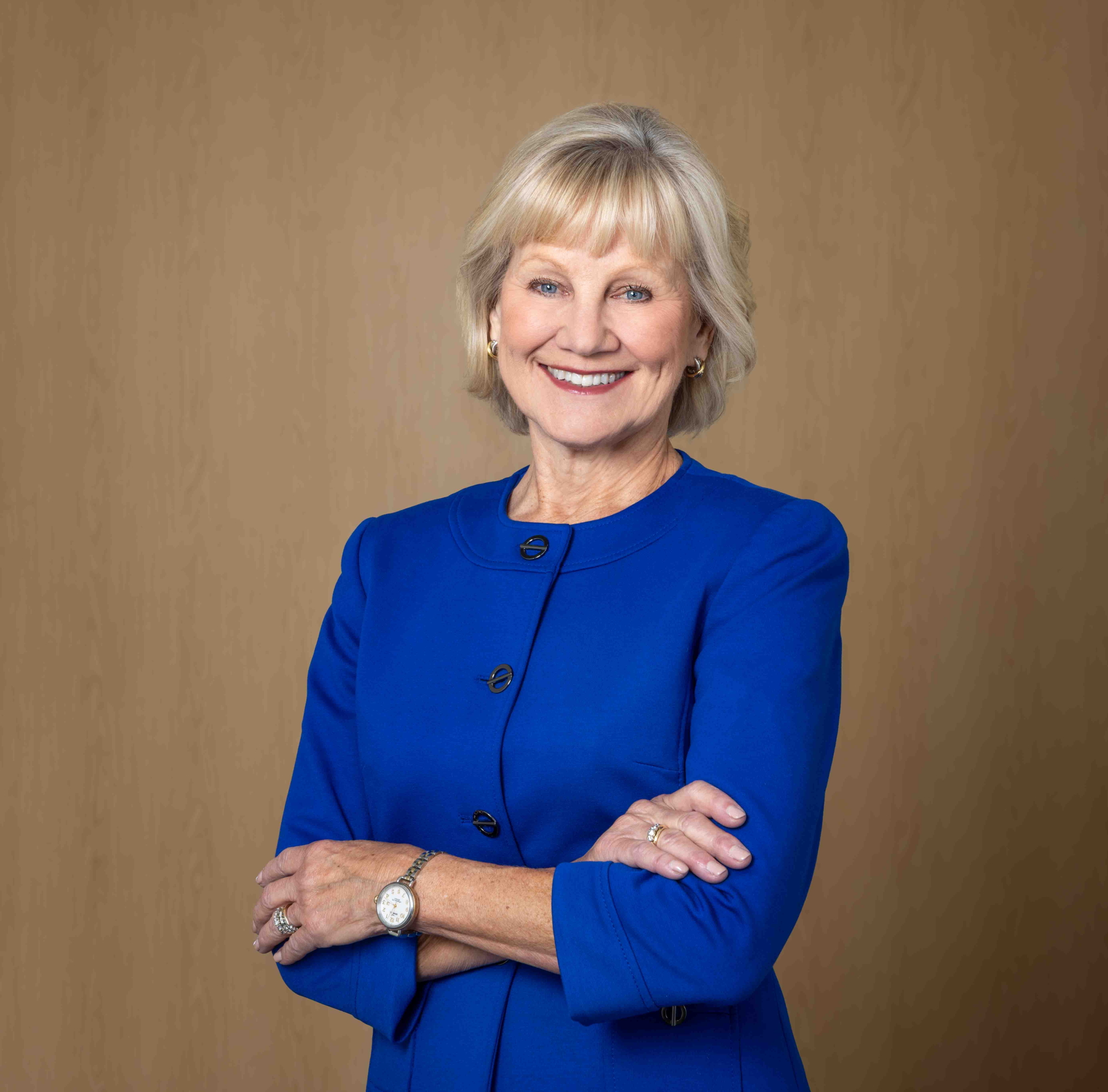
Peg Jonkhoff
How it all began: Raised in Leelanau County by “role model parents,” Jonkhoff caught the business bug by watching her mom and dad manage their home building business. Another key role model was her aunt Dorothy, a retired Rand McNally cartographer who owned the Glen Lake Workshop and taught Jonkhoff “so much about business operations.” Jonkhoff got to put those lessons into practice for Milliken’s department store first as a youth advisory council member during her high school years, and later as the store’s junior department buyer.
Most memorable roles: Jonkhoff is proudest of “helping to carry on her family’s funeral service legacy” as a 30-year co-owner of Reynolds Jonkhoff Funeral Home. Nearly as memorable, though, were community service leadership roles with organizations like the Traverse City Area Chamber of Commerce (now Traverse Connect), the Traverse City Country Club, Zonta Club, the National Cherry Festival and the Northwestern Michigan College Foundation Board.
Best decision: It’s a tie, Jonkhoff says, between marrying her husband Dan and starting their family together, and sticking around northern Michigan after high school so she could keep working with her “Milliken’s family” while also attending classes at NMC. The former decision led to two daughters, Christy and Lindsey, who now run Reynolds Jonkhoff. The latter forged deep, life-long roots in Traverse City, even after Jonkhoff transferred to Ferris State University to finish her schooling.
If you could change one thing: “I wish I had kept playing piano,” Jonkhoff said. She studied the instrument for eight years when she was younger.
Credit where it’s due: “There are so many people that I credit with key lessons learned,” Jonkhoff said. “In particular, I think of my parents, John and Nancy Lanham, who taught me the joys of faith, family and meaningful work; Ann McHuron, a long-time leader at Milliken’s, who taught me fair and consistent team management; Jeanne Snow, the first executive director of the Grand Traverse Regional Community Foundation and a true determined visionary; and Fran Gingras, my business advisor.”
Not slowing down: Having just celebrated her 70th birthday, Jonkhoff is the youngest person on our 7Over70 list this year. The milestone capped a busy year, which included working on anniversary celebrations for both NMC and the National Cherry Festival, serving as a “transition team” member for Mission Hill Church’s new lead pastor search, and chairing the Zonta Club’s Festival of Trees Tall Tree Gallery. Jonkhoff was also honored this year with the NMC Fellow award and Zonta Club’s OWL (Outstanding Woman Leader) award. Looking forward, she says one of her key goals “is to help Michele Howard and her crew at the Traverse Area District Library transition history-related materials to the Carnegie building,” in hopes of creating a new “history hub” in Traverse City.
Advice: “Prioritize time with family and friends, as you cannot get it back, ever. Become involved with organizations or projects that you are passionate about and help make a difference with dream teams. Continue learning and meeting new people while nurturing your current relationships. Finally, work smarter, not harder: delegate responsibility, strive for a work/play balance and enjoy the gift of each day.”

Marty Lagina
How it all began: A proud Yooper born in Iron Mountain to second-generation immigrants, Lagina got his undergraduate degree at Michigan Tech and then went to work in the oil fields of Michigan. Admission to the University of Michigan law school briefly pulled him away, but the energy industry continued to beckon, and Lagina ended up starting his own oil drilling company while still in school. “I got a J.D. and passed the bar, but then decided drilling oil wells was more fun than practicing law,” he said.
Memorable roles: “Years ago, my brother Rick and I decided that we would figure out what the hell happened on Oak Island, regarding the unsolved 200-year treasure hunt there,” Lagina said, referencing the famously mysterious island off the coast of Nova Scotia. Hollywood came calling and the concept birthed the History Channel’s long-running "The Curse of Oak Island" TV show. That series – and the treasure hunt – continues to this day.
Best decision: While he's quick to note that his best decisions in life all have to do with his family, Lagina points to “deciding that I had a chance to have a good career without working for somebody else” as his key business decision. Though the oil company he started in college drilled 14 dry holes to start, the 15th yielded “a really good, prolific oil well” – and made Lagina’s career. He ended up selling the company for a hefty sum at the age of 40, but not before helping develop a revolutionary technology “that led to greatly enhanced energy reserves in the United States.”
If you could change one thing: “Occasionally, I think I should have sought a political position when I was younger, because when I see the state of politics in the U.S. right now, I think maybe I could help – and certainly couldn’t hurt!” Lagina said.
Credit where it’s due: Lagina points to his high school physics teacher, “who convinced my mother to let me go to Alaska when I was 17.” He credits that formative precollege adventure for teaching him “all about hard work.”
Not slowing down: Lagina still has plenty on his plate. He remains chief executive of Heritage Sustainable Energy, the company he established in 2004 to develop wind and solar energy projects in Michigan. He also owns Traverse City’s Mari Vineyards, and is still dedicated to the goal of “making world-class wine” in the Mitten. And, as "The Curse of Oak Island" approaches its 14th season (premiering in November), he’s as bent as ever on solving the island’s centuries-old mysteries.
Advice: “Be willing to compromise,” Lagina urged. “Everything seems so polarizing to me now – nationally, statewide and locally. That’s not good. In my view, people need to refrain from being sure they’re right and the other guy is wrong, or that the people who disagree with you are evil. The truth is usually somewhere in between, and meeting in the middle is often a good thing.”

Tom Menzel
How it all began: Menzel was born in northern Michigan 82 years ago. “When I left to go to college in 1962, Grand Traverse County was 17,000 people,” he recalled. “Everybody knew my name because my dad was head basketball coach for 26 years and athletic director, and my mother taught first grade in East Bay Elementary.” Menzel matriculated to Valparaiso University in Indiana, then started his career working in public affairs for Allstate Insurance. Years and many jobs later – including for the likes of Xerox, McGraw Hill and Leelanau Industries – Menzel started his own consulting firm in Chicago, aimed at being a “change agent” for underperforming companies.
Most memorable roles: A “change agent” is exactly how Menzel came to be known in northern Michigan. After serving as alderman and then mayor for Rolling Meadows, Illinois, Menzel decided to retire to his home in northern Michigan in 2006. In actuality, he took the executive director job for the National Cherry Festival, which he says was spiraling at the time. “I don't think too many know this, but when I took the festival over, it had 6 to 9 months before it was going to go bankrupt.” Menzel reorganized the business structure, drastically downsized the 87-person staff, and established what he calls “a firm foundation” for the future. “People were surprised when I left for three years, but I've always liked to change things,” he said. “I don't like being a maintenance manager.” Similar changemaking stints followed at BATA, where Menzel served as executive director from 2009 to 2015; and Grand Traverse County, where he stepped into the role of county administrator from 2015 to 2017.
Best decision: “Listening to the advice of my parents, which was to remember that the right thing is not the easiest thing to do, but the thing that will deliver the best long-term results,” Menzel said. “I was always able to differentiate myself from a lot of other managers, because I was willing to make the tough calls up front. Most would prefer not to do that, to get away from controversy.”
If you could change one thing: Menzel says his biggest regrets all came from not trusting his instincts. “Once, I had to hire a CFO for one of the organizations I ran, and there was this candidate who just interviewed perfectly, but I just felt there was something that didn’t fit,” he said. “I was getting a lot of pressure from the staff, who really liked this candidate, so I listened to them and hired him anyway. I fired him six months later. I learned then that there are some things you can’t put your finger on, but If you don't go with your intuitive skills, you'll have problems.”
Credit where it’s due: Menzel points to a trio of one-time Cherry Festival colleagues: Bruce Rogers, his predecessor as executive director; Chuck Judson, the organization’s attorney at the time; and Wes Nelson, who served as board president. “It was a really tough quarter when I started that job, and if I hadn’t had those three supporting me, I wouldn’t have been able to turn things around,” Menzel said.
Not slowing down: Menzel owns and operates Menzel Orchards, a fruit farm on Old Mission Peninsula. He also led the charge to bring the Cinema Society, a popular cinephiles club based in San Diego, to Traverse City. The club, essentially a membership-oriented film series, will kick off at the City Opera House this fall.
Advice: “You’ve got to continue to find ways to improve yourself,” Menzel said. “I took nine courses last year, on everything from AI to Galileo. I’m 82 years old and I’m still learning. I meet interesting people, I get to see different points of view, and it keeps me cognitive, alert and alive.”

Jim Milligan
How it all began: Growing up in Ohio, Milligan’s one great love was basketball, and he had dreams of playing professionally. “By early college, it had become pretty clear I wasn't going to make a career of that passion,” he said. Rather than following in his father’s footsteps – Milligan’s dad had graduated from the University of Michigan law school – he “set off down a corporate sales and marketing path.” Soon, he’d been recruited by the multinational conglomerate 3M, where he “grew into all sorts of leadership roles, including international business.” It was in the course of that work, Milligan said, that building businesses became his new lifelong passion.
Most memorable roles: “When 3M spun off five of its business divisions into what became Imation, I was appointed managing director of the company's subsidiary in Mexico,” Milligan said. Imation specialized in data storage products, including the SuperDisk (a floppy disk alternative), magnetic tape, and later, CD-R and flash drive technology. “It was a thrill to recruit a leadership team, open an office, and build a new culture from the ground up, all while living in Mexico and learning everything I could about the country,” Milligan added, noting that the experience “is what lit my entrepreneurial candle.”
Best decision: “It took me twenty years to turn my five-year plan of moving to Traverse City into reality, but at the end of 2007 it finally happened,” Milligan joked. He and his wife had recently sent their daughters off to college and were adapting to life as empty nesters. Milligan seized the chance to take early retirement from the corporate world at the age of 55, and then it was off to northern Michigan. “I had an oil and vinegar tasting room concept in my back pocket, and it was clear that Traverse City was the place to start with Fustini's Oils & Vinegars,” he said.
If you could change one thing: “I wish I had struck out on my own earlier, but there was real security in a corporate career while we were saving to put our children through college,” Milligan said. “At the time, that priority came ahead of scratching the entrepreneurial itch.”
Credit where it’s due: “I owe a great deal of credit for establishing Fustini's to my original management team,” Milligan said. “We started and built the brand and the business together over the first decade and more: Liz Lancashire in Traverse City, Charlene Hunt in Petoskey, Denise Walburg in Holland, and Jill Bakewell in Kerrytown and Ann Arbor. Their legacy lives on.”
Not slowing down: Now 73, Milligan is still at the helm of the Fustini’s empire, where he says he is “currently heads-down building the leadership team and a broader, deeper foundation to scale the business into its next phase.” That phase, he notes, is about growing the business and “providing even greater experiences for our customers, our staff, and our community partners.” Crucially, Milligan says the current planning process is also about getting the business to the point where it can function “without my day-to-day involvement in operations.”
Advice: “Try lots of different experiences to find your passion,” Milligan said. “Don't be shy about asking for help and advice. Dream big, and work hard.”
 Photo credit: Jacqueline Southby Photography
Diana Milock
How it all began: Milock was born in southern California and spent most of her childhood in Orange County. Then, when she was 12, Milock’s family relocated to Michigan, “to an old schoolhouse that was five miles out of town, on a dirt road.” The culture shock, from big population cluster to rural small town, was real, and it didn’t help that Milock’s parents had “old-fashioned ideas” that meant her brothers were allowed to go to college but she wasn’t. Married at 17, and a mother shortly after, Milock started rectifying the situation when her son was three. “I felt like I did not know how to raise this child, so I went to the local community college and took a bunch of classes,” she said. Those years birthed a lifelong love for education – and for helping the less fortunate access it.
Most memorable roles: Working with a group of parents and teachers in Mancelona, Milock helped launch an organization called Communities in Schools, which supports students in poorer areas to make sure their needs are met and they can stay in school. Years later, the organization has a presence in eight school districts in northwest Michigan.
Best decision: “Deciding that I couldn’t be a stay-at-home parent,” Milock chuckled. “After six months, I said, ‘No, that’s enough.’ I found it boring. Instead, Milock got heavily involved in her kids’ school, serving as president of the PTO and sitting on multiple teacher committees. “I really dug into trying to improve the educational process for all kids, and became the go-between for the education system and the community.”
If you could change one thing: “I wish that I had believed in myself enough, or had some adult who saw something in me, so that I could have gone to college,” Milock said. Asked what she would have studied, she points to library science. “I’ve loved to read since I was four; I love bookstores, I love libraries, and I think being a librarian would have made me really happy.”
Credit where it’s due: “Being involved in Traverse City, there are so many people who I've looked at and admired, and I always tell them ‘I want to be you when I grow up,’ even though I’m older than a lot of them,” Milock said. “Susie Janis, Anne Stanton, Deb Lake, Christie Minervini – all these women who just have the courage to do. It was really special for me to have women that I saw as being very accomplished and very capable, who would spend time with me and then find things in me to admire. That changed my life.”
Not slowing down: Milock and her husband Richard are among the region’s top philanthropists, having supported everything from NMC to the National Writers Series to the Traverse City Film Festival. She’s passing that baton to her sons, who work with her to run the Begonia Charitable Foundation. “They came to me and said, ‘We don’t know how to give money, and you and dad to it all the time,” she said.
Advice: “I want to tell young women: Make decisions for yourself. Don’t put everyone else first, because you aren’t going to be helpful to anyone if you don’t take care of yourself. I want young women to decide what they love, and what they want their lives to look like, and then find a way to do that.”