Occupational Therapy: A growing healthcare career flying under the radar
November 2026
 Cook
Hype over AI has made industries once viewed as stable career paths feel shaky with one big exception: healthcare.
With workers falling into short supply, there’s no algorithm that can replace these hands-on roles, and as the next generation mulls their future employment, occupational therapy (OT) is one role that’s surprisingly flying under the radar.
The U.S. Bureau of Labor Statistics projects 15% growth in the profession by 2035, with a median hourly wage of $48.24. And unlike a lot of other healthcare jobs, OTs don’t have to wield needles or surgical tools.
As northern Michigan’s rehabilitation needs increase, here’s what we learned from five occupational therapy professionals about our region’s demand for services, employment needs and where (and how) to pursue the education needed to land an OT job.
Despite being more than a century old, occupational therapy can be hard to define by title alone. Julie Cook, an occupational therapist of 34 years and clinical director of Traverse City's Life Beyond Barriers Rehabilitation Group, explained that OTs help patients develop or regain the motor, sensory, cognitive and social-emotional skills needed for everyday life. That might mean helping a child with dyslexia use voice-to-text apps at school or guiding someone recovering from a stroke through new routines that support greater independence.
Even babies can benefit from OT. Cook recalls her dad once asking why an infant might need the therapy.
“I shared some of the ‘occupations’ of an infant, including feeding, self-soothing, sleep, and play," she said.
Demand from both ends of the age spectrum
Unlike physical and speech therapies, which are also offered at Life Beyond Barriers, OT services aren’t wait listed. Still, OT referrals have steadily climbed in number and scope, says Cook, with earlier diagnosis for age-related cognitive impairment and dementia helping to drive the spike.
 Zietz
Pediatric rehabilitation visits in the region – including management of medically fragile and premature infants – are also on the rise. At Mary Free Bed at Munson Healthcare – which employs 65 occupation therapists over a dozen locations – visits for pediatric physical therapy, occupational therapy, speech-language therapy and feeding therapy rose from 5,825 to 6,048 over the most recent rolling year, according to Alisha Reichenbach, assistant manager for outpatient rehabilitation and pediatric OT.
Occupational therapy visits outpaced the combined pediatric services, increasing from 1,610 to 1,766 — a 9.69% year-over-year jump and a trend that Reichenbach says she doesn’t expect to fall anytime soon.
“We anticipate continued growth in the upcoming year,” she said.
OT opportunities (and pitfalls)
Nationally, there’s an ongoing shortage of occupational therapists, with an average of 10,000 openings annually driven by replacement demand. By 2030, that shortage is expected to reach all 50 states. Locally, the shortage is thus far less pronounced, though a scan of job boards for Grand Traverse, Leelanau, Benzie and surrounding counties finds there’s at least a dozen occupational therapy openings, all ranging from $40 to $53 per hour. The pay, even if it does pale slightly against wages in metro areas, is a plus.
So is the ability to jump into a healthcare role that doesn’t have to mean clocking into a sterile setting every day. For prospective therapists, the wide scope of patients, life stages and settings that call for an occupational therapist means it doesn’t have to be a one-size-fits all job, which was one of the greatest draws for Tiffany Roberts, an OT and certified lymphedema therapist at Munson’s Foster Family Community Health Center.
“I love working with people and I love talking and educating, so it felt like a perfect match,” said Roberts, who found that of all of the healthcare paths she was exploring during college, occupational therapy provided “the greatest level of patient engagement” no matter the setting.
Haley Zietz, a treating occupational therapist at Life Beyond Barriers echoes that.
“I feel like occupational therapy is such an amazing profession because of the opportunities to do so much with it,” she said.
 Reichenbach
But the same breadth of possibility that attracts job-seekers, and the chance to find the just-right fit, can also make recruitment harder up here, where overall openings – and types of openings – are constricted compared to places like Grand Rapids and Detroit.
“I think that drastic range … may add to the challenges with filling some of the more traditional roles,” especially in rural areas, said Zietz.
“I also feel like opportunities for many of these to be more remote positions, or the growth of travel therapy companies have also added to this (workforce shortage) situation,” she said.
Meanwhile, “Working in a healthcare field is becoming more and more challenging,” clinical director Cook said, pointing out that cuts to reimbursement from insurance companies have put extra pressure on the existing workforce.
Not to mention, it’s an expensive education that requires completing a master of occupational therapy to the tune of up to six-figures in academic costs, something Cook believes has become discouraging to potential students.
Students can start their OT pathway close to home
Tasked with exploring those financial and logistical barriers that keep northern Michigan students from entering the healthcare pipeline is Kelly Aubry, a Grand Valley State University professor of allied health sciences at its Traverse City campus and coordinator for Northern Michigan programs in the College of Health Professions.
 Aubry
Aubry explained that the first place for prospective OT students to start is completing their bachelor's degree.
“The bachelor’s degree and prerequisite coursework portion is very accessible in northern Michigan,” she said.
For college students who want to stick close to home, NMC offers concurrent enrollment at Grand Valley State University, allowing them to complete as many credits as possible through community college before finishing their bachelor’s degree locally through GVSU – an arrangement that also helps students save on tuition.
Once graduates begin their MOT program, a little required travel to Grand Rapids and in-person study ramps up since students are “ultimately preparing to work directly with patients,” Aubry said, adding that occupational therapy isn’t relegated to new students.
“One of the really interesting things about healthcare education is that there isn't one typical student anymore,” noted Aubry. “We have traditional students who know from a young age who know they want to work in healthcare, but we also see people who discover healthcare later in life or decide to change careers.”
For those applicants, becoming an occupational therapist might be even easier, with some colleges now offering credit for prior industry experience. And while the degree can open up doors all over the country, as a born-and-raised northern Michigander, she’s especially motivated to help future OTs who want to work here to find the means to study here too.
“Research has shown that students who are educated in rural communities are more likely to stay and practice in those communities,” Aubry noted. “So creating more opportunities for students to complete their education here can have a real impact on the healthcare workforce in Northern Michigan.”
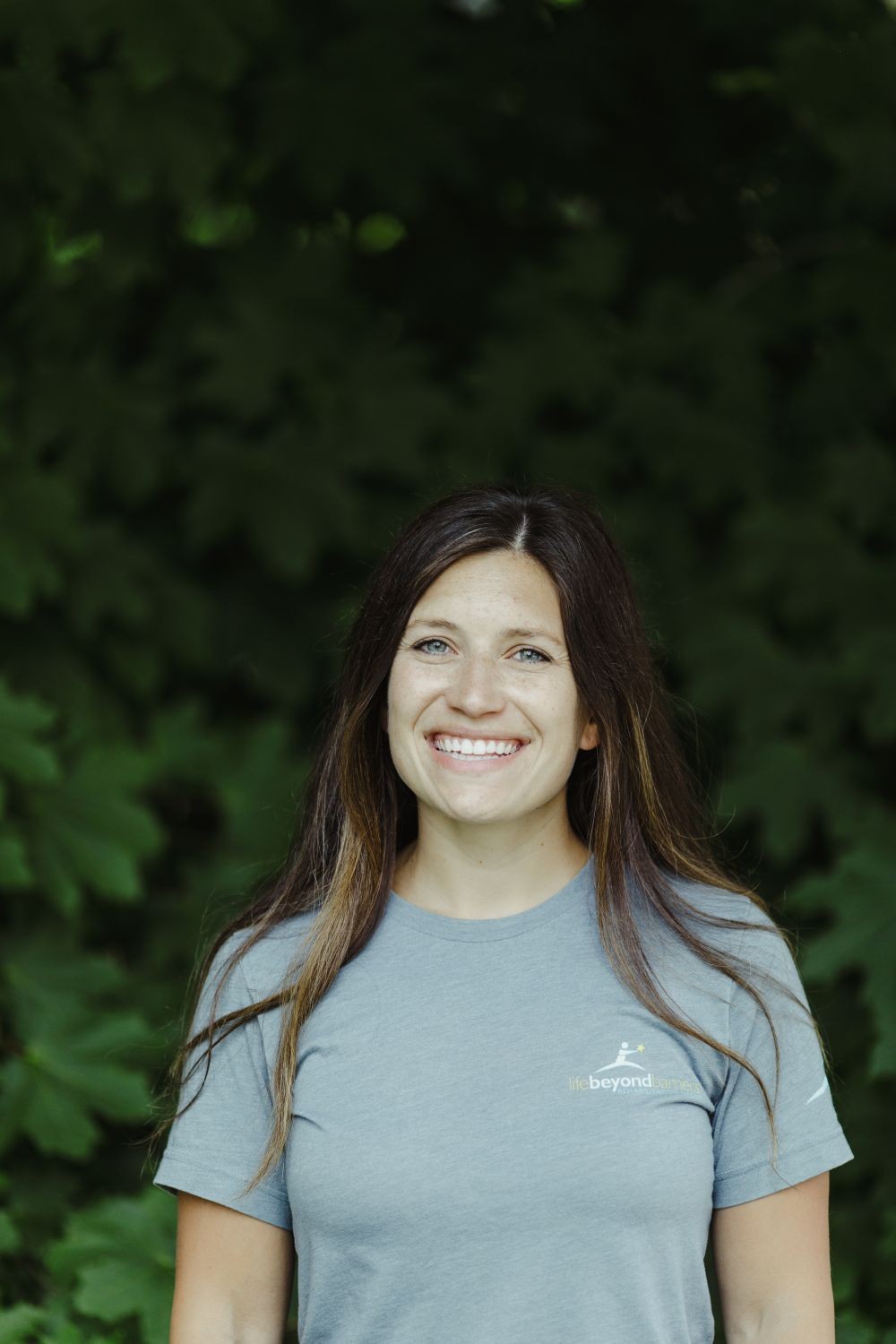
Pictured: Haley Zietz of Life Beyond Barriers Rehabilitation Group in Traverse City