WHAT2WATCH: What will make headlines in 2026?
January 2026
What stories will we be talking about this year in and around Traverse City? The TCBN looked into the crystal ball and predicted the more than 20 people, places, products and projects we’ll be watching in 2026, from a new Meijer and film festival to arts funding and new home building innovations.
Meijer expects to break ground this year on Blair Township supercenter

If all goes according to plan, 2026 should be the year that Grand Traverse County gets a third Meijer.
The Ticker (TCBN’s sister publication) broke the news in March that the retail giant was actively planning a roughly 160,000 square foot supercenter with a gas station, drive through pharmacy, garden center and more for a 33-acre site just west of Menards near Chums Corner. As a frame of reference, the Acme store is about 190,000 square feet and the U.S. 31 store is about 220,000 square feet.
In a letter of intent to Blair Township, Meijer’s representatives made the case for the need to provide services to the “greater southern Traverse City area.”
Like other Meijer stores – including the existing Traverse City location on US-31 and the Acme location on M-72 – the Chums Corner location will have alcohol sales, a bottle return area, and clothing and other general merchandise including toys, pet supplies, sporting goods, electronics, home and auto maintenance supplies, and health and beauty products.
The planned site will feature outlot spaces that could be developed in the future, though those would be subject to separate planning and approval processes.
Meijer is working with the Michigan Department of Transportation on access issues to the site, with the likely end result being a new traffic signal aligned with East Commerce Drive near Michigan Trailers, about a half mile from the U.S. 31/M-37 intersection.
Blair Township Supervisor Nicole Blonshine told TCBN in December that Meijer had completed all approvals as far as the township was concerned. Meijer spokeswoman Erin Cataldo told TCBN that construction will be underway relatively soon.
“Construction plans are still fluid, but we anticipate breaking ground in 2026,” she said. “We appreciate all the support from the Traverse City community, and look forward to being able to serve more customers south of town with this new store, as well as expand our local partnerships to continue investing in local teams and nonprofits."
Meijer is the latest of several major developments to recently come to Blair Township, including Blain’s Farm & Fleet, Amazon, and a new workforce housing development called Corners Crossing now under construction that will bring almost 200 apartments to Deronda Drive.
New lodging tax for hotels, short-term rentals?
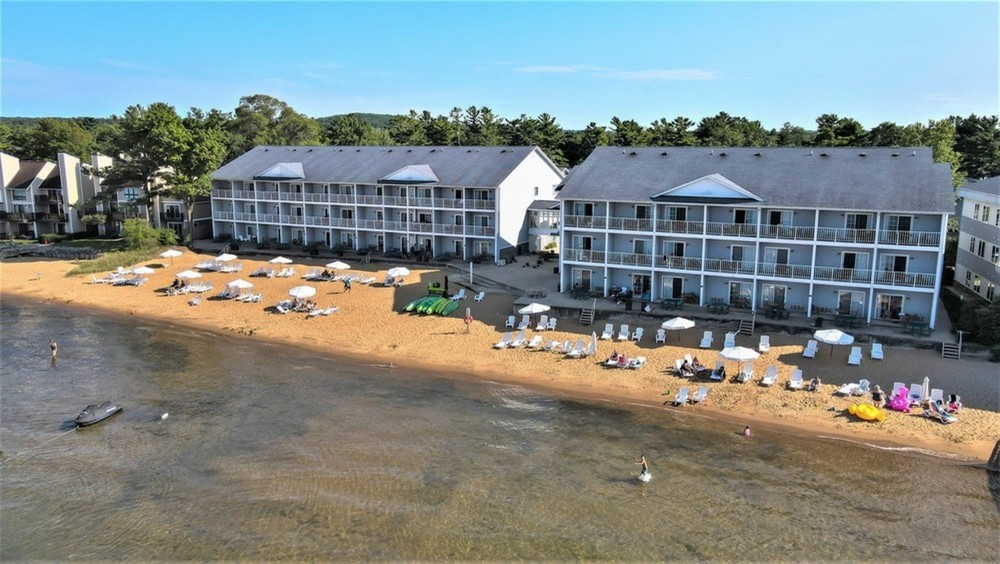
A new package of bills co-sponsored by State Representative John Roth (R-Interlochen) would make it possible for voters to opt their county or local unit of government into a new 3% excise tax for hotels, motels and short-term rentals (STRs). Those tax revenues could then be used for things like infrastructure and emergency services – a way to “help tourist-heavy areas offset the additional cost of hosting visitors,” according to bill co-sponsor Mark Tisdel (R-Rochester Hills).
While Roth is doubtful the bills will pass as written, he’s hopeful they will ignite a dialogue around equitable distribution of tourism revenues in Michigan.
“I really consider these bills vehicle bills,” Roth said. “I don't know that they'll end up going through, but I really think they’ve restarted the conversation. The restaurants, the lodging industry, the convention-and-visitors bureaus (CVBs), the Michigan Township Association, the Michigan Municipal League – they’re all talking again. And I think there’s recognition … that some of these funds need to go back to the local governments to help take care of infrastructure – whether that be sewers, fire or inspections of short-term rentals.”
Notably, the legislation has the backing of Airbnb, which has become an increasingly large part of northern Michigan’s tourism economy in recent years. A fall 2025 report from The Ticker found that the north coast region of Michigan boasts more than 9,000 active STRs during the peak summer tourism season.
For his part, Trevor Tkach, who leads the local CVB, Traverse City Tourism (TCT), takes issue with Airbnb’s role in the legislation. TCT is funded by an existing 5% assessment on member hotels, motels and other lodging properties, but STR operators only pay into the organization if they operate more than 10 units. Tkach wants a more level playing field for hotels – something this legislation wouldn’t provide.
“Platforms like Airbnb – and the STR owners they represent – have been the beneficiaries of a longstanding system that supports Michigan’s visitor economy,” Tkach said. “Rather than helping ensure that their members are fully compliant with the existing system and paying their fair share, Airbnb has created a distraction by introducing an entirely different plan. If implemented, their plan would raise taxes on business owners who have been playing by the rules all along, while undermining the very framework the industry relies on.”
Old Mission wineries vs. township lawsuit stretches into sixth year

Will the lawsuit between the Wineries of Old Mission Peninsula (WOMP) and Peninsula Township ever end? That dispute will celebrate its six-year anniversary come October, and while 2025 saw some of the biggest developments yet, there’s still no clear end in sight.
In 2020, WOMP and its 11 member wineries filed a federal lawsuit against Peninsula Township, alleging that the township’s zoning laws violated the wineries’ rights under the First Amendment, the state's Commerce Clause and alcohol laws. At the crux of the lawsuit were township rules that had long barred wineries from hosting weddings or other events, but the filing also took issue with restrictions around advertising, merchandising and farming practices.
This past July, WOMP won a major victory when Judge Paul Maloney of the U.S. District Court for the Western District of Michigan collectively awarded the wineries $49 million in damages for being restricted from hosting events. Half a year later, though, those damages have yet to be paid. In October, the wineries made a settlement offer to Peninsula Township, but the terms have not been publicly disclosed, and no official settlement has been reached at this time.
In December, WOMP filed a new complaint, claiming Peninsula Township “has taken steps to delay meaningful settlement discussions and has continued to take enforcement actions against wineries for activities the federal court expressly held were lawful.” The allegation stems from a cease-and-desist letter Bonobo Winery received from township attorneys on November 21, threatening to revoke the winery's special use permit and “shut down operations over activities – including music, events, and food service – that the court specifically acknowledged Bonobo is permitted to conduct.”
For her part, Peninsula Township Supervisor Maura Sanders characterized the township’s letter to Bonobo as a way of seeking “clarification and compliance with existing special use permit conditions and township ordinances, including noise regulations.” The correspondence, she said, “was intended to open dialogue as well as an administrative review process that could proceed before the planning commission and township board to ensure all businesses operate within established community standards.” Sanders went on to criticize the wineries for choosing “to immediately escalate matters by pursuing federal litigation against the township.”
Mill District development on Woodmere underway
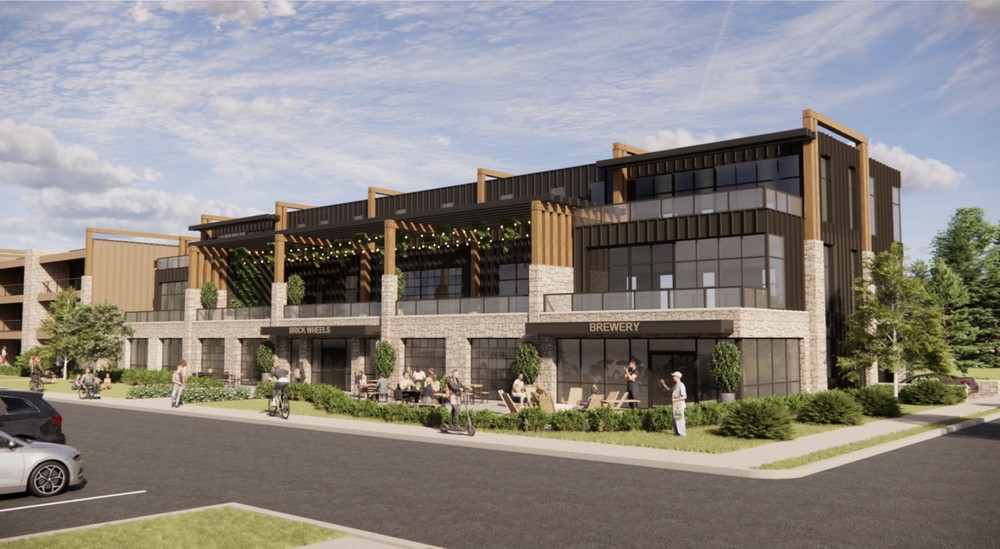 The Mill District will be a mixed development featuring retail, restaurant and residential spaces.
Construction is now underway on the Mill District, a major new project that will transform 1.6 acres of land at the corner of Woodmere Avenue and Carver Street into a mixed-use development featuring retail, restaurant and residential spaces.
The land was previously owned by TC Millworks, which sold it to Tim Pulliam of Keen Technical Solutions in 2022 after moving to a new facility on Aero Park Drive. Pulliam has been working on a redevelopment plan ever since, finally earning city commission's approval in August.
Pulliam and his partners plan to construct four new buildings on the Millworks property, including one commercial building and three residential buildings. Per a press release, a November 20 groundbreaking ceremony marked “the official transition from demolition into the construction phase as the team prepares to begin foundational work …”
In 2026, most of the construction at the site will focus on the commercial building, which has a targeted opening date of March 2027. That building will serve as the new headquarters for Brick Wheels, which will relocate from its long-time home on Eighth Street. Other businesses expected to set up shop there include a coffee shop and a restaurant. Pulliam told The Ticker that Brick Wheels and the coffee shop are expected to start operating at the Mill District in spring 2027, while the restaurant should open that summer.
“The restaurant group has been selected,” Pulliam said. “I can't share who quite yet, but I'm very excited for the concept and it will fit well with the vision we are trying to create.”
The commercial building will also include a handful of residential units, though Pulliam said “the exact mix isn't finalized” just yet. Later phases of the project will focus more heavily on market-rate housing.
Other planned amenities at the Mill District include a new connection to the Boardman Lake Loop Trail, a sidewalk along Carver Street and the paving of Sheffer Street, complete with public on-street parking.
Traverse City gets a new film festival
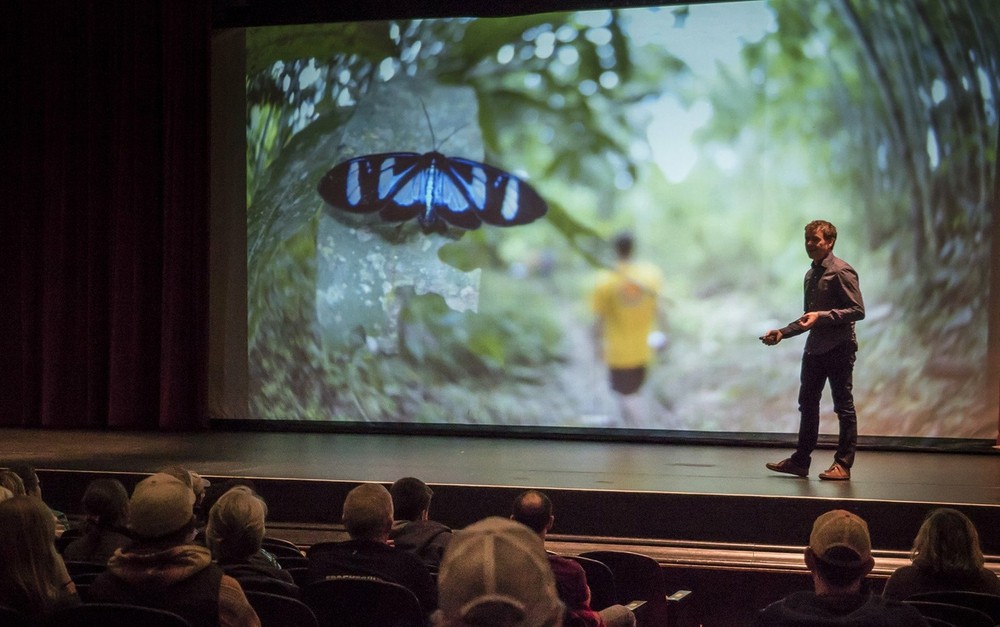
Three years after the Traverse City Film Festival (TCFF) drew to a close, a new film festival has found its way to Traverse City.
This spring, from Thursday, April 30 through Sunday, May 3, TC will host a satellite edition of Marquette’s Fresh Coast Film Festival, an outdoor-centric, conservation-focused, documentary-driven festival launched in 2016. Organizer Joe Beyer says the Traverse City version will maintain the spirit and traditions of the Marquette festival while adding its own spin – including spotlights on local filmmakers and a few forays into narrative films.
A Sundance Institute veteran, Beyer moved to Traverse City from Los Angeles in 2018 for what ended up being a brief stint as TCFF’s executive director. Later that same year, local film producer Nick Loud introduced Beyer to the Fresh Coast Film Festival, and he fell in love with it. Occurring in the middle of October, the Marquette festival quickly became an annual pilgrimage for Beyer and his friends. Eventually, he started wondering whether a Traverse City version might be possible.
It turned out the founders of Fresh Coast were looking for opportunities to expand, and a Traverse City version of the festival was born. The local version will show a selection of films from Fresh Coast’s 2025 slate, temporarily converting venues like the City Opera House, the Alluvion and Right Brain Brewery into movie houses.
Beyer is also in the process of curating a selection of more localized, fiction-forward content to give the festival its own identity.
“We really want to show student work from the area,” Beyer said. “I have been in touch with Interlochen, and we're talking to them about their students getting involved. But really, anything could come along from somebody that lives here or works here, and we’d be happy to take a look at it. Traverse City hasn't had a place to bring all of those projects together and celebrate them as a community, so this will be an outlet for things like that.”
Hagerty launches its return-to-the-office plan
One of the biggest local news stories of 2025 came from Hagerty, which in November announced a hybrid return-to-the-office plan for its northern Michigan employees. The plan, which is being referred to internally as “WorkForward,” will bring some 500 workers back downtown starting this year, and will likely reignite some of the economic impact Hagerty drove there prior to its pivot to remote work in 2020.
According to Coco Champagne, Hagerty’s chief human resources officer and chief administrative officer, the company has about 1,800 employees worldwide, 42% of whom live in Michigan.
Like most employers, Hagerty shifted gears to remote work in 2020 during the COVID-19 pandemic. Unlike most employers, the company never executed a true return-to-the-office plan, previously praising remote work for allowing it to “recruit talent that previously would not have been able to join us.”
WorkForward won’t ditch remote work entirely. An explanation of the plan posted to the Hagerty employee intranet – and obtained by the TCBN – states that the “first phase” will only affect team members “within a 20-mile commuting distance of the Traverse City office whose roles allow for regular in-person collaboration and cross-team interaction.” Those team members “will spend part of the week – typically Tuesday, Wednesday and Thursday – in the office.” Per Champagne, about 500 Hagerty employees are within driving distance of Traverse City.
Hagerty plans to kick off WorkForward in February, with company leaders starting hybrid schedules first. Traverse City team members will switch to hybrid the following month.
One person excited for WorkForward? Harry Burkholder, executive director for the Traverse City Downtown Development Authority.
“Hagerty’s return-to-office plan will bring renewed energy and daily activity back into the heart of downtown,” Burkholder said. “Increased foot traffic supports our small, locally-owned businesses, strengthens the vibrancy of our public spaces, and helps reinforce downtown as the region’s economic and cultural center. We appreciate [Hagerty’s] continued commitment to being a strong partner and pillar in keeping downtown thriving.”
The impact of nationwide arts funding cuts

Local arts organizations spent much of 2025 worrying about whether one of their key funding sources, the Michigan Arts and Culture Council (MACC) would disappear. In Fiscal Year 2025, MACC awarded more than $10 million statewide. During a combative state budgeting session that brought Michigan to the brink of a government shutdown, MACC funding was one of many expenditures Republican legislators put on the chopping block. The funding ultimately survived – and then some, with the 2026 budget including more than $12 million for MACC. But the worries aren’t gone for arts funding, which has also been a target of the Trump administration in its efforts to slash federal spending.
MACC uses an annual application process to distribute grants to arts organizations throughout Michigan. In 2025, 17 Grand Traverse County orgs applied for a combined $709,000 in grants. MACC ultimately awarded nine of those grants, worth over $243,000. Deb Jackson, executive director of Traverse City’s Old Town Playhouse, said this fall that her organization relies on MACC funds for things like replacing antiquated equipment and upgrading obsolete technology.
MACC funds may have been preserved for 2026, but arts organizations view that victory as just one battle won in a much larger war. Nationally, President Trump has called for the total elimination of the National Endowment for the Arts (NEA), which provides some of MACC’s annual funding. In the spring, Trump cancelled hundreds of open grants from the agency, including one that would have brought $10,000 in federal funds to the Traverse City Dance Project.
MACC’s 2026 fiscal year funding should at least dispel immediate existential threats for local arts organizations, but the worries aren't gone. On December 16, the Traverse City Philharmonic announced that $64,000 in Michigan state funding it was counting on had been "unexpectedly cancelled." That scuppered grant was part of nearly $645 million in previously approved funding that the Republican-controlled House budget committee. Beyond $1.9 million in slashed funding for symphony orchestras, the cuts affected programs in healthcare, economic development, law enforcement, and more. TC Phil has since launched a "keep the music playing" fundraising campaign to "bridge the gap" of the lost funding.
Capital campaigns all over
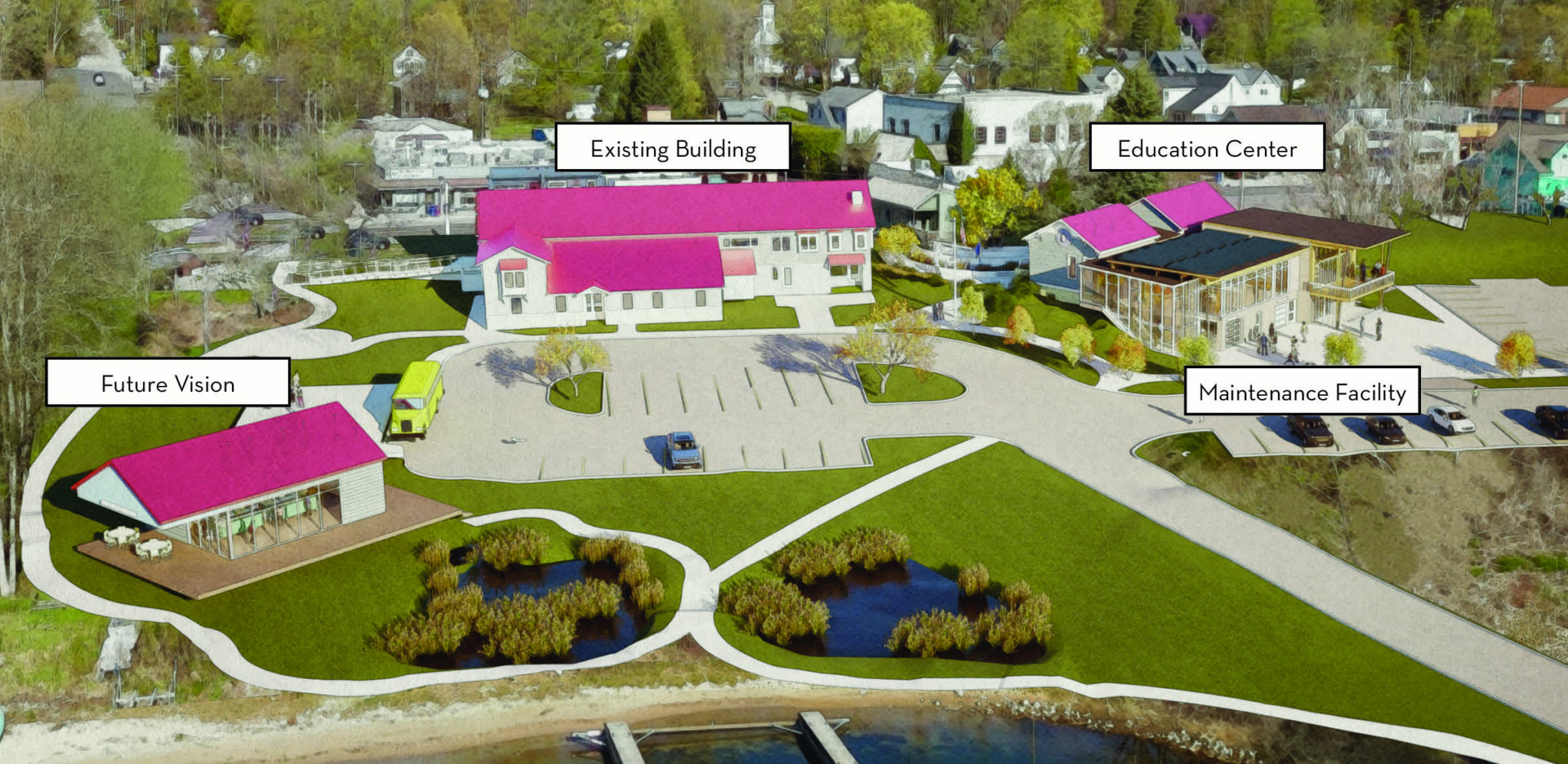 A rendering of ISEA's planned campus expansion.
The Leelanau Conservancy’s $8 million campaign to reimagine the Sugar Loaf property isn’t the only capital campaign making big waves in northern Michigan lately. Here are a few others that either recently finished or are just kicking into high gear.
Inland Seas Education Association (ISEA): In the summer, ISEA went public with its $11.1 million “Campaign for the Future of Great Lakes Education.” That fundraising effort has been running for years, and the quiet phase has already paid for major investments at the nonprofit – most notably its 2022 purchase of the schooner Alliance. The final public stages of the campaign are intended to finance the expansion of ISEA’s campus in Suttons Bay, including the purchase and renovation of a second building next door to the organization’s existing headquarters. The property, Suttons Bay’s historic Millside building, will become additional educational space and a boat maintenance workshop. Executive Director Fred Sitkins is hopeful construction on the project will start in May or June, with a completion target of spring 2027.
Women’s Resource Center (WRC): WRC is in the quiet stages of a $3 million campaign to renovate its transitional home. In addition to its 22-bed emergency shelter, WRC has a 12-bed transitional house where women fleeing abusive households can live for up to two years for affordable rates. According to Executive Director Juliette Schultz, the new campaign, called Home SAFE Home, will reimagine the transitional home from a community living layout to a more private environment, expanding the capacity from 12 to 16 in the process.
Northwestern Michigan College (NMC): This past spring, NMC’s Board of Trustees approved a $60,000 with Farmington Hills-based consulting firm the Winkler Group to conduct a comprehensive capital campaign feasibility study. As outlined in the study, the campaign would aim for $50 million to $75 million in fundraising, with a stretch goal of $100 million. According to a December memo from Katherine Marvin, vice president of college advancement for NMC, the college’s foundation now has the results of that feasibility study in hand, and will vote in February “whether or not to move forward with a comprehensive campaign.”
75th anniversary, Boardman Lake Campus sale spell big year for NMC
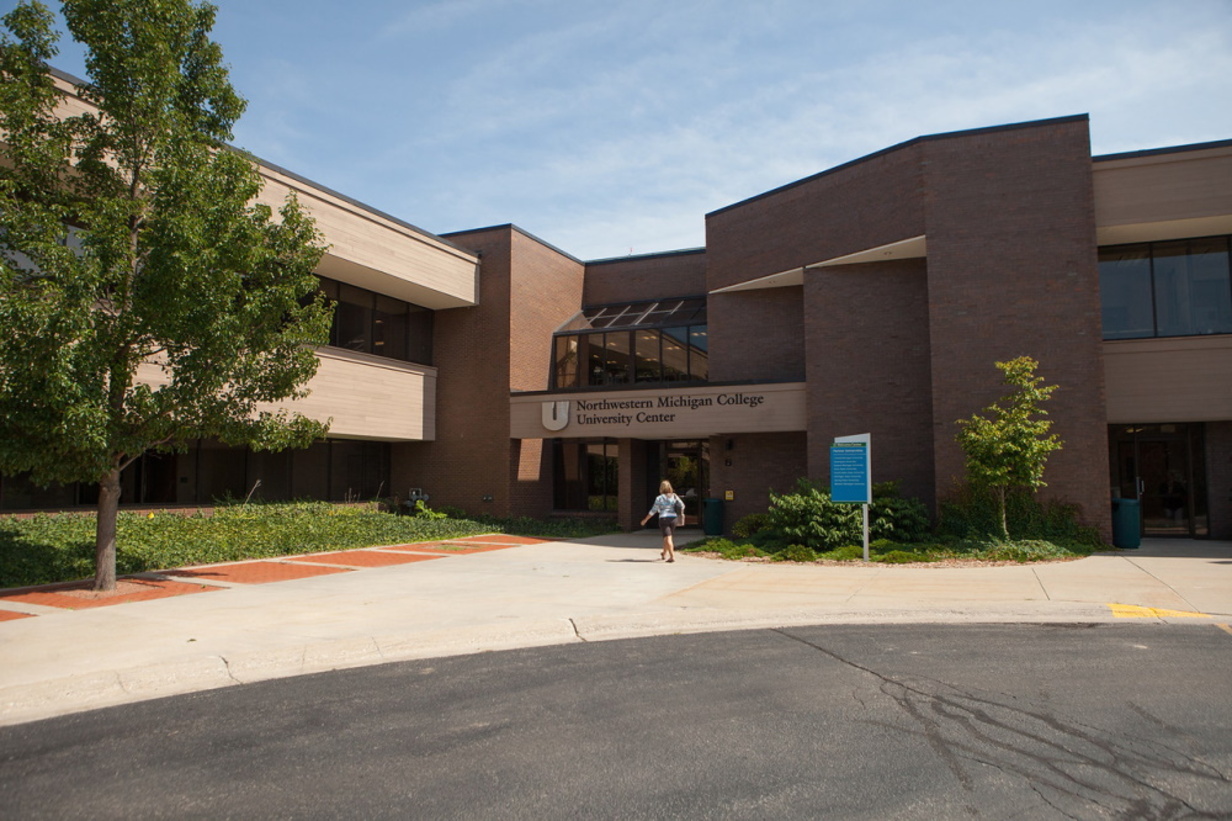 The potential sale of the Boardman Lake Campus is just one big item on the docket for NMC in 2026.
2026 will be a big year at Northwestern Michigan College (NMC).
In addition to the new capital campaign outlined above, Traverse City’s community college is preparing to celebrate its 75-year anniversary in 2026. Behind the scenes, NMC has been working on a list of its top 75 alumni, which will be unveiled this month. Other highlights will include events like a student and community block party on April 25, a “history walk” on July 25, and a Founder’s Day celebration on September 19.
Corresponding with the anniversary is the implementation of NMC’s new strategic plan, which will steer the college’s direction between 2026 and 2029. The plan, which NMC’s Board of Trustees approved at their December meeting, features three core strategies – future-focused education, enrollment and student success, and vibrant college community – each tied to 4-5 underlying objectives. Specific objectives include everything from strengthening outcomes through “responsible and effective use” of artificial intelligence, to expanding flexible learning options “so every student, especially adult, rural, and part-time learners, can advance toward employment or further education.”
The plan also hooks into NMC’s campus master plan, adopted in 2024. That document identified priorities like expanding on-campus student housing, transforming NMC’s Osterlin Building into a student services hub, and figuring out what to do with off-campus property holdings like a 22-acre parcel the college owns off Eastern Avenue.
While it remains to be seen whether any of those projects will see progress in 2026, at least one key NMC asset is headed for a major change. Also at their December meeting, the Board of Trustees voted to enter into negotiations with the Grand Traverse Band of Ottawa and Chippewa Indians (GTB) to sell its Boardman Lake Campus. That building, located off Cass Road, served as the NMC University Center for 30 years, before the college relocated its university partners to main campus this past fall. Selling the property to GTB would require NMC to find new locations for several departments, including its business and human resources offices and the NMC Foundation.
According to a tribal press release, GTB plans to "repurpose the facility as a centralized governmental services center dedicated to delivering programs and services for Grand Traverse County and the surrounding region."
A brand-new marijuana tax
 Lume opened its second marijuana dispensary in Traverse City in 2025.
When the Michigan legislature finally reached a budget compromise in October, it included a dagger for the state’s marijuana industry: a new 24% wholesale tax, projected to generate $420 million for the Michigan’s $1.8 billion road improvement plan. While the new tax reportedly helped legislators avoid sweeping budget cuts, it’s also drawn criticism from cannabis leaders who say it could destroy their industry.
“At a time when cannabis businesses already pay the highest federal taxes of any industry in the country, the state of Michigan is piling on with another 24%, so there will be an impact on our state’s entire cannabis industry,” Doug Hellyar, president and COO of Lume Cannabis Co., told the TCBN. Lume is one of Michigan’s leading marijuana companies, and has two locations in the City of Traverse City.
Lume is big enough that it can absorb some of the cost increases. Rather than a $10 product jumping to $12.40, for instance, Hellyar said customers can expect “most items that cost $10 today will increase anywhere from $0.60 to $1.20” when the new tax goes into effect Jan. 1, 2026.
Smaller operators could struggle, though. One example is Olean’s Northport, the lone dispensary in Leelanau County. Speaking to the Leelanau Ticker in October, Olean’s owner Daniel Caudill said “it was hard to make margins as it was,” and that Michigan’s new tax would push stores like his closer to the brink.
“The initial feeling is that, with all these additional taxes, a lot of the smaller players will have a much more difficult time, our store included,” Caudill said. “For now, it’s just a waiting game to see how things play out.”
If the tax does force industry consolidation, that will have an impact on local units of government. The Michigan Regulation and Taxation of Marihuana Act distributes some tax revenues from the state’s cannabis industry to each county and each city, township, or village in which dispensaries operate. For the 2024 fiscal year, Grand Traverse County received $931,658.56 in distributions from its 16 licensed dispensaries, while the City of Traverse City pocketed $756,972.58 from its 13 dispensaries.
AI steams ahead

It seems that artificial intelligence is all anyone wants to talk about these days. While it might be a few years before we can fully see how this rapidly developing technology will impact society (for better or for worse), one thing seems certain: It’s going to change the world.
From a business perspective, AI offers enormous potential benefits in terms of productivity, taking tasks that once took weeks or months and completing them in a matter of minutes or hours. This could substantially reduce costs for businesses, and ultimately, customers. There’s also been much discussion about AI replacing certain jobs altogether, especially analytical or data-heavy jobs that can be automated. Many business leaders feel pressure to begin exploring or implementing AI, or risk being left in the dust.
While there’s no question AI is starting (and will continue) to produce tangible business solutions, local tech leaders interviewed elsewhere in this issue feel that we’re in somewhat of an AI bubble as scores of solutions hit the market that are of questionable value. Start with a problem that needs to be solved, they say, instead of chasing the latest programs that stack up in the inbox promising world-changing results.
Many local business leaders have already implemented basic AI programs that help with generating written or visual content and automating various tasks. As many of these programs were unavailable even two to three years ago, and since advancements are happening at a faster pace than ever before, business and tech leaders look to see what 2026 will bring in terms of new, truly useful programs and solutions.
Compass/Anywhere merger: What will it mean for independent agencies?
A proposed $1.6 billion merger between the nation's two largest real estate companies could increase pressure on smaller, independent brokerages.
Announced in September and expected to be finalized sometime in 2026, the deal is between Madison, N.J.-based Anywhere Real Estate (owner of such nationally recognized brands as Century 21, Coldwell Banker and @properties) and New York-based Compass, the largest U.S. residential real estate brokerage by sales volume. The combined brokerage company is expected to be worth $10 billion and would create a combined 340,000-agent network, according to reporting by NPR.
Many local companies and agents – including some of the largest and most prominent groups in northern Michigan – will fall under the newly merged company. Leaders from Anywhere and Compass have communicated to their employees and agents that each company will continue to operate separately and independently, maintaining their own “distinctive brands, platforms, and cultures” for the time being. Whether that continues post-merger is something to keep an eye on.
While there may be significant benefits for agents in the newly merged company, some industry insiders caution that the consolidated behemoth may increase pressure on smaller, independent brokerages by wielding substantial competitive advantage in terms of marketing dollars, technology, superior data tools and much more.
Whether that comes to pass – or whether local, independent agencies will continue to hold their own, as they’ve always done, against larger companies with more resources – will be something to watch in 2026 and beyond.
$10M Loamstead Project to make hay this year

Plenty of food and wine eyes are on Leelanau County this year as The Loamstead Project takes shape.
The project is the brainchild of Amanda Danielson, best known as founder, co-owner and sommelier at Traverse City’s Trattoria Stella. She and partners are buying the Shady Lane Cellars property in Suttons Bay with visions of creating “a transformational rural development initiative rooted in regenerative agriculture, sustainable wine production and community education.”
The project will retain the branding, identity and team of the winery while also adding new components all around it, including a commercial kitchen, a culinary classroom, 8,500 square feet of new meeting and event space, and more.
The four-year, $10 million capital project is intended to transform “over 100 acres of Leelanau County vineyards and historic outbuildings into a working campus that connects researchers, students, farmers, and visitors from northern Michigan and beyond.”
The evolution is intended to accomplish one grand goal: turning Shady Lane and the Loamstead Project into examples for what northern Michigan wines – and northern Michigan ag in general – can be.
“We want to focus on quality and focus on making wines from Michigan-grown grapes, so we can show that northern Michigan wines belong on any table in any restaurant or any home around the world – and that they stand up in terms of quality to wines from other better known producing regions,” Danielson told The Ticker (TCBN’s sister publication). “We want to be able to say, ‘This is a way forward. This is a possibility for any winery or any small farm in the state.'”
Danielson says there will be a “slow roll” of changes this year as the project unfolds.
Businesses brace for major U.S. 31 overhaul this spring
Area residents have endured several major road rebuilding projects in recent years, with the complete, multi-year rebuild of Grandview Parkway/U.S. 31 from Garfield Road west up into M-22 in Leelanau County being the most notable.
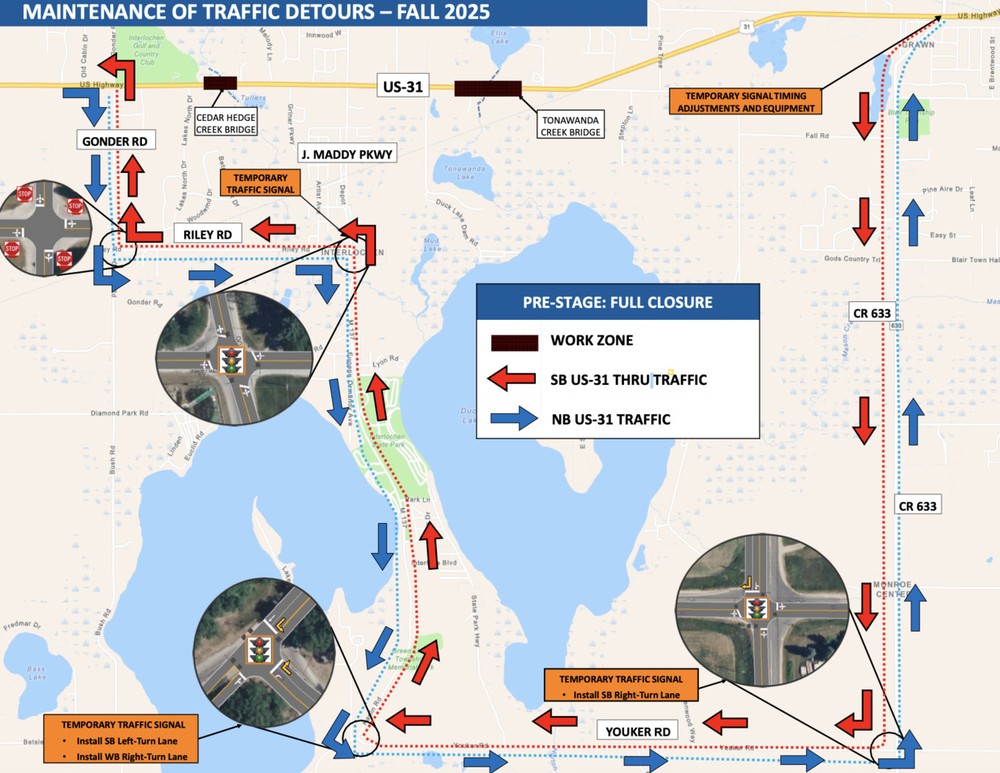
In 2026, crews are expected to break ground on a major, $37.5 million overhaul of U.S. 31 between Reynolds and Sullivan roads. The nearly eight-mile rebuild will includes a new roundabout at Interlochen Corners, the intersection of U.S. 31 and South Long Lake Road/J-Maddy Parkway.
Work is primarily safety-driven, according to MDOT Project Manager Lucas Porath, and includes adding center left turn lanes throughout the corridor, widening the shoulders and adding rumble strips. MDOT considered two options for the South Long Lake Road/J. Maddy Parkway intersection at Interlochen Corners – including signal modernization or a roundabout – and ultimately selected a two-lane roundabout as the planned design.
Significant detours are planned for construction, which is expected to start sometime in the spring and last through the fall. Crews will first rebuild U.S. 31 from Sullivan Road to Interlochen Corners and the roundabout, then build east to Reynolds Road.
Businesses in the region are bracing for impact, according to reporting by The Ticker (the TCBN’s sister publication), with many expressing hope that people will still put up with the construction to patronize their shops and restaurants.
Potential mortgage rate dip could spur housing market

A predicted dip in interest rates could make for a huge year in the mortgage market.
Industry observers say both new mortgages and refinances could spike if traditional 30-year mortgage rates drop to at or below 6% in 2026, down from around 7% to start 2025.
While it doesn’t seem like much, the National Association of Realtors (NAR) says that even a 1% decrease in rates could add about 5.5 million households, including 1.6 million renters, to the pool of potential buyers. Many of these people have been on the sidelines waiting for rates to drop before diving into the action.
NAR’s outlook factors in several influences on rates, including the Federal Reserve’s recent cuts to its short-term interest rates, ongoing inflation trends, the federal deficit and national debt, the impact of tariffs, quantitative tightening and movements in the 10-year Treasury yield, according to a story on its website.
The full effect of a dip in the Grand Traverse region, where demand continues to be strong for a relatively tight supply of homes despite high interest rates, remains to be seen. A full 45% of purchases in Leelanau County and 35% in Grand Traverse County are cash sales, taking mortgages out of the equation entirely.
Redevelopment of Sugar Loaf to begin

After more than a quarter century of dereliction, Sugar Loaf received a new lease on life when the owner gifted the property to the Leelanau Conservancy.
The donation by SPV 45 LLC, the ownership group that acquired Sugar Loaf in 2020, was contingent on the nonprofit’s ability to raise $8 million for a site plan. That goal was reached in fall 2025, and Brighid Driscoll, the communications director for the conservancy, says the property transfer will be completed this spring.
The conservancy has a five-year plan for completely restoring and opening the property. The long-term plan is to reopen the property as a four-season public recreation area with hiking, biking, snowshoeing and cross-country skiing trails, as well as family-friendly amenities like a sledding hill, a seasonal ice rink and a native plant garden.
“The big goal for 2026 is to have the legacy trails to the top open and safe,” said Driscoll.
Given the fact it was abandoned after closing in 2000, it is not surprising that one of the first priorities for the conservancy is to deal with the many non-native plants that have laid claim to much of the property. “It’s overrun with invasive species,” said Driscoll. “That compromises the native plants and ecological value.”
She says patches of autumn olive have almost become a forest. “We’ll start removing [it] and replanting native species," she said. "It will be quite an undertaking.”
The conservancy is working with Dune Bird Winery to craft Sugar Loaf-themed wines. Both a red and a white will be available in 2026. A portion of proceeds from the sale of each bottle will go toward continuing maintenance and development at Sugar Loaf. Driscoll says the conservancy is dedicated to maintaining all its properties, and continuing stewardship at Sugar Loaf will mean continuing to raise funds for its long-term stewardship.
Affordable housing efforts in Benzie County

Efforts to provide much-needed housing in Benzie County are continuing through the work of non-profits including Housing Trust of Benzie. Housing Trust Executive Director Jackie Borozan says its latest project – the Cottages at Corning – will welcome four new owner-resident families this year.
The half-acre site is located at the corner of Ninth Street and Corning Avenue across from Family of Faith Nazarene Church, from which the land was purchased. The four cottages are each between 900 and 1,000 square feet, with a one-car attached garage.
The Housing Trust model is unique in that the residences are sold separately from the property. The Housing Trust leases the land to the owners for a nominal fee. This is the second project for the non-profit, which previously completed four single-family homes on Grove Place in Frankfort.
Borozan says the organization is looking for a location in the county for its next housing development, but such projects may necessitate modifications to the governing body’s zoning regulations. They often require a five-acre site and do not include water or sewer. Those added costs make them unaffordable for working individuals and families who earn between 60 and 120% of the county’s area median income, for whom they are intended.
“The city of Frankfort made changes to its zoning,” she said. “We wouldn’t be where we are without it.”
Borozan says Elberta is considering its zoning regulations as well. The housing trust estimates the homes will cost about $200,000. Each home requires approximately $50,000 in philanthropic support to close the gap between the development costs and what local families can afford. The trust previously completed four single-family homes on Grove Place in Frankfort. According to Housing North, an additional 1,508 residences must be made available by 2027 to meet demand, and only about 100 open up each year, many out of reach for most home buyers.
Historic Buildings in Empire could see new life

Two currently historic properties in Empire are ripe for change.
The owner of the Empire school house at the corner of West Front Street and M-22 is looking for ways to develop and lease the building, while the former hardware store and livery barn at the western terminus of West Front on Lake Street remains for sale.
Joe Van Esley held a public meeting this summer regarding his ideas for the schoolhouse, with leases for office, retail or community purposes, which he hopes will include a coffee shop he would operate and space for the Empire Community Center and Emergency Fund.
“We are going for approvals soon and hope to see activity in April,” he said.
Currently he is working with three entities: the county on a brownfield grant, the National Park Service on the historic end and the MEDC on a grant. He already had an electric car charging station installed on the property.
Jim Bagaloff, who owns the former hardware store property, says he is guardedly optimistic something will happen this year. “Nothing is imminent,” he said.
He says he has been contacted by several interested parties and received offers, though they have not resulted in a sale. A challenge for both projects is the fact the village does not have a sewer system, and large-scale projects must provide their own septic. Van Esley and Bagaloff both say they have solutions, though in Bagaloff’s case it is based on the entire property being sold in whole.
The price for the 5.34-acre property with the store, pole building, two sheds and livery barn is $1,565,000; the two-level livery barn on 1.12 acres is listed for $870,000. Development of either the schoolhouse (closed since 1968) or the Lake Street property (vacant since the hardware store closed in 1995) would be a boon for the village.
The Red Piano comes to Front Street
 Jones in front of his Front Street location.
The after-work crowd is about to get one more late-night option when live music venue The Red Piano opens this spring. Decked in chandeliers and known for Vegas-level headliners, the concept’s first two locations in St. Maarten and Santa Barbara will serve as blueprints for its new Front Street spot in the former Mackinaw Brewing Company space.
The Up North debut has been 15 years in the making, explains owner Jason Jones, whose cofounder Colin Campbell is also part of the TC launch.
“One of our beloved regulars from our Caribbean location … fell in love with what we do and has been sending us listings in northern Michigan for well over a decade,” he said. “We kept saying no.”
That is, until 4,200 square feet at 161 E. Front St. hit the market in fall 2024.
“The moment we saw it, we knew it was the right space in the right community at the right time,” said Jones, who has since moved his family to the area and begun renovations on the 134-year-old Beadle Building, adding that the original brick walls will stay.
Part of what changed his mind was the uptick in both nightlife businesses and the number of people looking for late-night entertainment, which has grown right alongside a more than 10% population surge since Jones first started looking up here.
Now, with a menu that’ll include a slate of mocktails and pizza, he hopes to “help strengthen” that scene by offering something that’s not just another bar-crawl stop.
“The entertainment is the attraction, not the alcohol,” said Jones.
He also notes that Front Street’s status as the year-round spot to wander checks the same boxes that drive success at his original locations.
“If we can help keep downtown Traverse City energized later into the night, especially during those quieter months, we see that as adding real value to the entire community,” he said.
Munson expands early breast cancer detection tools
 Worden
Munson Healthcare is rolling out a new personalized lifetime breast cancer risk score across its 11 mammography sites – an effort to spot cancers in that crucial early window, when survival rates hit 99%. The tool is available to women older than 40 without a referral and arrives as Grand Traverse County’s mammography rate for women ages 50 to 74 sits at 76.4%, below the 80.3% target set by the U.S. Department of Health and Human Services.
“There was a time when breast cancer rates in Grand Traverse County were higher than the average,” said Kendra Worden, clinical administrator and senior lead advanced practice provider for Munson’s Oncology Service Line. Over the last decade, she noted, those numbers have seen a small decline.
Nationally, one in eight women will be diagnosed with breast cancer during her lifetime. Munson hopes the new Lifetime Risk Score will help catch more cases before they progress beyond early-stage disease. The score draws on a mix of data and testing including the patient’s personal, medical and family history along with breast density, explains Worden.
Patients with a 20% or higher lifetime risk may then be referred to Munson’s High-Risk Breast Cancer Clinic, where a nurse practitioner reviews risk-reduction strategies and screening recommendations.
“The patient can meet with a genetic counselor as well to discuss if genetic testing is appropriate for her,” Worden said.
Up next, Munson plans to add contrast-enhanced mammography (CEM), an imaging option that can better pinpoint areas where cancer may be hiding deeper than a standard mammogram can detect. And, as a welcome breakthrough, CEM could minimize the need for biopsies by distinguishing benign tumors from malignant ones.
Bale Craft bets on straw

Demand for new construction has seesawed in the last few years, yet the industry is still projected to more than double its carbon footprint by 2050, per research published in Communications Earth & Environment in late October. Traverse City startup Bale Craft hopes to bend that curve by bringing an age-old building material (and method) back into the mainstream in 2026.
If the name didn’t give it away, that material is straw, specifically Straw SIP (structurally insulated panel) construction, the predecessor to today’s prefab. It’s all-natural, made from agricultural byproducts, cuts down on waste, and, perhaps most importantly for homeowners, creates homes that are surprisingly energy efficient.
And a rustic looking three little pigs situation, it is not. In Straw SIP construction, insulation is swapped for tightly packed straw, while clay or plaster replaces drywall, explained two of Bale Craft’s co-founders Sophie Pacelko and Ellis Wills-Begley. Since launching in 2023, their eight-person team, which includes a third co-founder, Joe Trumpey, has kicked off two residential builds.
It’s not necessarily cheaper (labor shortages don’t help) but Bale Craft’s early market is environmentally conscious and willing to make up the cost difference with sweat equity. For Pacelko and Wills-Begley, both graduates of the University of Michigan’s Taubman College of Architecture, climate impact is the whole point – the building and construction sector makes up roughly 40% of global greenhouse gas emissions, while Straw SIP carries a lower carbon footprint.
This year the pair plans to scale up by hiring their first full-time crew to help pack panels. They also aim to add commercial projects to their portfolio. The biggest obstacle so far has just been getting the word out. As they put it: “We want to show our community what local materials and Straw SIPs are all about.”
Grand Traverse State Bank closer to opening
After more than three years in the planning stage, Grand Traverse State Bank (GTSB) is nearing fruition.
 Bigger
“The buildout is nearly completed and regulatory approvals have been granted,” said bank founder Gregg Bigger.
GTSB will occupy 2,300 square feet on the first floor Boardwalk building at 232 East State St. Bigger says he expects the full-service bank will open by the end of March. GTSB will specialize in serving small and midsize businesses.
Bigger initially planned to open a startup “de novo bank” in Traverse City in 2022, starting fresh rather than growing through mergers or acquisitions. But faced with the prospect of high costs, he shifted gears a year later and acquired the First State Bank of Decatur, Michigan’s oldest commercial bank. Bigger then proceeded to establish Grand Traverse State Bank as a division of the Decatur bank, the name of which Bigger has since shortened to First State Bank.
A bank holding company, GTSB Financial Inc., was established to acquire the Decatur bank and is the parent company of Grand Traverse State Bank and Bank313, which opened last October in downtown Detroit. Bigger is chairman and CEO of GTSB Financial. Rob Farr, who founded and sold two banks in Oakland County, is the president and CEO of Grand Traverse State Bank, Bank313 and First State Bank.
Bigger says Grand Traverse State Bank will have about seven employees at its opening. GTSB and its sister banks will utilize a technology platform that will allow small businesses to get a decision on loan applications in as little as 24 hours.
GTSB Financial has plans for further expansion in Michigan. Bigger says First State Bank is looking to offer banking services in the St. Joseph, Kalamazoo and Grand Haven markets.
“We’ll have three brands under a holding company,” Bigger said. “We want to triangulate the state.”