HR in Five Chapters: How human resources became Hagerty’s secret weapon
July 2026
Three million. As of June 2026, that’s how many vehicles Hagerty has insured.
The Traverse City company has come a long way from its 1984 roots, growing from a basement-run specialty insurance provider into a publicly traded company with 1,930 employees worldwide.
What enabled this family business to become one of northern Michigan’s most impressive scalability stories? In a lot of ways, the credit goes to a department that virtually every business has but rarely occupies the spotlight: human resources.
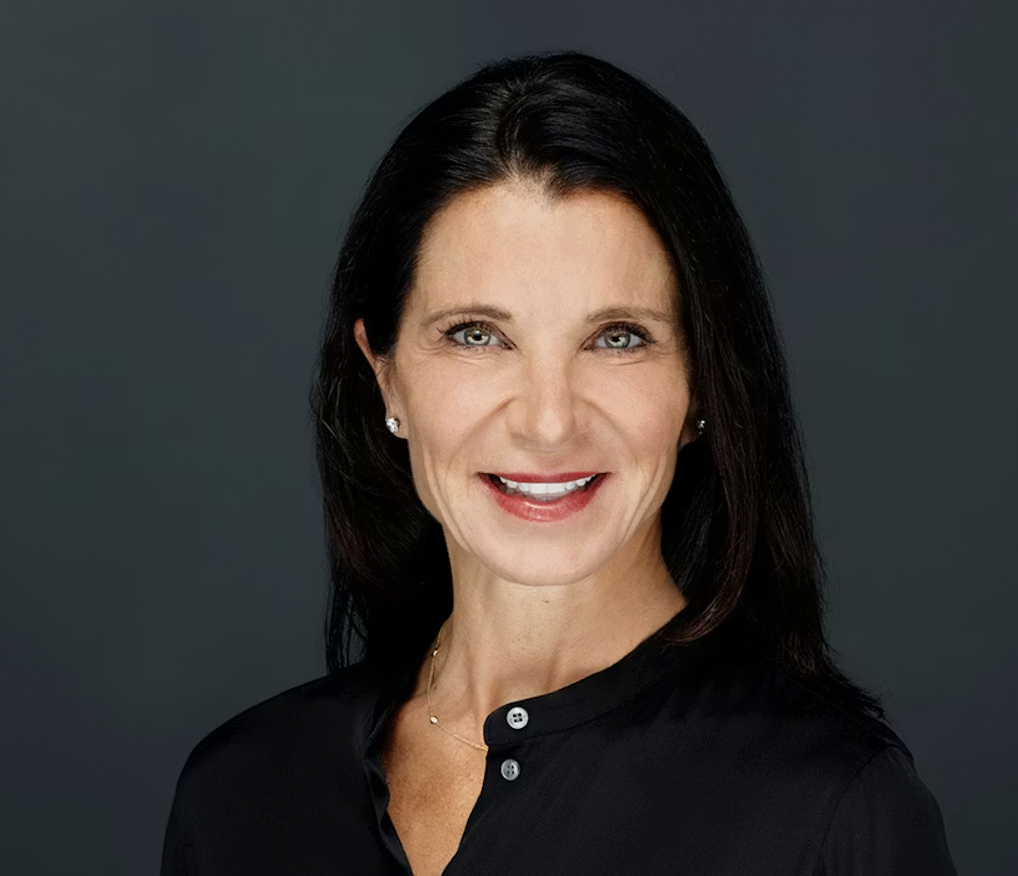
Just ask Collette “Coco” Champagne, who came aboard 27 years ago to lead Hagerty’s inbound call center. Fast-forward, and Champagne is now both chief human resources officer and chief administrative officer, and a key player in virtually every major milestone the company has hit since the turn of the millennium.
In Champagne’s view, Hagerty couldn’t have evolved from a small, niche insurance business to the global auto-centric lifestyle brand it is today without utilizing HR as a function that envisions and propels growth rather than just reacting to it.
“I don't think of myself as a human resources leader, and I really have led this team to not think of themselves as human resource leaders,” Champagne explained. “Instead, we really all think of ourselves as business leaders here at Hagerty; we just happen to be focused on the work that impacts our employees. We’ve been fortunate to be included from a very strategic perspective in addressing what this business needs.”
This month, the TCBN sat down with Champagne and two core members of her team – Dempsey Van Timmeren, Hagerty’s senior director of leadership development; and Annie Czubak, senior director of talent – to learn how HR drove five key chapters of Hagerty’s history.
Chapter 1: The pre-pandemic era
Between 2001 and the start of the pandemic, growth was the name of the game for Hagerty.
In 2008, the company had 280 employees, up from just 60 a decade before. By 2013, that number had jumped to 570. By the end of the decade, Hagerty had more than 1,100 employees and a million insured members. Along the way, the company opened multiple satellite offices, including in Ann Arbor, Golden, Colorado, and even in the United Kingdom.
 Champagne
“As a growth organization, you have to stay ahead of (those types of milestones) and start anticipating where the growth is going to come from,” Champagne said.
The most pivotal milestone in those years, she notes, came in 2013 when Hagerty struck a carrier partnership with Markel, a global specialty insurance provider that became the underwriter for its insurance policies.
“Their belief in us, and that strong partnership in general, gave us the ability to widen the funnel of what we would accept in our collector car book of business,” Champagne said of Markel. “It also allowed us to create some very meaningful partnerships. We had our first real strong partnership with Allstate, where we were the exclusive carrier for their collector car business, and the success with that program then started other carriers that we were able to build similar relationships with nationwide, including Progressive and State Farm. Those types of relationships transformed us.”
The partnerships, Champagne says, not only “helped us keep a competitor out of the collector car space,” but also created widespread name-brand recognition for Hagerty, making it a well-known commodity in the world of car collectors and enthusiasts. The addition of “media capabilities” (Hagerty’s in-house magazines) and car shows (by 2019, Hagerty had more than 2,500 events to its name) created a situation where “people looked at us more as an automotive brand and less as an insurance company.”
Crucial to the shift, according to Champagne, was making a passion for cars as much a part of the workplace culture at Hagerty as it was part of the company’s outward-facing mission. That approach, of injecting car culture and community into the day-to-day rhythms of the workplace, became an ace up the sleeve when it came to attracting and retaining talent.
“One of the best things that we did is we made sure our employees experienced the hobby,” Champagne said. “We wanted to make sure that everybody got their hands behind the wheel. We wanted to make sure that, if you didn't know how to drive a stick shift, we were going to teach you how to do it. We wanted to make sure that you got educated on all things cars, so that you can be able to speak with credibility to the people we insure. And then, as we positioned ourselves as experts in this niche, I think that allowed us to move into other spaces with authenticity.”
Chapter 2: COVID-19 and the pivot to remote work
Even before the COVID-19 pandemic struck and took millions of Americans into remote work situations, Hagerty was experimenting with the concept.
“We had made a move to have a very strong telephony system – which is what powers our inbound call center – so we could track quality, call center analytics, and productivity,” Champagne said. “Learning how to do that allowed us to scale an opportunity for people to work from home.”
Champagne estimates around 30% of Hagerty’s workforce was working remotely prior to COVID-19. Then, when March 2020 rolled around, nearly everyone at the company was working from home.
Even as fears around viral transmission began to abate in 2021 and 2022, Hagerty retained its remote work arrangement, in part because of how it had dramatically expanded the talent pool.
 Czubak
“The COVID era opened that door for us to be able to recruit from all over,” said Czubak. Today, while around 500 Hagerty employees live within driving distance of Traverse City, Hagerty’s nearly-2,000-person workforce remains widely disbursed.
Chapter 3: Hagerty goes public
In August 2021, Hagerty announced plans to become a publicly traded company, by way of a merger with Aldel Financial.
Getting to that point, Champagne says, was an “incremental” process, with HR working in the wings to make it a reality.
“You start in 2010, with establishing a board of directors that has a governance structure which describes how decisions are going to be made,” she said. “From 2010 to 2018, that's what we focused on. We were really making sure we had quarterly board meetings, which then required quarterly audited financial statements.”
According to Champagne, HR played the key role of “helping our leaders and our team get ready to have the responsibilities of a quarterly reporting structure.”
“We needed to build that muscle, of understanding what it's like to have those cadences as a business,” she said.
Rather than derail the plan to go public, COVID-19 helped illuminate the path, with Hagerty’s newfound remote work capabilities making it easier to find, recruit and hire the talent necessary to get things over the finish line.
“When we started needing to hire more people (after the pandemic), it was not only because of our growth, but also in anticipation of going public,” Champagne explained. “We realized there was a whole new capability that we needed to build. We had to find people who already knew how to do this, and in many cases, our team was having to look for people that weren't necessarily in the same market where we had previously been recruiting.”
In particular, Champagne says Hagerty’s financial and legal departments “had to change” because of the stringent Securities and Exchange Commission requirements that come with being a publicly-traded enterprise.
“We had to get the right team around our CEO, to help lead the way in those two specific functions,” she said.
Finally, in the final month of 2021, Hagerty went public, ringing the opening bell at the New York Stock Exchange on Dec. 6 to mark the occasion.
Thinking back on that moment and its aftermath, Champagne says the hardest part was realizing Hagerty’s earlier growth hadn’t been as strategic as company leaders had hoped. In December 2022, TCBN sister publication The Ticker learned the company was laying off 6% of its 1,800-person global workforce.
“That was a very difficult decision, and a very difficult time for us,” Champagne admitted. “But we also knew that, to run a strong company, we had to be able to show the right level of profitability and the right level of revenue growth. I think we were growing so quickly between 2001 and 2018 that we didn't think about how to scale as effectively as we could.”
Chapter 4: Back to the office
The Ticker also broke the news, last November, that Hagerty was finally calling its employees back to the office. The plan, internally dubbed “WorkForward,” required employees within close proximity of Hagerty’s Traverse City headquarters to adopt hybrid schedules, with three days per week in the office.
Champagne says company leaders simply saw a need for more in-person interaction among the workforce. For the three years leading up to WorkForward, Hagerty had been “gathering our teams together four times a year … for regional rallies.” The “on-the-spot collaboration” made possible by those gatherings, she notes, “was something that we wanted to try to activate more of.”
While the decision proved controversial among Hagerty’s workforce, Champagne believes the company and its HR team minimized disruption by “giving everybody enough notice to make these kinds of changes,” thinking about the “readiness” of the office spaces and the technology therein, and sketching out a balance between in-person work and remote work.
The biggest challenge? Acknowledging that the majority of Hagerty’s employees wouldn’t have to abide by this new shift, simply because they live nowhere near Traverse City.
“We have a lot of key employees that are not here, and we did not want to have a perception that there is a different set of rules (for people who live elsewhere),” Champagne said.
That desire to treat all employees equally has Hagerty thinking about opening a new office for the first time in years. While the business still has a few outposts in other parts of the world – including in Ann Arbor, Detroit, Los Angeles, Richmond Hill, Canada, and Bicester, England – several others have been phased out, including in Dublin, Ohio and Golden, Colorado.
“We will likely be opening another location where we have another employee base,” Champagne revealed to the TCBN. “One of the challenges with Traverse City is trying to get a flight into Cherry Capital Airport in July; it’s so busy that it becomes like trying to fly into Nantucket! So, it’s not easy to get here. It’s not easy to get a hotel. It's not easy to coordinate. If we have 200 people here, where are we going to take those 200 people out for a meal on July 20? We want to be able to do something else, where our diverse-located employees can gather and have access to an airport that allows them to get there pretty readily.”
So far, Champagne says Hagerty has been “looking in a few other markets” for its potential second hub. “But we haven’t made a commitment to anything yet.”
Chapter 5: The future
As Hagerty writes its next chapter, the HR team is already working to lay the groundwork – and relying heavily on technology to do it.
“We want to create an environment where employees can clearly see what growth looks like for them,” Czubak said. “A career is really a unique journey for everyone, and we want to help support that and truly empower employees to drive things like internal mobility, skills development, and career conversations with their leaders.”
Hagerty uses Workday tools for that type of HR management, and for years, Czubak has been working on a new system within Workday that will bring Hagerty’s talent strategy into the era of artificial intelligence. On Wednesday, June 22, she finally launched that tool, called the “career journey and career hub.”
“(The hub) is really an interactive guide to explore skills and pathways in our career framework,” Czubak said.
Hagerty built that “career framework” two years ago, inputting every job at the company into the system and assigning each position 10 to 15 “mandatory skills.” Employees can also add their own skills to their career profiles. Together, those attributes then provide a company-wide map of the skills Hagerty has within its worker ecosystem.
“The system gives us a deeper look into the skills our team members have, and at what proficiency level,” Czubak said. “It's great for us to lean into whenever we're trying to fill open roles internally, because we now have this information for all of our employees. It also shows us what gaps that we have. So, if there are certain skills we're looking for and we can't find them in our own employee inventory, then it gives us the opportunity to explore skills development, or to see what kind of external talent we might have to look for.”
 Van Timmeren
The new career journey and career hub tool allows employees to map out pathways for “ongoing career development planning,” making it easy for team members to see how and where they can grow into higher-level roles.
“It has this really cool AI-driven development recommendation feature to it, so it's very uniquely positioned for every employee, every leader, every team member,” Czubak said.
Much of that development then falls to Van Timmeren, who describes her leadership development role as “looking at what capabilities our leaders need in order to face new growth and new complexity three years, five years, 10 years from now.”
“Every year, we update our 10-year long range plan,” Champagne noted. “That helps us understand what our revenue targets are. We translate revenue targets into head count to understand what we're going to need, and then Dempsey works through the question of ‘What does that mean from a people leadership perspective?’”
As for recruiting new people, Czubak says Hagerty’s new data-centric approach helps on that front, too.
“LinkedIn really helps us to use data-driven reporting to find these applicants,” Czubak said. “They have a network of over one billion members, so we can run some really specific reports to find the exact talent that we're looking for. And they've got some really great tools leveraging AI that we can lean into now, too, just for efficiencies and reaching more people faster."