Getting Crushed: Small, independent grape growers are desperate for buyers
April 2026
The call came late in the season for Peter Rigan.
Rigan, who with his family grows 12 acres of wine grapes on Old Mission Peninsula, had for years sold them to a large peninsula winery. But in 2024, after his contract had lapsed, he had the rug pulled out from under him. The winery told him earlier in the season that they were still going to try to buy his fruit, but they couldn’t follow through.
 Peter, Doug and Patrick Rigan
"They basically said ‘Hey, we don’t need your fruit this year, and you’re not a contracted grower, so best of luck,’” he said. "And by the time we actually got notified that they weren’t going to buy anything, it was the end of August, early September, something like that.”
So began a scramble to offload more than 30 tons of fruit. Rigan’s been in the industry for years and has some connections, but they only took him so far.
“If I had something I had to do in the vineyard, I went and did that for two hours, and then I spent six, seven, eight hours on the phone, cold calling people,” he said. “And since then, I’ve built up a spreadsheet with over 400 wineries on it across several states, just calling and bugging people. In 2024 I was able to sell everything, and in 2025, I sold almost everything.”
Though the late-season notice made Rigan’s situation extra stressful, small growers across the region are getting pinched big time amid record grape yields and a general reduction in wine production and consumption. Because many of them supply extra grapes to wineries that already grew their own, they're the first to get jettisoned as times grow leaner.
A growing problem
Further north on Old Mission, Randy Williamson and his life Linda have a similar story. They grow a variety called Marquette and a small amount of riesling on about seven acres, all of which went to a prominent Leelanau winery for years.
“The Marquettes have done very, very well over time. They’re everything they’re cracked up to be, for the climate, the conditions and everything. [The winery] took all of them, and for a number of years things were going along really well,” he said. “But along the way, the owner of [the winery] decided that Marquettes are really good and started planting their own.”
The winery eventually stopped buying Williamson’s grapes, and a staggering 90 percent of them were left to rot last year. (Rigan, who’s worked with Williamson, was able to find a buyer for some.) And that’s after reduced buys for several years prior.
“For a while there, it broke even, maybe even made a little money, which was fine. That's all we were looking for is to have it basically break even. And it took a while to get it there, but we were headed in the right direction,” Williamson said. "And then it just seems like all of a sudden, the bottom fell out of the market.”
Though the Williamsons grow their grapes on what amounts to a hobby basis instead of for the revenue, they won’t be able to keep doing it without buyers.
“If I'm going to do something, I'm going to do it right or not do it at all,” Randy said. “We've done everything that we could to make a very good quality grape, so it would be a hard thing to give up on those.”
Over in Leelanau County, Nathan Kulpa grows a variety of grapes on 17 acres. For years, his grapes went to a local winery that eventually no longer needed them. He then went through two more wineries with the same end result. Now, like Rigan, it’s a matter of piecing together multiple buyers.
“The last two years I've had to really get on the phone, and reach out to many different wineries across the state … and even out of state just to find anybody that was willing to buy,” he said.
This issue impacts even (or perhaps especially) the smallest of growers. Glen Chown and his family grow about a half acre of riesling on Old Mission and have for years, completely on a hobby basis. After their buyer of more than a decade could no longer take them, he considers himself very lucky to have found another one.
“It was miraculous, and a big relief,” he said. “I mean, it simply would've pierced my heart to just let those grapes go bad, especially for everything they’ve meant to our family.”
Ultimately, though, most of these growers understand that it’s business, not personal. Local wineries say they do everything they can to support independent growers, but they also have to keep their own businesses viable.
“It’s a real challenge. You can’t keep putting money into something that’s not moving out of your tasting room or out of a store or restaurant,” said Tony Jacobson, who serves as board president of Parallel 45 Vines & Wines, a local industry group. “So eventually, you’ve just got to cut those cords.”
 Ulbrich
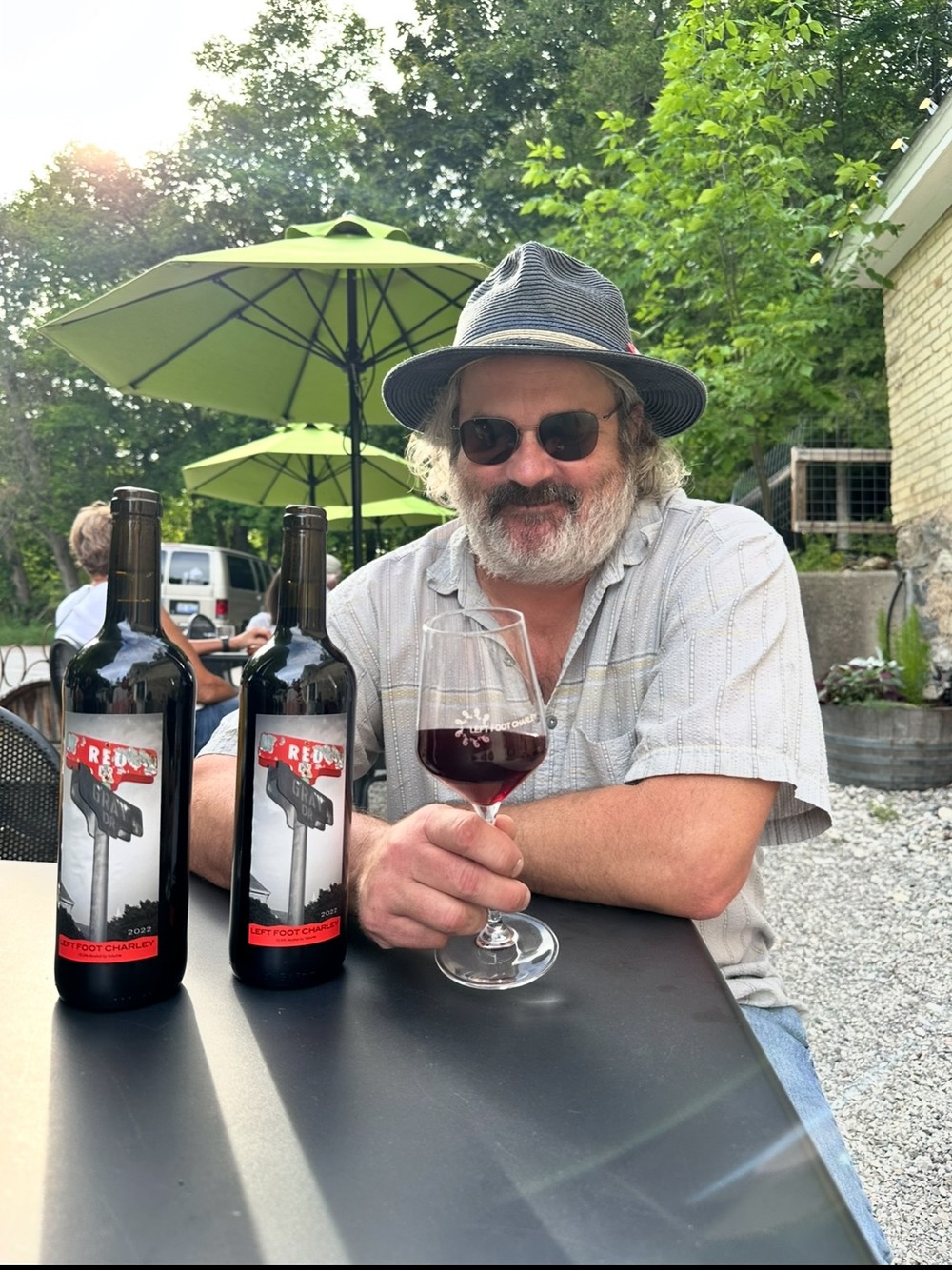
Bryan Ulbrich owns Left Foot Charley, a popular local winery that has made a name for itself by utilizing a variety of smaller growers. He’s worked hard in recent years to make sure they’re all taken care of.
“In the last couple of years, if there was fruit from our growers that we didn't necessarily need in terms of liquid inventory, we were able to find other places to either make wine for them or [found other buyers] to make sure that the cash flow and the fruit kept moving,” he said.
That effort extends to other small growers Ulbrich doesn't usually work with.
“My phone is ringing a lot these days with people looking for homes for their grapes, and we're trying to help connect people, even those people outside of our family of growers," he said. “We’re trying to come up with creative solutions.”
Unfortunately, Ulbrich says, many wineries are continuing to face a lot of hard economic realities that lead to severing ties with smaller growers.
“The relationships with these smaller farms are incredibly valuable, not only just to the supply side, but into the whole story of our region,” he said. “So [they’re] not looking to break up with people because of bad relationships. It's just out of lack of cash, really.”
Root causes
Those involved say several things are at play here. The first is that local grape growers are simply doing a very good job at producing fruit, which leads to oversupply issues. After several decades of fine-tuning grape production in northern Michigan, things are going well – perhaps too well.
“Part of it is that we're becoming our own worst enemies,” Rigan said. “It's not like every year is a huge bumper crop, but we've … gotten a lot better at producing higher yield, higher quality fruit on a regular basis.”
Kulpa agrees.
“We are just so much more efficient at what we do,” he said. “In the last five years, we’ve had three of the largest crops we’ve every picked."
The second factor is that small, independent growers are mostly utilized for excess production in the first place, and therefore are first in line to be cut.
“Pretty much every winery in northern Michigan, not all of them, but a good majority of them, grow their own grapes [in addition to buying],” Kulpa said. “And right now they're not buying grapes because they have too many of their own grapes. Tanks are getting full, there's not any room, so they literally can't buy more.”
Making matters worse is that the wineries themselves are trying to offload their own excess production.
“Another big problem is the wineries are selling their own fruit, so they're flooding the market outside of the individual grape growers that sell to wineries,” Kulpa said. “So there's just a lot of fruit on the market, and obviously it's driving the price [and demand] down.”
Finally, this all coincides with a well-documented downward trend in wine (and other alcohol) consumption over the past several years. Experts attribute this to shifting demographics (young people drink less overall, and those who do have more options than ever before), health concerns and growing competition from cannabis and other indulgences.
In short, it’s a really bad time to be great at growing grapes.
“We really have two factors working against us,” Kulpa said. “Supply is very high and the demand is low.”
Growers and winemakers hope these tough times aren’t permanent. Changes to any number of these causative factors (or new developments) could change things for the better.
“Things are temporal,” Ulbrich said. “These ups and downs happen in this industry.”
Above Photo Credit: Traverse City Tourism