'We Don't Have the People': Region still struggling from lack of workers across many industries
April 2026
You want the good news or the bad news?
The good news is that from a job seeker’s perspective, jobs are there for the taking in the Grand Traverse region. Plenty of them. Across the board, in almost every industry, employers are looking to hire good workers to fill a variety of positions. This is especially true in manufacturing, retail, hospitality and other non-professional sectors.
The bad news is that for a variety of familiar and not-so-familiar reasons, these employers are having a hard time finding people to fill these positions. In many cases, this problem is already damaging productivity and profits.
 Healy
Healy“I guarantee you I could add a million dollars of work tomorrow if I could fully man a second shift,” said Tim Healy, CEO of Century LLC and chairman of the Grand Traverse Area Manufacturing Council. “It’s a real issue.”
The TCBN connected with employment experts and industry representatives to get a feel for what’s going on with hiring in the Grand Traverse region.
10,000-foot view
Rob Dickinson is regional director of business services at Northwest Michigan Works!, which, among other things, helps job seekers and employers connect.
He says forecasts prepared by state agencies show the northwest Michigan market growing 2.4 percent over the next several years across all industries, which “mirrors what we’re seeing on the ground.”
“The job market is kind of stable for us. We're not going to gain a lot. We're not going to lose a lot,” he said. “While [2.4 percent] is not much, it’s certainly not going the wrong way.”
That 2.4 percent figure is tied for the Upper Peninsula for the best in the state, with all other regions ranging from slight losses up to 2 percent growth. But the region’s number would likely be much higher if there were enough workers to fill all the current and expected openings, Dickinson says.
“That's something that we try to factor into those projections,” he said. “We might see that there's going to be 300 openings [at an employer or within a sector], but I can't imagine that we're going to fill those.”
For the next several years, Dickinson says, the story isn’t likely to be a lack of jobs. As retirees continue to flock here and young people can’t afford to come or stay, it’s going to be a lack of workers.
“I think our problem isn't going to be job availability,” Dickinson said. “It's going to be putting the right person with the right skillset into those positions. We just don't have the people.”
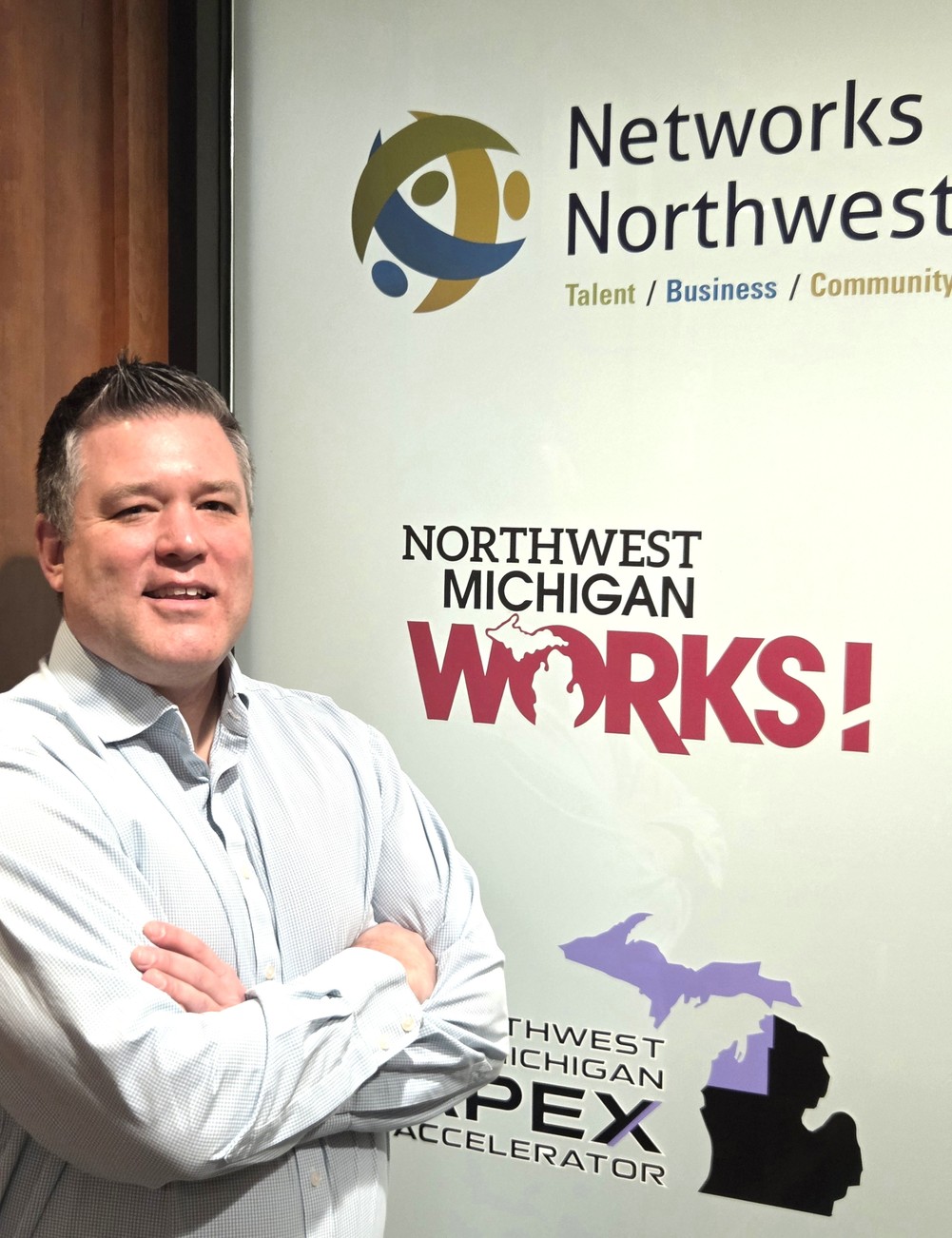 Dickinson
The “silver tsunami” and continued housing woes are massive factors in the region’s employment struggles, Dickinson says. It’s a big factor in why skilled workers in particular can’t move here, and it’s the biggest factor for local young people who want to return here after college, but can’t.
“We talk to employers across all industries, not one over the other, and they’re losing candidates because there’s not enough housing here,” Dickinson said. “Or they hire somebody and they're couch surfing for the first six months and get lucky, or they don’t and they have to move back home.”
And if housing is number one, childcare is 1-A. That’s one that employers are trying to tackle themselves, with varying degrees of success.
“We're seeing more and more employers come to us and ask those questions,” Dickinson said. “How do we help? How do we do this? How do we become part of the solution?”
In highest demand are workers for healthcare, professional services and transportation, Dickinson says, with manufacturing and construction right up there.
“I think almost without fail, every construction business owner that I talk to [desperately needs people],” Dickinson said. “If you have the skills, you can name your price and be working that day.”
About those skills: Yes, many positions across all industries require specific training or skillsets. But more than anything else, employers are desperate for people who are simply reliable and work well with others.
“The number one thing that we hear from employers every single day, day after day, is that they need people with soft skills,” Dickinson said. “Reliability, communication skills, problem-solving ability. It has been such a massive ask from employers. They say ‘We’ll train them [with the necessary job skills], we just want somebody that is on time and is dependable.’”
For those skills that do need to be learned, particularly in manufacturing and trades, Dickinson says schools and employers are figuring out a way to fast-track that process.
“You'll hear the term micro-credentialing now, where employers are like, ‘Listen, I don't need them to be in school for two years any longer. But I do need them to take these five classes. What can you do for me?'” Dickinson said. "So [Northwestern Michigan College, North Central Michigan College], Baker, they all chunk that into smaller slices.”
Artificial intelligence and automation are topics of discussion, Dickinson says, but the conversation is almost entirely driven by a lack of employees, not finding a way to replace them. Many business owners show up to seminars on these topics and say they’re only there because they can’t find enough bodies.
“There are automated plants in our area that a person never touches a product through the whole entire process, and that has been a lifesaver for some of our manufacturers that just can't get the talent through the door,” he said.
Finally, Dickinson says employees – who have most of the power in today’s market, considering widespread shortages – are being more insistent on flexibility. The employers that can cater to those demands are faring better than those that aren’t.
“They're not necessarily asking for a $2 raise anymore,” he said. “They're asking for flexibility: ‘I want to be able to do this remotely. I want to be able to see my kid’s soccer game.' And most employers are saying, ‘Absolutely. Yes, we will be flexible. We will accommodate those things.’”
Manufacturing
A conversation with Healy of Century LLC and the manufacturing council proves that Dickinson is more or less right on the money when it comes to this sector.
Century, which makes high-precision metal components, hired nearly 100 people in 2025, but only grew by 25 by the end of the year. Yes, a handful retired, but a lot more washed out because of a lack of the “soft skills” that Dickinson mentioned.
“The single largest reason is that it was really a bad fit for many people. And I don't want to be overly harsh, but a lot of it was folks who did not have what I'll call basic teammate skills,” he said. "They were not willing to show up on time, or … they were not empathetic enough to [communicate well with] the people around them and understand that they’re part of a team.”
Long story short, Century will be looking to hire a lot of people for good-paying jobs in the future – if they can find them. And they’re not alone.
“Every single small manufacturer I engage with has the exact same story,” Healy said.
Like Dickinson, Healy also speaks of automation as something borne from necessity.
“There's not a single person who lost their job because we installed a robot,” he said. “We could not do certain work without a robot because we did not have enough people to do it.”
On a positive note, Healy could not say enough good things about certain programs in town that do provide him with good workers.
“We are the number one user of graduates of [Northwest Ed’s] Career Tech Center here in Traverse City, which is by far the best source of employees that we have in this company,” he said. “I cannot talk highly enough about that organization and the young people that attend those courses. They are superb.”
Retail and restaurants
 Roofe
RoofeKaren Roofe is owner of My Secret Stash and I’m Planty AF, two specialty boutique shops in downtown Traverse City. She’s also the president of the Downtown Traverse City Association (DTCA), a merchant group that helps promote and advocate for downtown businesses.
Roofe says that many (if not most) shops downtown are looking for people, but an ongoing lack of the younger people who traditionally served as the lifeblood of those operations is continuing to cause problems.
“There was a time when if you were a college student and you wanted to get a summer job, you could come to Traverse City and find a place for the summer and could work in retail or restaurants,” she said. “And because of the housing situation here, that has all but dried up. So unless they live with their family, we’re not seeing those kids come through.”
And for whatever reason, the young people who do live here just aren’t showing up in numbers like they did years ago. To make matters worse, the ones that do are lacking (surprise, surprise) those soft skills everyone keeps talking about.
“A challenge with a lot of the current younger workforce is that they’re on their phones all the time and don't really know how to speak to adults,” Roofe said. “They don't know how to shoot the [breeze], so to speak.”
This leaves folks well into their working careers, which has always presented somewhat of a problem for retail, since most shops aren’t in need of full-time workers. Instead, Roofe says, they’re looking to “layer in” part timers to meet demands. These people are harder than ever to come by.
Roofe and other merchants have had limited – but promising – success with coaxing retirees back into the retail workforce, giving them workers with normally excellent soft skills who don’t need benefits and are much more amenable to part-time work.
Many larger retail groups, most hotels and other related businesses lean heavily into visa programs to bolster the workforce in the summer months, but the process is too expensive and cumbersome for smaller, independent shops, Roofe says.
Jim DeMarsh is area manager for Mission Restaurant Group, which operates North Peak, Jolly Pumpkin, Mission Table and other restaurants here and downstate. As with retail, younger people are extremely critical, especially for various support positions.
 DeMarsh
After a few brutal years where those young people seemed to disappear, DeMarsh says things appear to be turning around.
“I do feel like this winter I'm getting more applications, which is nice. So I do think it's kind of going to be back on the upswing sooner than later. Maybe not this summer, but probably by next,” he said. “I'm definitely seeing the high school and college kids starting to engage again.”
But finding good people is still a big challenge.
“I think my comment a few years ago was that I'm just going to check the pulse, and if their heart’s beating, I guess I'm going to have to give it a try,” he said. “It’s getting a little bit better, but not nearly as much as I would like it to so I can be more selective on who I can hire; to take one person that I feel is more skilled than the other.”
This is particularly true of higher skilled culinary talent.
“There's so many restaurants in town and there are so few in that culinary group, and they just trade among the restaurants over and over,” he said. “Everybody's chasing that extra dollar.”
Healthcare and professional
By and large, various white-collar and healthcare sectors are looking to hire, though their needs vary. Generally speaking, they aren’t as desperate for workers as some other industries.
Munson Healthcare is one of the region’s largest employers, with roughly 8,500 workers spread across several counties. It’s seeing year-over-year reductions in its large pool of vacancies, a very welcome trend after a string of tough years since COVID-19.
“Last year we averaged about 630 job openings, and now we are down to 500,” said Megan Brown, Munson’s chief marketing and communications officer. “This is still a significant number of openings, but we are making hiring progress across our region.”
As with everything else, the jobs get harder to fill as more experience and/or training is required.
“Jobs that are getting easier to fill are entry level jobs like environmental services, food and nutrition services and phlebotomists,” Brown said. “Jobs that are still hard to fill include radiology techs, nurses, medical lab techs, imaging roles and surgical techs.”
Nurses are hard get everywhere, with a well-documented national nursing shortage causing problems nationwide. Munson hired 50 new nurses in 2025, but Brown says they still have “more work to do.”
“Overall, the major trends causing the national nursing and healthcare shortages are an aging workforce, an aging population which increases demand, lack of a pipeline for new talent and burnout. Organizations are competing for smaller talent pools, and rural hospitals feel the greatest pressure,” she said. “We are tracking all of these factors and doing everything we can to get creative using every tool in our toolbox to attract and retain great people at Munson.”
Over at Northwestern Michigan College, another large professional employer, things are also turning a corner.
“It’s definitely been an employee's market since COVID, but for the first time in a long time, we're really seeing a healthy and bountiful applicant pool, with highly qualified talent,” said Erika Cotner, NMC’s talent acquisition coordinator.
Though Cotner obviously can’t speak for all professional-type employers, she echoes Dickinson’s sentiments regarding the current importance of flexibility.
“Those that can offer flexible or hybrid remote type of positions can definitely find more higher caliber candidates,” she said.