Hold the Alcohol: NA wines are finally making their mark in northern Michigan's viticulture scene
April 2026
What do you call wine without alcohol?
These days, you can only really call it one thing: the fastest-growing product segment in the world of viticulture.
Bad times in the wine world
According to Barron’s, 2025 was a dire year for the United States wine industry, with total revenues falling by more than a billion dollars year-over-year, from $75.5 billion in 2024 to $74.3 billion last year. That 1.6% drop had nearly a quarter of U.S. wineries describing 2025 as “one of our most challenging years ever” in a “state of the U.S. wine industry” survey conducted by Silicon Valley Bank (SVB).
One of the biggest challenges, per the SVB survey? “The older, wine-focused cohort is aging out, and younger adults aren’t replacing them at the same rate,” the report noted. “Millennial and Gen Z drinkers are spread across more categories and drinking less overall, particularly under age 29.”
The trend isn’t just hitting the wine industry. According to Bloomberg, shifting drinking habits and a rise in sober and sober-curious lifestyles have cost the global beer, wine and spirits industries 46 percent of their combined market value since a June 2021 peak – equating to a whopping $830 billion in wiped-out stock valuation.
No surprise, then, that non-alcoholic (NA) wines were the one clear bright spot on 2025’s wine sales data sheet. In January, Nielsen reported that NA wine sales were up 29.1 percent compared to the same time a year ago. The increases in market share are expected to continue, with most projections predicting double-digit annual growth rates for the NA wine market, carrying on well into the mid-2030s.
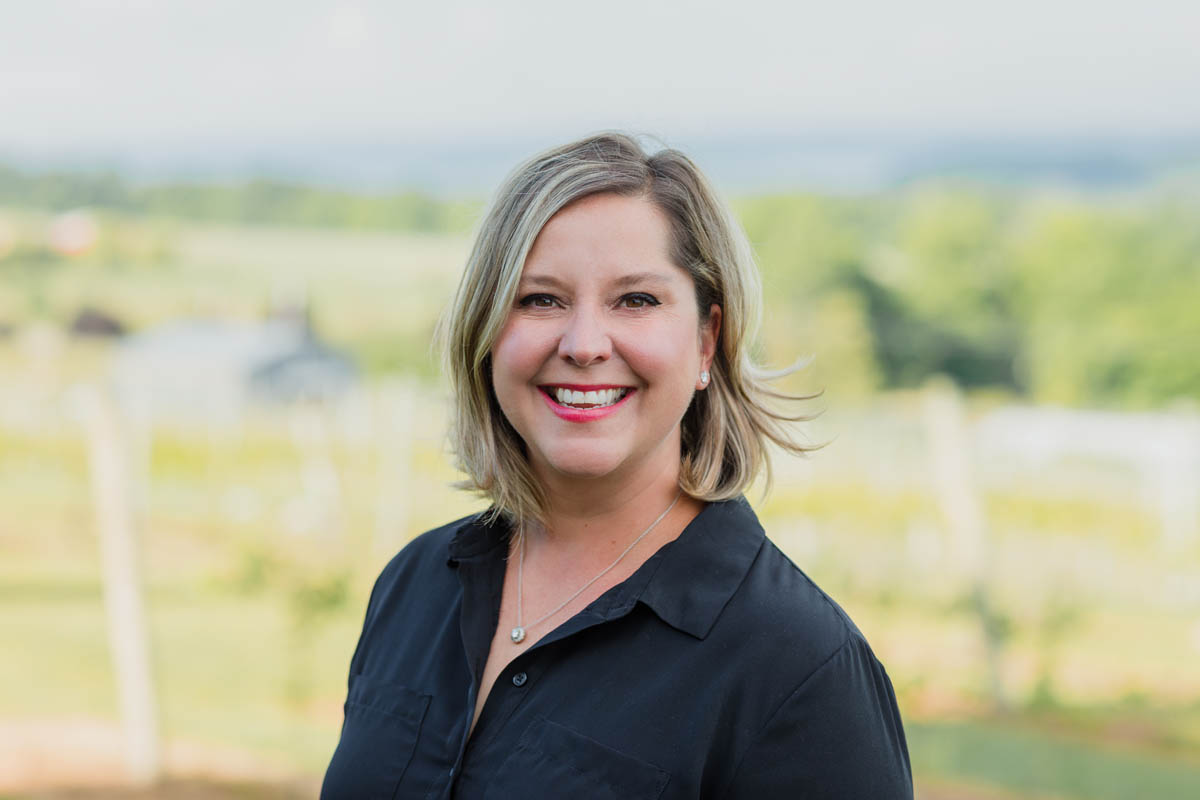 Chantal
The rise of NA wines
In Traverse City, vintners are starting to read the writing on the wall.
“As a category, we know NA is the only wine section to have growth nationally, and is the darling of all wine buyers at the moment,” said Marie-Chantal Dalese, president and CEO of Old Mission Peninsula’s Chateau Chantal Winery and Inn. “A trend, or here to stay? Probably here for the long haul, as consumers decrease alcohol consumption for a variety of reasons – but only if the wine quality is there.”
The shifting tides of the wine marketplace, combined with a surplus of wine grapes, prompted Chateau Chantal to make its first-ever NA wines about a year and a half ago.
“If everything had been singing along merrily and regular wine sales were on the up and up, we likely would not have embarked quite so deeply into the NA project,” Chantal said. “But given that regular wine sales are on the decline globally, and given that we had an oversupply of fruit, we said to ourselves, ‘OK, we've got this raw product here that we're unlikely to sell otherwise, so let's take a look at what it would take to convert it into a new product that likely will sell.’”
Fast-forward to April 2026 and Chateau Chantal has four alcohol-removed wines on its menu, including an aromatic white, a sparkling brut, a sparkling rosé and a semi-sweet red. All four wines exist under the “0%” series – and all four have done their assigned job of utilizing excess fruit in a profitable fashion.
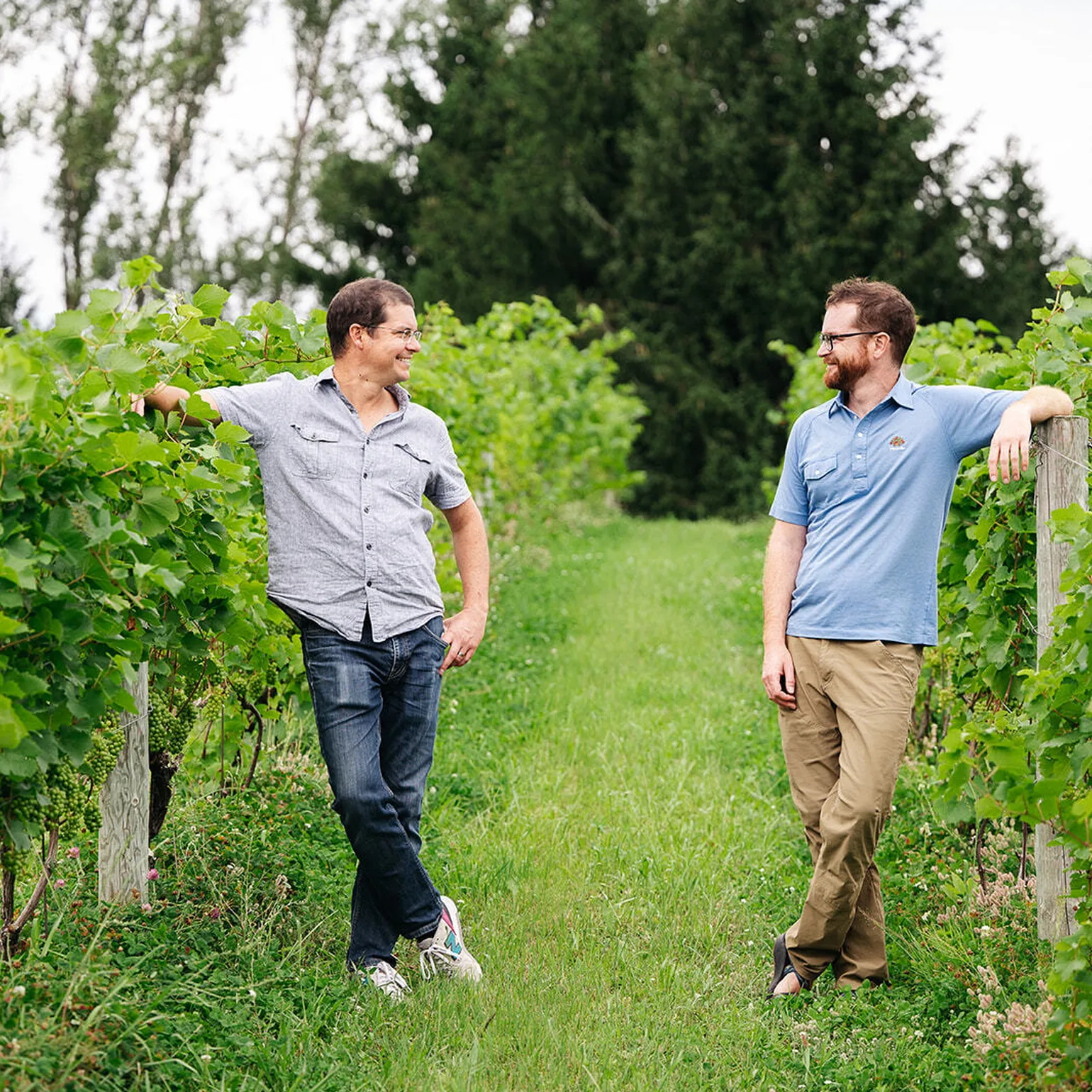 Mawby owners (and brothers) Mike and Peter Laing
“The sales are doing well,” Chantal said. “We're fresh off the release of the two newest varieties – the sparkling rosé and the red – and we feel that the lineup of four has given us a really nice selection. Here in the tasting room, I often notice someone out enjoying a flight of our different NA wines. And there’s been even more demand from retailers. Meijer has been a really good partner for Michigan wineries for a long time now, and they have taken on all four of our zero percent labels.”
Also performing well is Safe Sex, the NA sparkling rosé offered by Mawby Vineyards in Suttons Bay. Mawby soft-launched the wine – an alcohol-removed version of its flagship sparkling rosé Sex – in September 2024, and went wide with the release at the beginning of 2025. While the wine took some getting used to for fans of the original recipe – “We had folks fill out a survey, and a lot of people said ‘It doesn't taste like the real Sex,’” said Mawby co-founder Mike Laing, – it’s proven to be a big hit regardless. Per Laing, Safe Sex accounted for 6 percent of the winery’s total sales in 2025.
The pain points
Laing admits “it’s almost impossible to duplicate” the taste of a wine after the alcohol is taken away, which makes for one of the big hurdles of NA winemaking. In the case of Sex, the standard alcoholic version is 11 percent alcohol by volume (ABV), and the alcohol content doesn’t just give you a buzz; it also lends weight, texture, mouthfeel and other key attributes to the wine. Simply removing it, in other words, doesn’t a drinkable NA wine make.
“When you taste the raw products [after the alcohol is removed], it's the most awkward thing, because it kind of just tastes like acid water,” concurred Chateau Chantal Winemaker Brian Hosmer. “It’s not a flavor you’d normally taste, because almost everything you would consume that has acid in it – like every other fruit juice, for instance – has sugar associated with it.”
Both Laing and Hosmer say they had to go through extensive trials to figure out the best ways of “rebuilding” their alcohol-removed wines into something drinkable. It wasn’t just about masking the acidity with sweetness, either, but also about restoring some of the “body and roundness” that wine aficionados tend to appreciate about their favorite vintages.
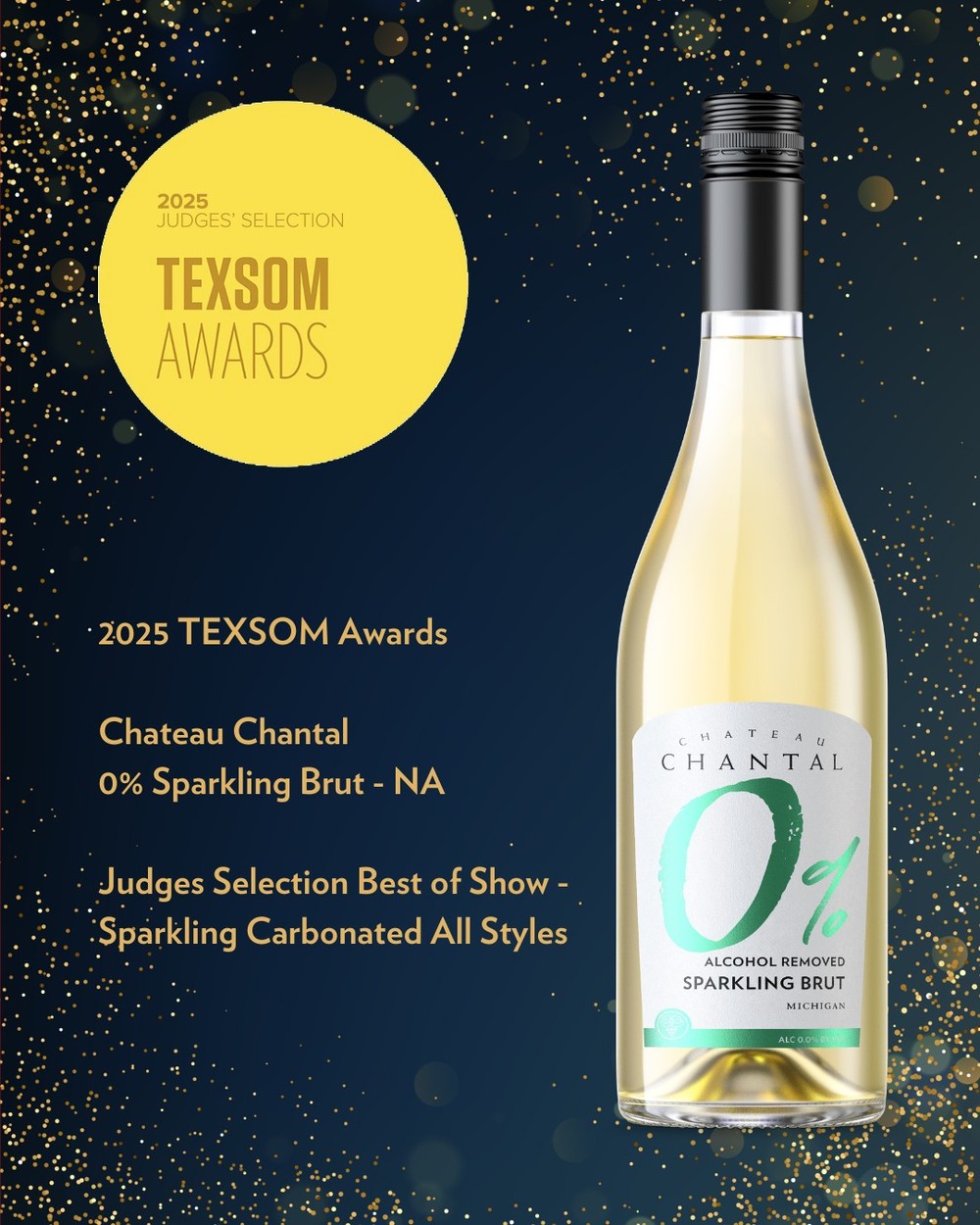 Chateau Chantal's award-winning NA sparkling brut.
Both Chateau Chantal and Mawby seem to have cracked the code. Chateau Chantal’s sparkling brut won “best of show” honors at last year’s TEXSOM Awards, a prestigious wine competition in Dallas, Texas, while Mawby’s Safe Sex was one of just five NA wines to win a gold medal at the recent 2026 San Francisco Chronicle Wine Competition.
Broader local adoption?
With a few strong NA wines on the market in Traverse City, could more northern Michigan wineries embrace the trend? A local winery investing in the equipment necessary to remove alcohol from wine would make local growth more likely. So far, both Chateau Chantal and Mawby have been collaborating with outside-the-region companies to make their NA wines.
“We sent our white wines to BevZero in California for alcohol removal, and the rosé and red to ABV Technology in Minnesota,” Chantal said. “They use different alcohol removal techniques, and we wanted to test both out.”
The Santa Rosa-based BevZero utilizes what is called “spinning cone technology” to remove alcohol from wine. According to the company’s website, the technology “is a vertical stainless-steel cylinder composed of alternating rotating cones that spread the wine out into a thin film, allowing rapid removal of the alcohol.” The St. Paul-based ABV Technology, meanwhile – which Mawby also worked with to make its Safe Sex – boasts a dual-stage vacuum separation technology called “the Equalizer,” which “uses a low temperature, low pressure vacuum filtration” to pull out alcohol content.
“Both had positives and negatives,” Hosmer said of the two technologies. “The spinning cone technology was better for retaining aromatics, which was definitely preferable for white wines and the sparkling brut that we made. The other technology doesn’t separate things out as cleanly, but we didn’t see as big an effect on our red and our rosé.”
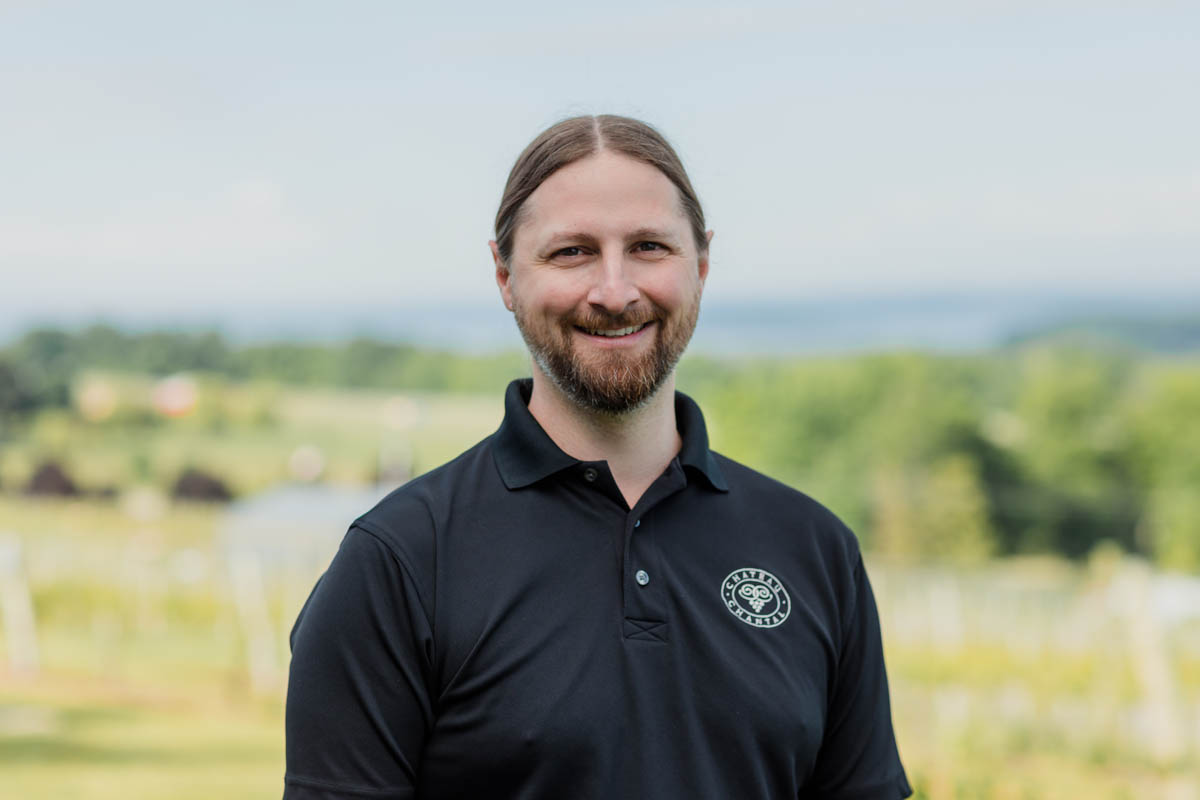 Hosmer
Less is actually more
While the collaborations with BevZero and ABV Technology ultimately proved fruitful for Mawby and Chateau Chantal, there are pain points to those processes, from shipping product back and forth across the country to overall cost.
“When we were starting out, we sent out trial batches to both companies, just to see how the wines came out, and that’s where some of the expense comes in,” Hosmer said. “Our first trial batch, I'm pretty sure we made the first $100 bottle of NA wine in Michigan history. And nobody’s trying to spend $100 on a bottle of alcohol-removed wine; there's some serious price sensitivity in that category.”
Therein lies one of the most common misconceptions of NA wine: that it should cost less than regular wine because it’s missing a key component. In truth, the alcohol removal process adds cost to the wine, not the other way around. It’s a piece of information Chantal has shared candidly with the numerous other local wineries that have approached her since the zero percent series launched, “interested in knowing what we did and what it took and all that.”
What's next for NA
That bubbling local interest has Chateau Chantal considering purchasing its own in-house alcohol-removal equipment – not just for its own wines, but also as an option that could be shared with other local winemakers.
“The thought is that we could be the provider locally for other wineries that want to enter this market, but can't quite meet the quantity benchmarks to make it worthwhile to ship their wine to California or Minnesota and have it de-alcoholized and sent back,” Chantal said. “We’ve decided not to do that just yet, given the expense of the equipment being very high – pushing $1 million – and some of the equipment being very untested at this point. But we are keeping our eye on it over time to see if any of that changes, if the trend continues, and whether there is enough interest from other Michigan wineries to make it worthwhile.”
Mawby is also keeping an eye on the technology space – and not just for pricing reasons.
“The technology for removing alcohol while keeping the integrity of the product the same is improving, so I think [NA wines] will only improve,” Laing said. “The Germans are leading the way on that front. The best sparkling wines I've had that are not alcoholic are German rieslings; they just taste so much more like the real thing. And I know that that technology is working its way into this country as we speak, so things are going to improve, and they are going to improve soon.”